
It’s Valentine’s Day, a day when we show our significant others we love them by fattening the wallets of greeting-card makers and florists. Now, if I seem cynical about that, I am, and if that surprises you, I’d ask, how long have you been reading my work? But on this day in mid-February, the first hints of spring are in the air – yes, even here in the Susitna Valley, where it’s cold and we have three feet of snow, but the days are growing notably longer, and the chickadees are starting to sing their spring songs.
But in some places, that dash of spring comes with a distinct… odor, which brings us to a place called San Rafael, California, where the local skunk population is feeling romance in the air. Well, some of them are.
Forget love, it’s stink in the air for some Californians this Valentine’s Day.
Residents near San Rafael in Northern California have complained of a pungent smell interrupting the season of love.
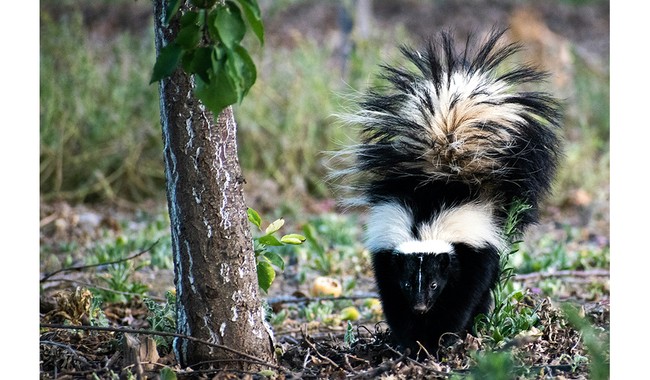
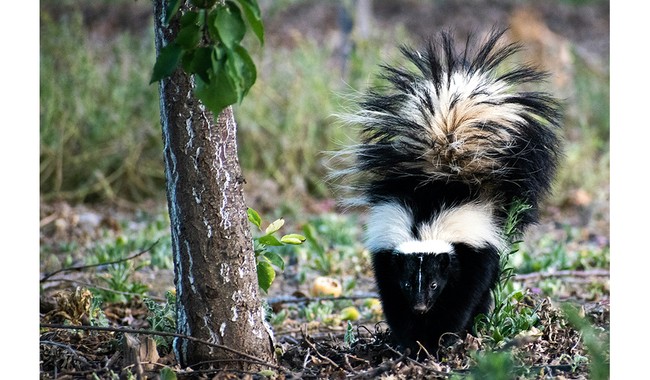
The perpetrators? Female striped skunks rebuffing the “unwanted advancements” of males during their mating season, which lasts from January through March. Skunk babies are typically born by May.
“What’s happening is the males are pursuing the females, and if the female is not interested, she sprays them,” Melanie Piazza, the director of animal care and hospital operations for WildCare, told SFGATE. “It’s their defense for predators, but it’s also their defense for, you know, unwanted Valentine’s Day advancements.”
Now that’s how you reject an advance, ladies.
The Striped Skunk (Mephitis mephitis) is a curious beast. They can not only turn their rear ends into chemical weapons projectors, but they are also quick, nimble, intelligent and curious. Back in my youth in Allamakee County, Iowa, my Dad reluctantly encouraged them to hang around, as they are better mousers than any cat. He just cautioned kids to give them a wide berth, and being that they are nocturnal critters for the most part, we generally only knew they were around by the smell.
And, now that I think back on it, spring does seem like the time we smelled them – a lot.
Skunks are members of the order Mephitidae, and the Striped Skunk shares the genus Mephitis with the Hooded Skunk, while the Spotted Skunk, common in the United States south and southwest, is a member of the genus Spilogale. Then there’s the Hognose Skunk, found in America’s southwest, which is a member of the genus Conepatus.
All of them can and will spray you.
Read More: Army Issues Savage Valentine’s Day Advice for Less Attractive Guys to Avoid ‘Honeytraps’: ‘10+5=’
Feel-Good Friday: US Olympic Ice Duo Shows What Love, True Partnership Are All About This Valentine’s Day
I’ve known a few people who kept skunks as pets. Literary genius Robert Heinlein described skunks as “affectionate pets for a cautious master,” and keeping a skunk, I am told, is much like keeping a cat; they are affectionate, but generally walk their own path, and being mostly solitary animals like cats, all places are alike to them. And, one can always remove the chemical-warfare capacity by having the scent glands surgically removed.
So, spring is coming to Northern California, and with it the Valentine’s Day reminder that skunks, too, are susceptible to the call of love. And, at least, the smell is better than one might encounter in Sacramento; given the choice between the odor of woke politics and skunks, I know I’ll choose skunks every time.
Editor’s Note: Do you enjoy RedState’s conservative reporting that takes on the radical left and woke media? Support our work so that we can continue to bring you the truth.
Join RedState VIP and use the promo code FIGHT to get 60% off your VIP membership!