
Most people are reluctant to downsize. It involves change, stress and endless decisions about where to move to and what possessions to keep.
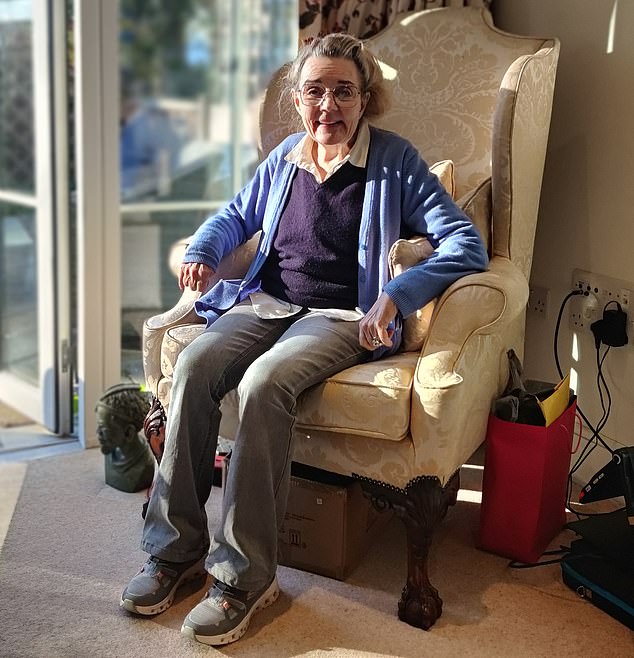
But for 78-year-old retired doctor Patsy Chapman, the decision to downsize from her nine-bedroom manor house in Yorkshire has been one of the best of her life.
She says: ‘I’ve made so many new friends. It’s a bit like going back to university – and every week is freshers’ week. It was overwhelming at first, but you meet people and work out who you like.’
Decisions like Patsy’s to actively choose to downsize are rarer than people may think.
Only 14 per cent of over-55s plan to downsize in retirement, according to a poll by Opinium on behalf of investing platform Hargreaves Lansdown. Meanwhile, half of those polled said they wouldn’t move to a smaller home and the remainder were unsure.

Patsy Chapman says the decision to downsize from her nine-bedroom manor house in Yorkshire has been one of the best of her life
When asked why they wouldn’t consider downsizing, 37 per cent said they didn’t want to move anywhere smaller, and a further third said they were attached to their home.
Cost was another important factor, with 21 per cent saying it was too expensive to move.
But it’s a decision you may have to take sooner than you realise. Research suggests 64 is the optimal age to downsize.
But is this life-changing decision a good idea from a financial standpoint? From stamp duty to the expensive charges that retirement homes levy, Wealth & Personal Finance weighs up the costs of swapping your family home for a smaller property – and speaks to two women who have taken the leap.

Patsy’s smaller home in a retirement village in Buckinghamshire, which she says is much more manageable
It’s a big decision, and can be an emotional wrench
For some who do choose to swap the family home for a smaller property, it can open up a new chapter of life.
Patsy was left alone in her big manor house when her husband Tony, a former surgeon, died aged 79 in 2022. She suffers from macular degeneration, a condition that affects the central part of the retina, resulting in poor eyesight, and she was struggling with their large family home.
Patsy says: ‘I just found I could no longer cope with a nine-bedroom house. The garden was going downhill fast.’
After discussions with her family, who lived further south, she decided it was time for a change.
In 2024, Patsy sold the house in Yorkshire for £830,000 and downsized to a new home a fraction of the size in a retirement village in Buckinghamshire. She left behind her large house with four acres of land to move to a two-and-a-half-bedroom new-build with a patio.
The move did not release equity, as her new home cost her £815,000, but meant she was moving into a more manageable property closer to her two sons and two grandsons, with help at hand if she needs it.
But that meant saying goodbye to a spacious property full of memories and old friends nearby.

It was difficult leaving her Yorkshire friends behind, says Patsy, but her social life in the retirement village is thriving

The village offers a number of social activities, including quiz nights and cinema screenings
And while the average homeowner over 65 has lived in their property for 26 years, according to Zoopla, Patsy had lived in hers for even longer, at 39 years.
She says: ‘Leaving all my friends behind and parting with so many of my belongings was hard.
‘My husband was a collector of pewter metalwork, so there was an awful lot of clearing out.’
Patsy says she enjoys the social aspect of her new retirement village and finds plenty of time to indulge her love of gardening on her new patio and in allotments.
She says: ‘I have not been lonely or bored since arriving here. They have cinema nights, lectures, quiz nights, even discos. The men tend to play table tennis and petanque, which gets very competitive. We have bridge groups twice a week and that gets competitive, too.’
Make sure you find the right home for you
The first hurdle for many potential downsizers is finding the right next home.
More than a third of homeowners over 55 who considered moving in the last two years but didn’t said a lack of suitable homes was a key reason, according to a poll by property advice website HomeOwners Alliance.
People often focus on the reduced size of prospective properties, or the lack of a private garden, but they should take into account that living in a different type of property may also mean that their lifestyle changes.
Linda Leader, 74, moved to a retirement village in Maidstone, Kent, in 2021 when her husband was ill with leukaemia.
The modern two-bedroom flat was only ten minutes down the road from their old home, a four-bedroom 1960s house. Five months after the move, her husband died. Linda says she was relieved they made the move when they did as she was surrounded by friends and family and received lots of support from neighbours in the village during the toughest of times.
The flat she bought was only slightly cheaper than her house, but her husband wanted her to downsize to the village to give her more safety and security.

Meirion Shaw, a downsizing specialist who helps elderly, busy or overwhelmed people to move home, says, in her experience, nobody ever regrets downsizing
Leaving a home you have lived in for most of your adult life means a lot of upheaval. While downsizing can take a physical and mental toll, often people do not look back on the move with regret.
Linda describes the experience as ‘cleansing’ and the best decision of her life. She is based in a retirement village, with 101 cottages and apartments.
The move involved a lot of upheaval but it was well worth the hassle, she adds.
The worst bit about downsizing, according to Linda, was choosing what to get rid of. But, ultimately, she describes that process as a blessing in disguise.
She says: ‘You have to get rid of things that you had for years, but when you move to the new home you quickly wonder why you cared about that stuff in the first place. You have to be quite brutal and practical about it.’
Meirion Shaw, a downsizing specialist who helps elderly, busy or overwhelmed people to move home, says, in her experience, nobody ever regrets downsizing.
She says: ‘All the clients I have helped to downsize all take a big sigh of relief once it is done.’
How much does it cost to downsize?
Moving to a smaller home should – in theory – free-up some cash, unless you move to an area with higher property prices. But it’s important to weigh up the financial pros and cons.
Stamp duty is the biggest deterrent for those who are considering downsizing. It applies to the purchase of all homes above £125,000.
An elderly couple selling a £500,000 home and buying a property for £300,000 would face a stamp duty bill of £5,000, on top of estate agent fees and other costs.
The good news is that when you purchase a new property, there should be no capital gains tax liabilities when selling your current home. This is because when selling a home, you are entitled to principal private residence relief which should, in most cases, shield you from capital gains tax that might eat into any house price gains.
Anyone who has lived in the property as their main home for all the time they have owned it, and haven’t rented any of it out, is entitled to this relief.
Once you’ve moved, there should also be lower maintenance costs and cheaper energy bills, as your new home is likely to be smaller and more energy-efficient.
Patsy says: ‘The thing that amazes me about moving from North to South is how warm it is. I’m a Northerner, but it’s warm down South and these modern buildings just seem to completely stop the heat from escaping.
‘Up in Yorkshire I was paying £5,000-plus each year on energy bills, and now I am paying around £1,000. It’s great.’
Linda is also thrilled at the energy savings she’s made moving from her 1960s house into a converted new-build barn conversion.
‘It’s so cheap to run in terms of my energy bills,’ she says, ‘I don’t even have the heating on in January. It’s so well insulated.’
Are retirement homes worth it financially?
Retirement villages tend to offer an attractive array of high-quality facilities such as lounges, restaurants and cafes, as well as gyms and swimming pools. They promise an easy-going life and a social calendar with a roster of activities.
But they are aimed at high earners, so it won’t be an option for everyone – and they come with expensive service charges and exit fees.
The average cost of a one-bedroom retirement home in London is £708,200, according to free care home directory Lottie, while a two-bedroom retirement property costs around £800,000.
In the North, the average one-bedroom retirement apartment is £215,922, and £304,135 for a two-bedroom home.
Properties are often sold with a long lease, typically 250 years, starting from the date the village was built. If someone is buying a resale property rather than one that is new, they will take over the remaining term of the lease.
And while ground rents are now banned, some older properties built before the 2022 legislation still have a ground rent clause, whereby it is charged at a rate set out in the relevant lease.
Patsy and Linda both live in Audley retirement villages, owned and operated by the Audley Group. There are similar developments offered by Inspired Villages, Churchill Living, Riverstone Living and McCarthy Stone.
Patsy says: ‘My new house has a 125-year lease. The service charge is £1,100 a month and rises by inflation each year, but it means I have access to a gym, pool, beautician, nail bar and restaurant.’
In Patsy’s case the exit fee is taken on the resale price when the house is sold.
For each year Patsy lives in her property, Audley Group will get 1 per cent of the property’s value, capped at 15 per cent. The company receives this share when an owner sells their house, dies or moves into a care home.
Linda says she pays £1,127 a month in management fees to cover the cost of insurance, cleaners, access to a gym, a pool, and discounts at the on-site restaurant among other things.
‘It’s well worth it. There is even a button we can push if you need something, and a porter can pop round or arrange for a doctor to visit,’ she says.
Retirement housing has been widely criticised in recent years for its leasehold sales models, which have resulted in buyers facing ever-increasing service charges. And there are often age restrictions on retirement properties which can make them more difficult to sell.
Grieving families who have been unable to sell these properties after a loved one has died have been forced to pay thousands in council tax, service charges and ground rent to retain ownership.
Some families have claimed these properties also failed to retain their value, meaning they are resold for considerably less.
However, Linda insists it is well worth the cost of high management fees. She says: ‘There is so much peace of mind having people on hand to help you with whatever you need, whether that be arranging for a plumber to fix a leak or someone to help with a delivery.
‘It is expensive. I have friends who would like to join me here who can’t afford to.’
Plan ahead and work out what to keep
Moving home can be an emotional time, even when it’s the right move. It often involves compromise – perhaps either a smaller property or a less desirable area – but above all it requires change, which can be unsettling.
Shaw says downsizing is all about planning ahead, but it’s vital to be unemotional about leaving your home and clutter behind.
She adds: ‘The idea of moving from the large family home where you have lived for decades to a small flat isn’t going to have anyone jumping up and down in excitement. But downsizing does not have to be frightening and overwhelming.
‘We like to say: drink it while it’s fizzy, which is another way of saying seize the moment – take the things you love to use, your best clothes, your champagne glasses. Don’t bother with everything else.’
SAVE MONEY, MAKE MONEY

4.36% cash Isa
4.36% cash Isa
Trading 212: 0.76% fixed 12-month bonus

£100 cashback
£100 cashback
Transfer or fund at least £10,000 with Prosper
.jpg)
4.49% cash Isa
4.49% cash Isa
Includes 12-month boost for new customers

£2,000 cashback
£2,000 cashback
1% cashback up to £2,000 when transferring

Sipp transfers
Sipp transfers
Get between £100 and £3,000 cashback
Affiliate links: If you take out a product This is Money may earn a commission. These deals are chosen by our editorial team, as we think they are worth highlighting. This does not affect our editorial independence. Terms and conditions apply on all offers.