
Every morning for the best part of 20 years Paul Quinn woke up knowing that another man was rotting in jail for a crime that he committed.
In that time, the 52-year-old had the pleasure of watching his six children grow up and the joy of becoming a grandfather.
The contrast with Andrew Malkinson’s pitiful existence could hardly have been more stark.
Sex offenders in prisons are particularly hated, and he had been convicted of attacking and raping a young woman.
The only time he felt remotely safe was when he was locked up in his cell at notorious HMP Frankland, and at times the 60-year-old contemplated killing himself.
Only one thing stopped him – the determination to prove that it was another man who should be in jail.
And so he fought to prove his innocence, something he had maintained from the moment police questioned him about the 2003 rape.
While Quinn posted photos on Facebook of his children’s birthdays, Mr Malkinson studied the law and spoke with lawyers.
While Quinn enjoyed nights out and going to football matches, Mr Malkinson took his case to the Criminal Cases Review Commission (CCRC), which investigates miscarriages of justice. Twice they rejected his claims of innocence.

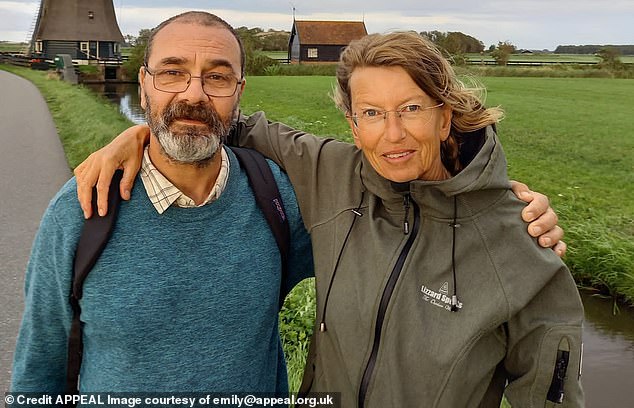
Proven innocent: Andrew Malkinson with ex-partner Karin Schuitemaker, who stood by him

Following a six-week trial at Manchester Crown Court, Paul Quinn was convicted of two counts of rape. He was also found guilty of grievous bodily harm and attempting to choke or strangle his victim to render her unconscious while he attacked her
I know the truth about Marilyn Monroe’s long–lost diary

I’m Rachel Sharp, US Crime Desk Editor, and I have learned shocking details about Marilyn Monroe’s long–lost diary – details that change everything we thought we knew about her mysterious death.
For decades, her missing diary has belonged to the realm of hollywood myth. But now, an investigator I spoke to not only insists it’s real, but that he found it. Sign up to read exactly what he found.
He could have accepted his ‘guilt’ and been released after serving less than seven years. But he refused and served 17 before finally being let out in 2020.
In many ways that wasn’t the end of this extraordinary story – but the start.
A campaign began, highlighting concerns about the safety of his conviction, and in mid-2022 it was reported that new DNA evidence linked the rape to another man.
At around the same time those reports emerged, Quinn’s browser history showed him searching for news about the story and about how long the police retain people’s DNA.
Because Quinn knew he was in trouble.
And yesterday, following a six-week trial at Manchester Crown Court, he was convicted of two counts of rape. He was also found guilty of grievous bodily harm and attempting to choke or strangle his victim to render her unconscious while he attacked her.
Key to his conviction was DNA that had been taken from him by police in 2012 as part of an operation to add historic sex offenders to the national database. He was included as he had carried out an indecent assault aged just 12.
Then, aged 17, he was convicted of two counts of unlawful sexual intercourse with a 12-year-old girl. Today such an offence would have resulted in rape charges.
But in 2012, his DNA did not link him to the 2003 rape – the sample from his victim was ‘imperfect’.
Due to a series of missed opportunities, he got away with it for another decade.
Finally, in December 2022, after new analysis linked the sample to him, the police came knocking.
Quinn fed police a story about how he was a Jack the Lad back in the day who had cheated on his wife with hundreds of women.
If there was DNA, he told them, then it must have come from consensual sex with the victim, whom he couldn’t remember.
But the billion-to-one forensic match was backed up by damning evidence from his now ex-wife.
Not only did she remember the night of the attack, but was also able to share details about Quinn’s physical appearance that linked him to the crime.
Quinn’s belated conviction will put further pressure on the authorities – and Greater Manchester Police (GMP) in particular – to explain one of the worst miscarriages of justice in British legal history.
Last night, Mr Malkinson said: ‘If the police had acted as they should have done, Paul Quinn could have been caught a long time ago.
‘Instead, they wanted a quick conviction and I was a handy patsy… all those responsible for allowing this dangerous man to wander free whilst I was locked up must now be held to account.’
Meanwhile, the victim said she was ‘very pleased’ with the verdicts, but added: ‘The investigation has been ongoing for over 20 years. It has robbed Mr Malkinson of 17 years in prison and robbed me of the life I wanted to have.’
Turn the clock back to the early hours of July 19, 2003, and Mr Malkinson, then 37, was asleep on the sofa in a workmate’s house in Little Hulton, Salford.

The victim told police her attacker had a Bolton accent, was ‘white, olive skinned and tanned, and had a muscular build’. It took the best part of 20 years before police caught up with Quinn
After time abroad, he had recently returned to Britain and was working as a security guard.
Quinn was also living nearby, having been raised locally.
He left school at 15, starting work as a fencing contractor, and in 1996, aged 21, married his fiancee.
By then he already had a lengthy criminal record – not that the jury in his trial could be told of it.
As well as the sex offences, Quinn had a conviction for assault and in 1993 had been sentenced to two years in a young offenders’ institute for setting fire to a wheelie bin outside an ex’s home.
Aged 19, he was convicted of burglary and trespassing with a loaded air gun.
He was also a terrible husband. He told police that every weekend between 1992 and 2010 he would go out with friends, drinking and taking ecstasy and cannabis, and sleeping with two or three different women. He never wore a condom, and admitted in court his behaviour was ‘disgusting’.
He told police: ‘I have cheated on my wife hundreds of times with girls we’ve met on nights out.’ On the night in question in 2003, Quinn was out as usual.
And in the early hours of that Saturday he struck. Police do not think it was a chance encounter.
Chief investigating officer Detective Chief Superintendent Rebecca McKendrick told the Daily Mail: ‘We think Quinn was probably hanging around waiting to see a lone female.’
Then one appeared – a mother in her early 30s, she’d had a row with her boyfriend and at about 2.30am decided to walk home, some six miles away. The route took her through Little Hulton.
At 4.26am she texted her boyfriend, saying a man hiding in bushes had threatened her and said he had a gun.
‘I started walking faster, then reached some houses,’ she told the jury in the original trial.
‘There was a gentleman behind me walking on his own with his shirt open. I heard a few footsteps. Before I could do anything I felt this force from behind. Somebody had grabbed… me and pushed me.’ Weeping, she told how she fought as her attacker tried to strangle her. Before passing out, she scratched his face so hard a fingernail snapped off.
Coming around later, the woman had a fractured cheekbone and swollen eye, one nipple had been partly severed by a bite and she had been vaginally and anally raped, although it appeared that the attacker had worn a condom.
She told police the man had a Bolton accent and was ‘white, olive skinned and tanned, 5ft 8in at the most; muscular build’.
She said: ‘He had a flat stomach and good pecs. He had a shiny, hairless chest. He wore dark trousers, a white shirt with a collar that was completely unbuttoned down the front.’
On hearing this description, two officers were reminded of Mr Malkinson. A month earlier they had pulled over a motorbike on which he was riding pillion and had taken his details.
Officers spoke to him at work the day after the rape, noting no sign of a facial injury.
But his housemate, having been asleep, could not give Mr Malkinson a firm alibi. Despite the fact he was 5ft 11in, did not have a local accent or scratch marks on his face, he quickly became the prime suspect.
Charged with rape, he told detectives: ‘I am categorically totally in every shape or form, innocent of this allegation.’
He was confident that DNA found at the scene would clear him. But, due to the infancy of the science, samples only proved that another person had been there.
The case instead centred on identity. Police arranged an identity parade to which the victim was invited along with a witness, a woman who claimed to have seen a man matching the attacker’s description while passing in a car with her partner.

Quinn is now behind bars after innocent Andrew Malkinson was locked up for his crimes
The victim immediately identified Mr Malkinson. But the witness chose another man before picking Mr Malkinson instead. Her partner identified him, too.
While the prosecution in the current case claimed the witnesses made an ‘honest mistake’ in identifying Mr Malkinson, others are less sure.
Evidence uncovered by campaigners for Mr Malkinson showed the couple had multiple convictions for dishonesty. The jury was not told this.
As for the victim, during the original trial she said she was ‘more than 100 per cent’ sure she had identified her attacker, but later had doubts, and told the police. ‘I was told it was just nerves,’ she said. ‘I was very naive. I listened to what the police said… I was reassured that it was the right man.’
Mr Malkinson was convicted on majority verdicts on two counts of rape and one of attempted strangulation. He was sentenced to life, with a minimum of seven years.
But he refused to accept the verdicts. The Court of Appeal heard and rejected his case in 2006. Three years later he made his first application to the CCRC.
By then a nationwide review of crime scene samples had been ordered to identify cases in which a DNA testing issue had potentially caused problems. This included Mr Malkinson’s case.
In 2009 the commission was made aware that a partial DNA saliva profile had been identified on the victim’s vest top.
Crucially, tests confirmed that the source of this partial new DNA profile could not have been her boyfriend or Mr Malkinson.
Yet in 2012 the CCRC refused to grant Mr Malkinson a new appeal or order further DNA testing on the grounds of cost and the belief it would not be sufficient to reverse his conviction.
A damning report by Chris Henley KC in 2024 into the CCRC’s handling of Mr Malkinson’s case revealed that as far back as 2008, GMP’s cold case unit tried unsuccessfully to get a match for the new DNA.
A meeting with prosecutors concluded that ‘no further work will be conducted’ because Mr Malkinson had not been convicted on DNA evidence.
Instead, in 2018 it was left to his lawyers to go back to the CCRC with a second application to refer the case to the Court of Appeal, which was turned down. Still no attempt was made to see if a new DNA match could be found.
Given that Quinn’s DNA had been on the database since 2012, it represented another missed chance.
In 2021, Mr Malkinson made a third application to the CCRC – which would lead to his conviction being quashed in July 2023.
It focused on new DNA findings commissioned by Mr Malkinson’s lawyers, as well as the failure of GMP to disclose the witnesses’ backgrounds. And so the net closed on Quinn, then living in Exeter with a new partner.
In October 2022, the reworked DNA profile from the victim’s vest top was loaded onto the national DNA database. It matched Quinn.
Police also spoke to Quinn’s ex-wife, from whom he had separated in October 2016.
She could clearly recall not just the ‘dreadful’ local rape but shared crucial information about her husband: He’d come home that night without his shirt on, and he didn’t know where it was.
While she did not recall any injuries to his face, she told police he would shave his torso, leaving it ‘completely bald’ – matching the victim’s recollection of the rapist’s ‘shiny, hairless chest’.
Since his release from jail, Mr Malkinson’s efforts to bring those responsible for his treatment to book have continued. Following widespread criticism, the head of the CCRC was forced to quit.
An independent inquiry is under way and the Independent Office for Police Conduct (IOPC) is investigating GMP, which Mr Malkinson insists lied and tried to cover up its mistakes.
The IOPC has revealed that the conduct of five retired officers and one serving officer is under investigation. One is under criminal investigation for potential misconduct in a public office and perverting the course of justice,
Mr Malkinson, whose Dutch ex partner Karin Schuitemaker stood by him, has received a six-figure compensation payout.
He said: ‘The state stole years of my life and robbed me of my physical and mental health, yet it still wants to arbitrarily limit the compensation I receive to try to put myself back together.’
Additional reporting: James Tozer