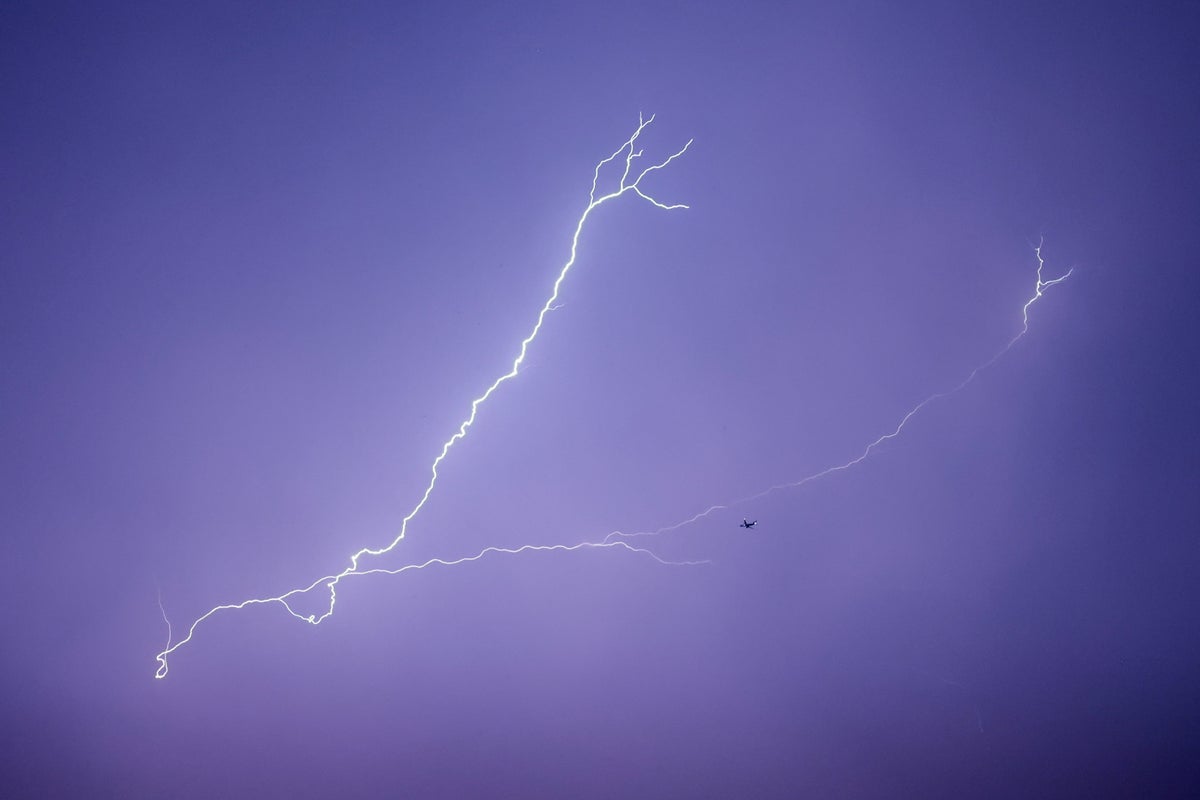

At least 14 people have died across Bangladesh after a series of lightning strikes swept the nation on Monday, officials confirmed.
The fatalities occurred in various districts as sudden, intense thunderstorms brought heavy rainfall and powerful electrical discharges.
Most of the victims were identified as farmers working in open fields and labourers caught in exposed outdoor locations, according to local authorities.
Several others sustained injuries and were transported to nearby hospitals, with some reportedly in critical condition.
Bangladesh, which declared lightning strikes a natural disaster in 2016, experiences hundreds of deaths annually from such events.
This included a particularly severe period in May of that year when over 200 people perished, 82 on a single day.
Experts say the rise in fatal lightning strikes is linked to deforestation, which has led to the disappearance of many tall trees that previously helped draw lightning away from people.
Lightning-related fatalities are common during the pre-monsoon months of April to June, when rising heat and humidity create unstable weather conditions.
Higher temperatures lead to more water vapour in the atmosphere, which cools at higher altitudes and generates the electrical charges that spark lightning. This has made lightning strikes more common and more deadly.
Neighbouring India is witnessing an alarming rise in lightning-related deaths, driven in part by the effects of climate change.
Researchers say that lightning strikes have become increasingly deadly in the South Asian country, with over 101,000 deaths recorded between 1967 and 2020 – nearly 1,900 each year.
Even though increasing awareness and urbanisation are expected to protect more people, the study shows that the last decade alone has seen a sharp uptick in fatalities.
While the total number of strikes wasn’t directly measured, the data on fatalities paints a grim picture of lightning activity becoming more unpredictable and frequent across the country.
The average number of deaths per state has risen from 38 per year between 1967 and 2002 to 61 per year from 2003 to 2020, coinciding with India’s population growth to 1.4 billion people, the study, led by researchers at Fakir Mohan University in Odisha, says.