Up next

“It Was Just a Crazy, Odd Race”
When I started taking Mounjaro I was seduced by stories of near-effortless weight loss and studies showing it could dramatically improve my health.
I ignored warnings that the jabs were new and untested because if it could shift the extra pounds after a lifetime of failed diets, get rid of my high blood pressure, sleep apnoea, creaky joints and protect me from the ravages of age then this would be worth the risk of any – as yet unknown – long-term side effects.
After six months I lost two stone in weight, and waved goodbye to all my niggling mid-life ailments. I could not have been happier – or healthier.
But then my hair started falling out.
I’d read that hair loss could be a side effect of taking GLP-1s but experts repeatedly said this only happens as a result of rapid weight loss and the nutritional deficiencies from crash dieting.
That didn’t apply to me at all.
I had lost my weight very slowly (1-2 lbs a week, dropping to 1lb every couple of weeks), had focussed on eating an exemplary wholefood diet packed with protein and fibre, and I swallowed a ridiculously expansive selection of vitamin and mineral supplements every day.
So why on earth was I suddenly pulling huge fistfuls of hair out of the shower tray?
Only when you have experienced it yourself can you imagine the terror of raking your fingers through wet hair to find it coming away in great clumps.
Was this the sting in the tail we jabbers had secretly been fearing all along?

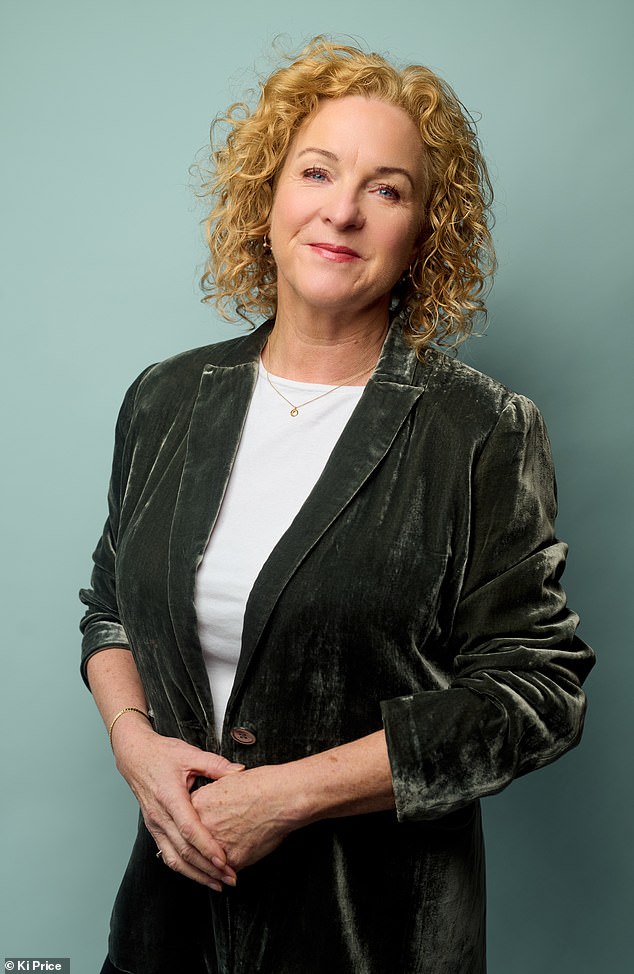
Louise Atkinson was seduced by stories of near-effortless weight loss on Mounjaro – and ignored warnings that the jabs were new and untested

And despite not losing weight too quickly, her hair began falling out in clumps
My phone must have been listening to my shrieks from the bathroom because soon I was being spammed by a stream of social media ads extolling the hair-protecting virtues of seaweed, biotin or caffeine shampoo, hair growth serums, capsules and powders, and endless ‘before and after’ photos enticing me to pay hundreds of pounds to get my glossy locks back.
The Facebook support groups I’d been following were peppered with posts from women fretting about hair loss. Many, like me, simply didn’t fit the ‘rapid weight loss, poor nutrition’ explanation.
Posts saying: ‘My hair used to be really thick. Now it’s just thin and straggly,’ and ‘OMG I’m going BALD!’ – would be met by helpful suggestions to increase protein consumption, take biotin or collagen, try different shampoos. There were so many repeated recommendations for one particular brand of pumpkin seed oil capsules that I suspected they’d employed a stooge to post ‘help my hair’s falling out’ requests in alternating guises just so they could put in a plug for their ‘cure’.
My TikTok feed filled with cartoon graphics claiming my problem was likely to be hormonal. Something as yet unspecified about GLP-1s was triggering a surge of androgens (male hormones), they said, causing a compound called DHT (a byproduct of testosterone) to bind to the androgen receptors in my hair follicles causing them to shrink. What I needed, they repeatedly asserted, was a natural DHT blocker such as pumpkin seed oil or a herb called saw palmetto.
There’s very little proper science to back up any of these claims, but social media is clearly rustling up a tsunami of fear – warning that GLP-1 hair loss could be permanent.
It certainly terrified me. Was being slim worth going bald? I had to find out what was really going on.
A recent (2025) study from the USA recorded a 50 per cent increase in ‘hazard for hair loss’ in women taking semaglutide (Ozempic or Wegovy). The study showed 30 per cent higher odds of ‘telogen effluvium’ – a form of temporary hair loss that usually occurs after stress, shock or childbirth.
But far more worrying, it showed 62 per cent higher odds of androgenic alopecia which is a progressive shrinking of the hair follicles that leads to receding in men and thinning on the crown in women.
Telogen effluvium can happen to anyone, but in women, androgenic alopecia is usually genetic, often starting at midlife – affecting an estimated 20 per cent of women under 50 but up to 65 per cent after menopause when the hair-protective effects of oestrogen drop away. Some women find their hair follicles develop an inherited sensitivity to androgens, which may cause the follicles to shrink, triggering thinning at the crown.
On Instagram, Spencer Kobren, founder and president of the American Hairloss Association warned his 163,000 followers that: ‘This GLP-1 hairloss is being brushed aside as temporary shedding but it is very likely that in some cases these drugs can trigger early onset female pattern baldness.’
Although he admits he’s not a clinician, he has a theory about what’s going on: ‘GLP-1s affect your gut hormones which in turn affect insulin, cortisol, thyroid and sex hormone balance, and this can trigger early onset hair loss if you are genetically predisposed.’
Ominously, he warns: ‘The effects can be very long-lasting.’
When I call him in California, Kobren tells me my vulnerability to permanent hair loss is likely to depend on whether there’s a history of hairloss in my family. ‘My guess is that people with a bald father, brother or mother post-menopause are more likely to be triggered into early onset alopecia by GLP-1s,’ he adds.
That’s a shocker. My dad sported a natty comb-over throughout my childhood, then embraced a shiny bald pate in later life.
I’m thrown into complete panic and track down an expert with the fullest raft of relevant medical qualifications I can find.
Adrian Health is Professor of medicine and consultant endocrinologist at Salford hospital – an acclaimed specialist in hormones and obesity.
He repeats the official line that GLP-1 hair loss is probably caused by nutritional deficiencies and not the sinister hormonal changes being bandied about on social media. In fact, he says, because of their powerfully beneficial effect on blood sugar levels, the GLP-1s are more likely to decrease levels of androgens (male hormones) in women, and not increase them.
Furthermore, he says the DHT scaremongering simply can’t apply to mid-life women he says: ‘The amount of testosterone you are making post-menopause will be miniscule, and if you’re not producing oestrogen or testosterone, then you can’t be having problems with DHT that would affect your hair,’ he says.
When I tell him about the vast and seemingly growing number of GLP-1 users fretting about hairloss he is sympathetic: ‘There’s no clear biological pathway to explain this, but it is possible that there could be something going on that we don’t yet know about.’
He, like Kobren adds, ‘As the pharmaceutical industry is making such excellent profit out of these drugs, they might feel inclined to fund research into what is really going on.’
Superdrug has just launched a Hair Health blood test (£99) which screens for hair-related deficiencies including iron, B12, folate and vitamin D. I jump at the chance to have my nutrient levels checked. There’s some reassurance to see my results are all in the green (for good) category, though B12 and vitamin D sit on the low level of ‘normal from a hair-growth perspective’ despite my already fulsome supplement regime.

Only when you have experienced it yourself can you imagine the terror of raking your fingers through wet hair to find it coming away, writes Louise Atkinson

Three months after the excessive shedding started it has slowed and now stopped and curls are already growing back around Louise’s hairline
I also make an appointment to have a scalp analysis and treatment at Bulb, a holistic hair salon close to where I live in the Cotswolds (£120 for two hours). Georgina, the owner, looks at my hair follicles through a hand-held magnifying device and tells me I have ‘plenty of hair’ and that I ‘need to stop worrying about hair loss’ and put more focus on ‘me time’ and relaxation. The fabulous news is delivered with a blissful cortisol-lowering Japanese head spa massage treatment and I leave the salon walking on air, cortisol levels definitely lowered.
But the spamming on social media continues unabated and I seek further reassurance from a medically trained scalp expert. Philip Kingsley offers a virtual consultation (£200 for one hour) or a face-to-face plus scalp treatment (£345 for two hours) in London’s Mayfair.
Face to face, consultant trichologist, Susie Aikin-Sneath asks questions about my diet and lifestyle, any recent episodes of stress or illness, listens sympathetically to my now near hysterical fears about imminent baldness, asks whether I’ve noticed less hair on my forearms, or thinning of my eyebrows (which I haven’t) all while scrutinising my scalp.
She is very calm and reassuring, telling me she is seeing increasing numbers of mid-life women reporting fat jab related extra hair shedding.
‘The GLP-1s are unlikely to be triggering androgenic alopecia,’ she says, ‘but sometimes the shedding can “unmask” a gradual thinning which might have been slowly happening without you previously noticing.’
She says the vast majority of GLP-1 cases that come to her turn out to be telogen effluvian caused by nutritional deficiencies interrupting the hair’s growing phase. ‘This phase can be very sensitive to all sorts of factors,’ she says. ‘When you’re eating fewer calories and smaller portions it’s hard to get all the nutrients your hair needs. Hair cells are greedy – they are high energy, but they sit at the back of the queue – the body siphons off nutrients to essential functions first.’
Stress or illness, she says, can further drain nutritional resources and can be enough to tip the balance away from hair, so triggering the shedding. It is also possible that the jab medication could be viewed by the body as an extra stressor in some way.
Susie explains the hair I am currently shedding by the handful will have been sitting in a ‘resting’ phase for the last three months and she asks if anything happened three months ago which could have caused me extra stress or upset my nutritional apple cart.
Well, yes. My much-loved father-in-law died unexpectedly, and our dog inhaled a grass seed that resulted in a £10k operation to remove half her lung.
‘That’ll do it,’ she says.
‘The production and regulation of stress hormones cortisol and adrenaline increases the demand for several key nutrients,’ explains nutritionist Rob Hobson, author of The Low Appetite Cookbook (HarperCollins). ‘Stress also raises oxidative stress and inflammation in the body, which uses up antioxidant nutrients such as vitamin C and E at a faster rate. Stress can also reduce stomach acid and slow digestion, impairing nutrient absorption further.’
But is there something else going on to further starve my hair of nutrients?
One of the ways GLP-1s suppress appetite is by slowing the digestive process, and Dr Federica Amati, who is head nutritionist with Zoe, speculates that this factor will inevitably alter the gut environment, changing the way our gut microbes behave – in beneficial and not-so-beneficial ways.
‘GLP-1s also influence hormones, bile acids, the immune system, and even communication along the gut-brain axis, all of which can change the gut environment and the microbes that live there,’ she says.
It is known that gut microbes play a major role in how your body absorbs and uses vitamins and minerals – so perhaps my Mounjaro habit has shifted these microscopic critters out of kilter?
After a thorough examination, trichologist Susie Aikin-Sneath delivers her verdict: ‘You have simple telogen effluvium. It’s temporary. Your hair is already growing back just fine.’
The sense of relief I feel is huge.
She says all I need is a bit of nutrient supplementation to stop the shedding cycle and support my body’s production of new hair and recommends I bump up my B12 and vitamin D with extra supplements, explaining ‘when it comes to hair health, it’s best to punch for “optimal levels” which can be quite a bit higher than “normal levels” that put you safe from deficiency.’
Happily, I don’t need to spend any money on a DHT blocker – chemical or plant-based – or any of the solutions, foams, serums or tablets filling my social media feed.
It makes me so angry to see them trying to cash in on the fears of women like me. ‘Those impressive “before and after” photos you see online are often misleading,’ agrees Susie Aikin-Sneath. ‘There are numerous products and in some cases a lot of misinformation being promoted on social media so you should certainly be wary of extravagant claims of an easy fix. Seaweed shampoos and other off-the-shelf products like this won’t be effective in treating pattern thinning.’
She urges anyone as worried as I’ve been to seek proper advice from a trichologist and tells me if she had suspected androgenic alopecia in my case, she would have recommended a topical anti-androgen solution to apply to my scalp every night to protect my hair follicles from the miniaturising effect of male hormones in my system. Luckily, I don’t need that.
And clearly neither do the majority of jabbers currently worrying about hair loss.
Three months after my excessive shedding started it has slowed and now stopped and crazy curls are already growing back around my hairline. I could easily claim that re-growth is all down to some special shampoo, serum or supplement. But that would be wrong.
Maybe it’s because I’ve reduced my Mounjaro dose to the tiniest maintenance trickle and have boosted my supplement regime. But being reassured that I’m NOT going bald means I can ignore those persistent social media ads, and there’s no doubt in my mind that this has clearly helped lower my stress levels below the hair loss tipping point.