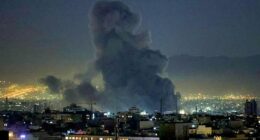
The chaos in global stock markets showed no sign of letting up this morning as Asian equities sank on fears of a drawn-out war in the Middle East.
As Israel and the US continued their attacks on Iran, South Korean shares closed 12 per cent lower, marking their biggest daily drop since 2008, while European indices remained cautious.
Trading was halted on Korea’s benchmark Kospi index after sharp declines triggered circuit breakers for the first time since August 2024.
The escalating conflict across the region is pushing up oil and gas prices, which has a significant impact on net oil importing countries such as South Korea, which relies almost entirely on imports for its energy.
Oil prices have soared to above $80 a barrel after Iran disrupted shipping in the Strait of Hormuz – a key shipping route for crude tankers– raising concerns over supply and what it means for inflation.

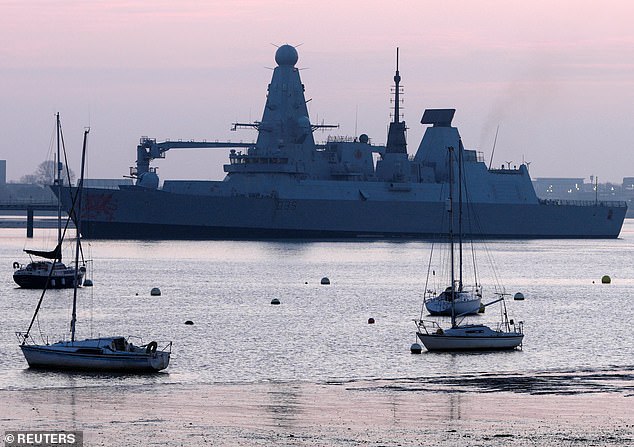
Escalating conflict in the Middle East are causing chaos in global stock markets
Those fears have spread across European stocks, which suffered sharp drops on Tuesday, as brent crude rose 2.75 per cent to over $83 this morning.
Germany’s Dax and the French CAC index made tentative gains in early trading, while Spain’s Ibex slipped 0.3 per cent after Trump threatened to cut off all trade with Madrid.
The FTSE 100 made a small recovery at the open, having closed 2.75 per cent lower yesterday, its biggest one-day selloff since Donald Trump announced his ‘Liberation Day’ tariffs last April.
It is currently trading 30 points up at 10,515.
Natural gas prices have rocketed over 100 per cent this week, and while below the levels seen in the 2022 energy crisis, analysts fear a sharp rise in bills. Stifel analysts forecast the energy price cap may hit £2,500 by the summer.
The threat of a fresh bout of inflation has dented hopes of further interest rate cuts, which is also weighing on markets.
Financial markets now put the chances of a cut at the Bank of England’s March meeting at just 30 per cent – down from 80 per cent last week.
The FTSE was led by a broad basket of companies, including Experian, Intertek and Pearson, which were all trading up over 2 per cent. Miners, defence and energy companies continued their second day of decline.
Richard Hunter, head of markets at Interactive Investor said: ‘There were signs of a floor having been reached in the UK, at least temporarily, where after a couple of bruising sessions the FTSE100 limped to a marginally positive open.
‘It remains to be seen whether this tentative climb is the beginning of a recovery having priced in the implications of the conflict, or whether it is simply a relief rally buoyed by some investors choosing to buy on the dip.
‘In any event, the primary index remains relatively unscathed, with its 5.7% gain in the year to date lower than previous highs but showing some signs of the defensive resilience which has been an investment attraction to global investors in the recent past.’
Meanwhile, precious metals made gains after sharp falls on Tuesday as a stronger US dollar, rising inflation concerns and liquidity demand curbed demand for the haven assets.
Gold rose 1.46 per cent to $5,158 while silver jumped 3.4 per cent to $84.82.
DIY INVESTING PLATFORMS

AJ Bell
AJ Bell
Easy investing and ready-made portfolios
Hargreaves Lansdown
Hargreaves Lansdown
Free fund dealing and investment ideas

interactive investor
interactive investor
Flat-fee investing from £4.99 per month

Freetrade
Freetrade
Investing Isa now free on basic plan

Trading 212
Trading 212
Free share dealing and no account fee
Affiliate links: If you take out a product This is Money may earn a commission. These deals are chosen by our editorial team, as we think they are worth highlighting. This does not affect our editorial independence.
Compare the best investing account for you