Summary
- Marvel Zombies: Black, White & Blood #1 chronicles Spider-Man’s first battle against the undead, offering a fitting end for the character in the Marvel Zombies Universe.
- Previous portrayals of Spider-Man in the world of Marvel Zombies have been brutal and disrespectful to the character, but this new story treats him with much more dignity.
- “Hope” showcases Spider-Man’s unwavering resolve and unbreakable spirit in the face of an unwinnable situation.
The world’s most iconic undead heroes return in Marvel Zombies: Black, White & Blood #1, an anthology of undead action from all-star creators Garth Ennis, Alex Segura, Ashley Allen, Rachael Stott, Javier Fernandez, Justin Mason and Clayton Cowles. Its three short stories focus on Daredevil, Moon Knight, and more in moments of time across different zombie-infested universes, but one in particular feels especially cathartic. It’s been nearly 18 years since the first Marvel Zombies comic released, but Black, White & Blood #1 is the first time Spider-Man has ever taken a heroic last stand against the hordes of ravenous undead.
The fates of do-gooders across the Marvel Zombies franchise are anything but glorious. Most are gruesomely killed or reanimated to enact even worse brutalities upon others. Spider-Man’s fates in particular have run a miserable gamut, ranging from first casualty to final survivor, first victim, and eventual progenitor of the zombie plague. But somehow, Black, White & Blood #1 is the first chance he’s had to go down fighting. Alex Segura’s “Hope” succinctly explores a possible final moment for the character when faced with dramatically ironic absolution. The short story has the farcical stylings of its cynical franchise, but boasts enough respect to serve as Peter Parker’s first fitting end in the Marvel Zombies Universe.
Spider-Man’s Perverse History in Marvel Zombies
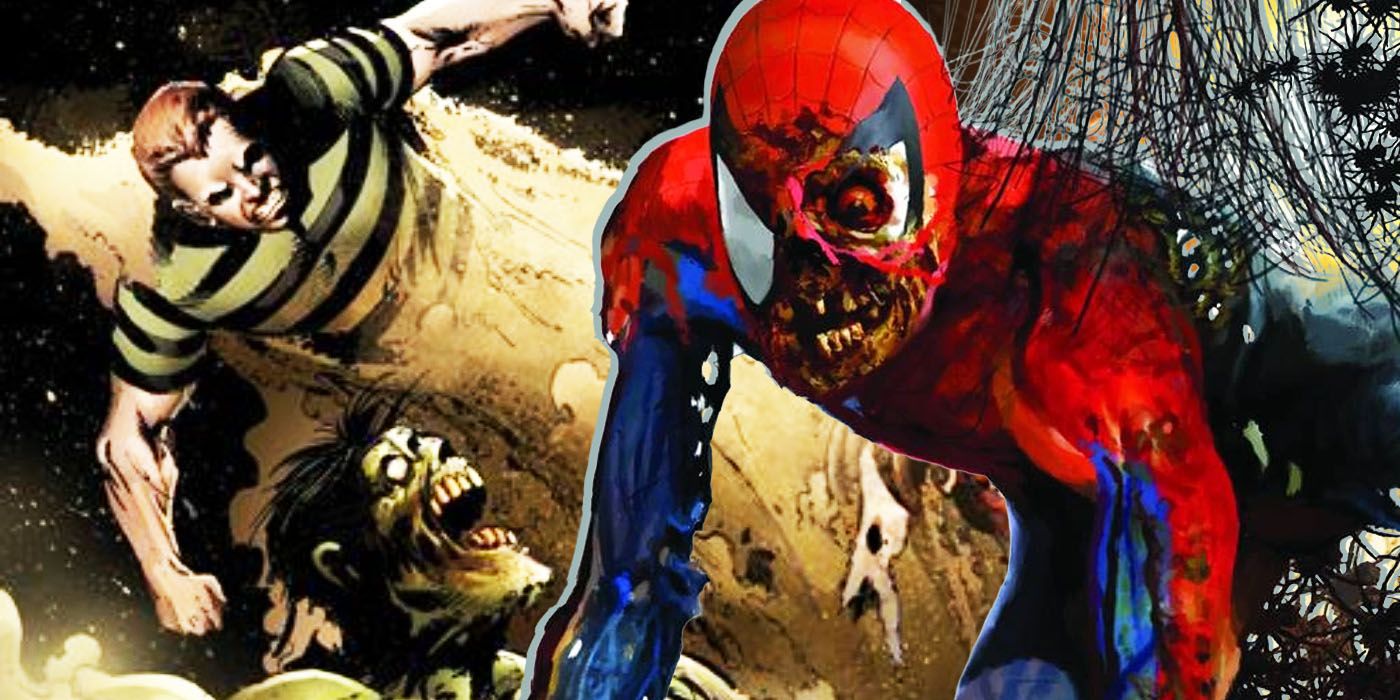
It would be an understatement to say that Marvel Zombies has disrespected Spider-Man in the past. In fact, his notorious portrayal across the series’ history may reach farther than the franchise itself. In the original incarnation of Marvel Zombies (by Robert Kirkman and Sean Phillips) Peter is consistently portrayed as the most bereaved of the heroes. Having eaten Aunt May and Mary Jane during the outbreak of the virus, Spider-Man spends every moment not consumed by his violent hunger regretting his actions. Parker even admits that wearing the Spider-Man mask lets him distance himself from his guilt. These emotions are treated as an outlier, with Iron Man at one point using them to comically prove that the tortured webhead had already eaten.
While the first version of Spider-Man seen in Marvel Zombies earned divided reception, it’s the second that’s arguably the most infamous. In Marvel Zombies Return: Spider-Man (by Fred Van Lente and Nick Dragotta) Earth-2149’s zombified webhead arrives in an untarnished universe that bears a resemblance to Silver Age Marvel. Things quickly go awry as the Sinister Six attack, and react with shock when Spider-Man begins eating Kraven the Hunter. Panicked and confused, Sandman encounters his native Spidey while trying to flee, leading to an out-of-context moment known by even casual Marvel fans. Sandman plunges himself into Spider-Man, overinflating his insides. The hero waddles helplessly, calling out for Gwen Stacy before erupting in a mess of sand and viscera.
Marvel Zombies Finally Gives Spider-Man a Dignified Ending
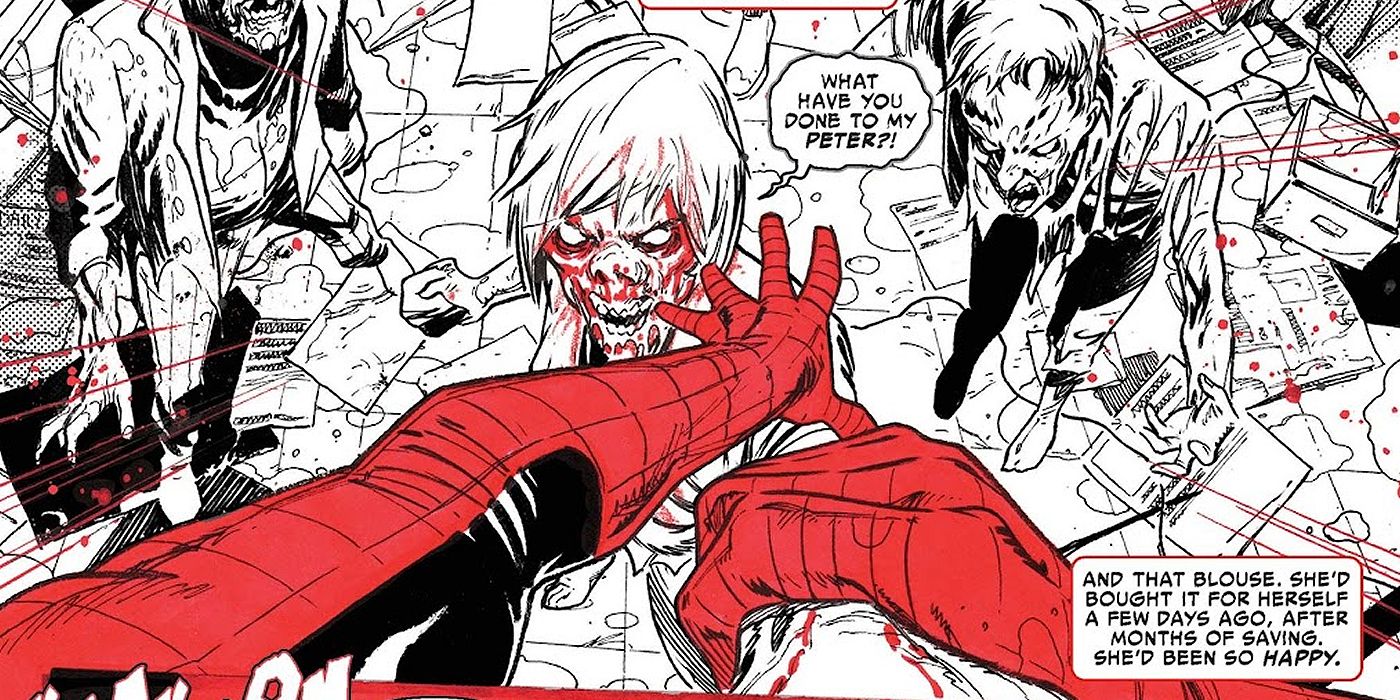
While Black, White & Blood‘s “Hope” isn’t any less tragic for the doomed Peter Parker, it certainly offers something new in how he meets his end. The story depicts Spider-Man defending a small group of surviving civilians against a horde of zombified undead. Unable to reach the Avengers, Parker resolves to hold out as long as he can after remembering a speech from Aunt May about keeping hope alive. The wallcrawler is emboldened by optimism against the inevitable and doggedly fights to protect a crew of scared civilians that includes public rival J. Jonah Jameson. Peter is eventually caught off guard by a zombified Aunt May, whose appearance stuns her nephew long enough to infect him.
Read Related Also: Watch: Man Arrested After Complaining About Palestinian Flags Flying in London, Criticising Mass Migration
Spider-Man isn’t ultimately successful in his story, but his character-driven downfall feels far more dignified than previous outings against the zombie plague. “Hope” feels more personally driven, focusing on Peter Parker rather than simply including him as collateral damage. No longer an unsuspecting casualty, the quintessential street hero is able to go out on his own terms and create a positive change through his sacrifice. The webhead is felled by the infection of his loved ones, but it feels far less ill-willed than making him the one directly responsible for their deaths. It gives Spider-Man the stronghearted send off he deserves something that has been denied the hero for far too long.
Spider-Man’s Horror-themed Variant of the Classic Last Stand
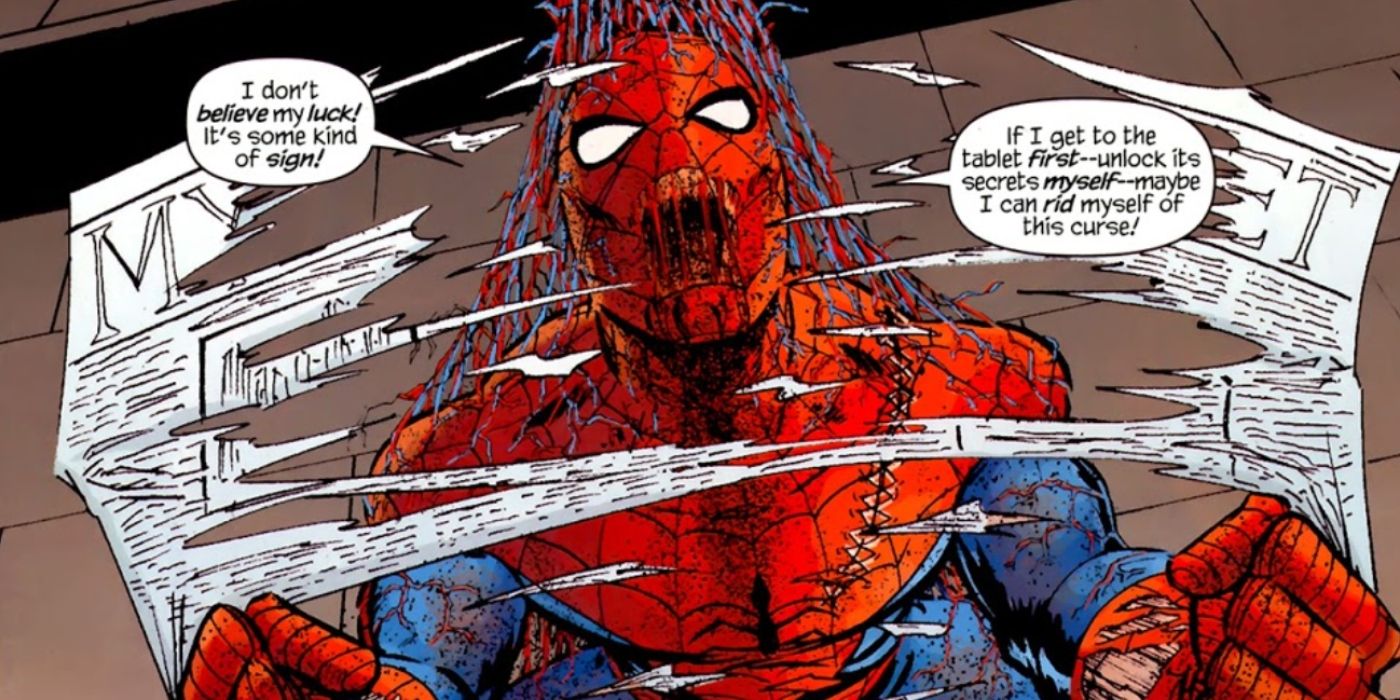
Readers have been able to see Spider-Man battle and even survive the zombie outbreak in 2018’s Marvel Zombies and 2019’s Marvel Zombies: Resurrection. But Marvel Zombies: Black, White & Blood is the first time Peter Parker has succumbed to it respectfully. Similar to the famous Bolivian Army ending featured in Butch Cassidy & The Sundance Kid, Spider-Man stares down an unwinnable situation with the resolve of a champion. Unfortunately, the credits don’t roll to save Peter Parker, instead lingering just long enough to show readers the grim confirmation of his end. And while Black, White & Blood may be a new moment in Spider-Man’s adventures among the undead, these moments do echo a previous Spider-death.
Exactly 20 years and five days before the release of Marvel Zombies: Black, White & Blood #1 came 2003’s Amazing Spider-Man #500. In the landmark issue (by J. Michael Straczynski, John Romita Sr., John Romita Jr., Scott Hanna and Randy Gentile), Peter Parker witnesses what he calls his own last stand. In a motorcycle jacket and web-less mask, he faces a wave of police officers ready to shoot him down for manslaughter. Knowing he’s met his end, and knowing his past self is witnessing it, the elder Parker valiantly jumps headfirst into the mayhem that he knows will end his life. Given the quiet anniversary of the the impactful moment, it feels almost purposeful that Black, White & Blood #1 echoes the story’s climactic appeal.
“Hope” is an admittedly straightforward story. It doesn’t try to introduce anything groundbreaking to the Spider-Man mythos, but uses what already exists to powerful effect. Across 10 brief pages, Marvel Zombies: Black, White & Blood #1’s middle section pushes Peter Parker’s heart and will to their limits, and shows them to be unbreakable to his last breath.
Marvel Zombies: Black, White & Blood doesn’t feel like a continuation of the Marvel Zombies brand as much as an expansion of it. The series has committed to telling short, engaging stories about zombies in a wide variety of situations that let any idea prove itself as interesting without risking a worn-out welcome. Four issues have currently been announced for release, with Marvel Zombies: Black, White & Blood #2 arriving November 29th.