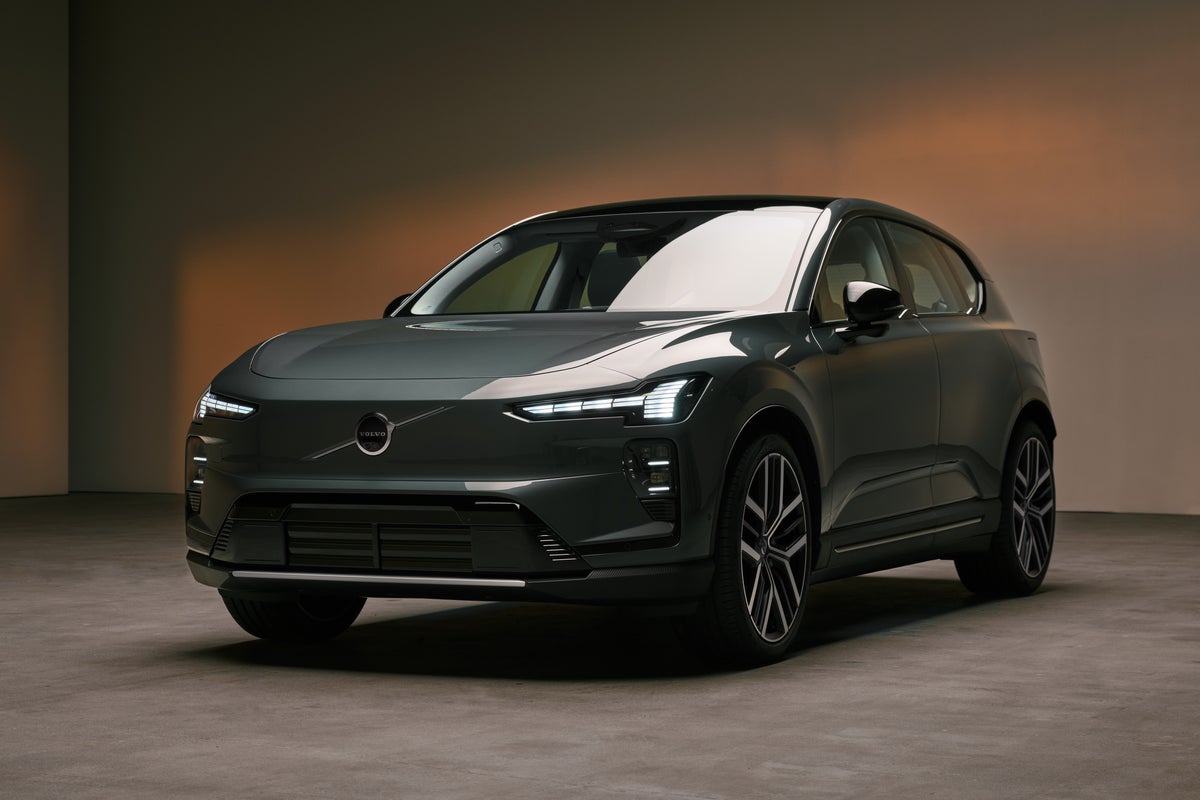

Volvo has revealed its new EX60, an all-electric mid-size SUV that represents a significant step in the brand’s transition away from petrol and diesel power. Designed from the outset as an electric car, the EX60 replaces Volvo’s biggest seller, the combustion-engined XC60, and sits at the heart of Volvo’s future electric lineup. The EX60 combines long range, rapid charging, next-generation software and updated safety systems.
The EX60 is built on Volvo’s new SPA3 electric vehicle architecture, the first production model to use this platform. According to Volvo, SPA3 has been developed to support a new generation of electric cars with improved efficiency, reduced complexity and lower manufacturing costs, while allowing vehicles to improve over time through software updates. The company says this approach will underpin all its future electric models.
Volvo claims the EX60 sets a new benchmark for the brand – and its stats measure up well against its biggest rival, the new BMW iX3. In its longest-range configuration, the all-wheel-drive EX60 can travel up to 503 miles on a single charge – a few miles more than the iX3’s 500-mile claim.
Other versions of the EX60 offer shorter but still substantial ranges, with the entry-level rear-wheel-drive model quoted at up to 385 miles, while an all-wheel-drive mid-range version is rated at up to 410 miles. Volvo says these figures are intended to remove remaining concerns around long-distance electric driving for family car buyers.
Charging performance is another key focus. Volvo says the EX60 can add up to 211 miles of range in just 10 minutes when connected to an ultra-fast 400kW charger – BMW claims up to 231 miles after 10 minutes for its iX3 model. Charging from 10 to 80 per cent is quoted at around 19 minutes for the longest-range EX60.
Håkan Samuelsson, who returned as chief executive of Volvo Cars earlier this year, said: “The new, all-electric EX60 changes the game in terms of range, charging and price and represents a new beginning for Volvo Cars and our customers.
“With this car, we remove all remaining obstacles for going electric. This fantastic new car is also a testament of what we are capable of at Volvo Cars, with an all-new product architecture introducing new key technologies – mega casting, cell-to-body and core computing.”
As Samuelsson said, the EX60 introduces several new manufacturing and engineering technologies for Volvo. One of the most significant is cell-to-body battery construction, which integrates the battery cells directly into the car’s structure rather than housing them in a separate pack. Volvo says this increases energy density, reduces weight and improves charging performance, while also lowering the car’s overall carbon footprint. The EX60 is also the first Volvo to use large-scale aluminium “mega casting”, replacing hundreds of smaller components with fewer, larger castings to reduce material use and production complexity.
As a result of all this, Volvo claims the EX60 has the lowest carbon footprint of any electric car it has produced so far, matching that of the smaller EX30.

Get your charger and tariff now.
Save happily EV after.
T&Cs apply
Find out more
ADVERTISEMENT
Get your charger and tariff now.
Save happily EV after.
T&Cs apply
Find out more
ADVERTISEMENT
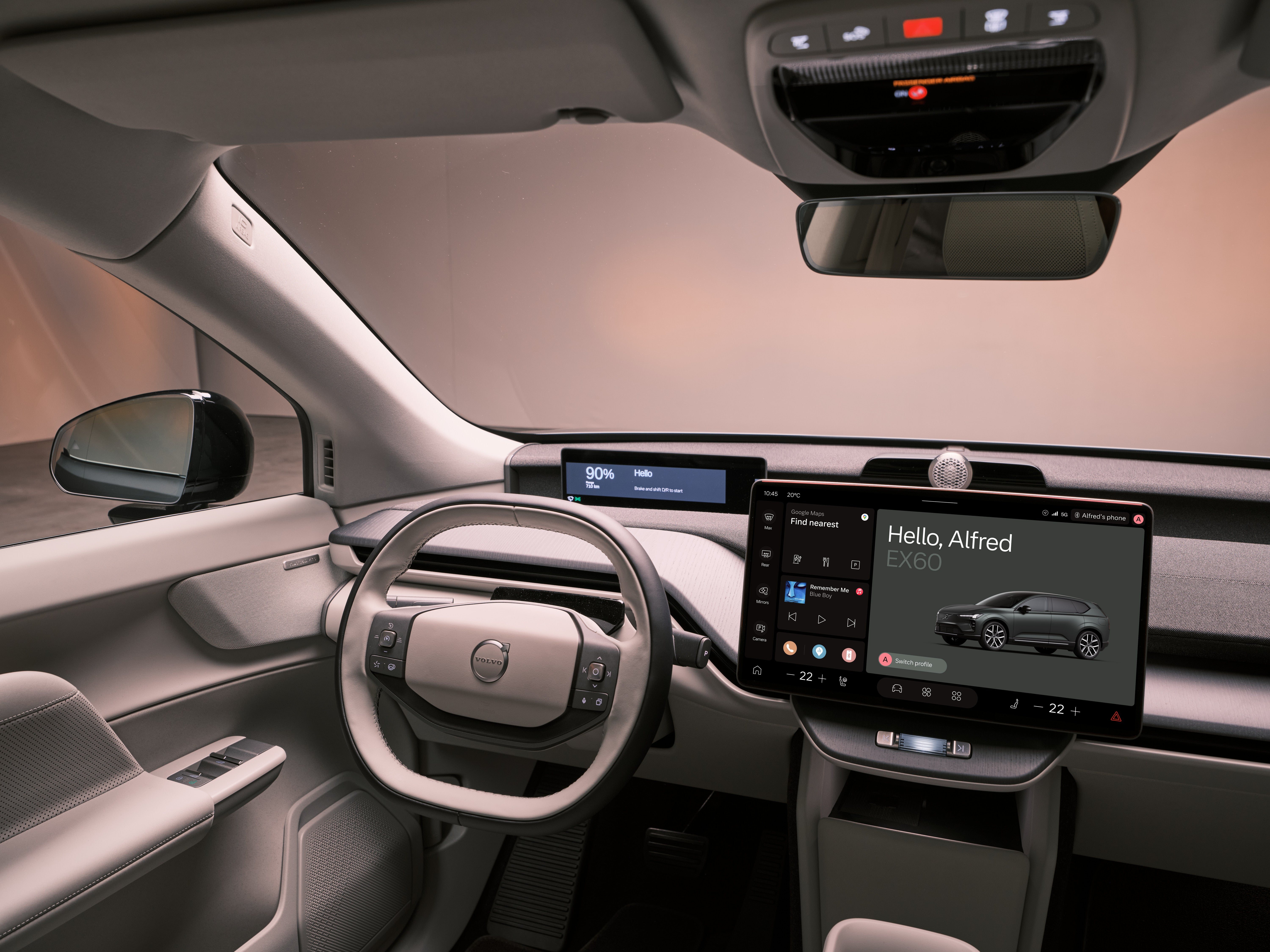
Software and digital systems play a central role in the EX60, too. The car is powered by Volvo’s new core computing system, known as HuginCore, which processes data from the vehicle’s sensors and supports driver assistance, infotainment and over-the-air updates. Volvo says the EX60 is its most intelligent car yet and the first to launch with the Google Gemini AI assistant integrated into the vehicle. This is designed to allow more natural voice interaction, with drivers and passengers able to speak conversationally rather than relying on fixed commands.
Volvo says the infotainment system has been designed to be faster and more responsive than before, with quicker access to key functions and reduced lag when using navigation, media and voice controls.
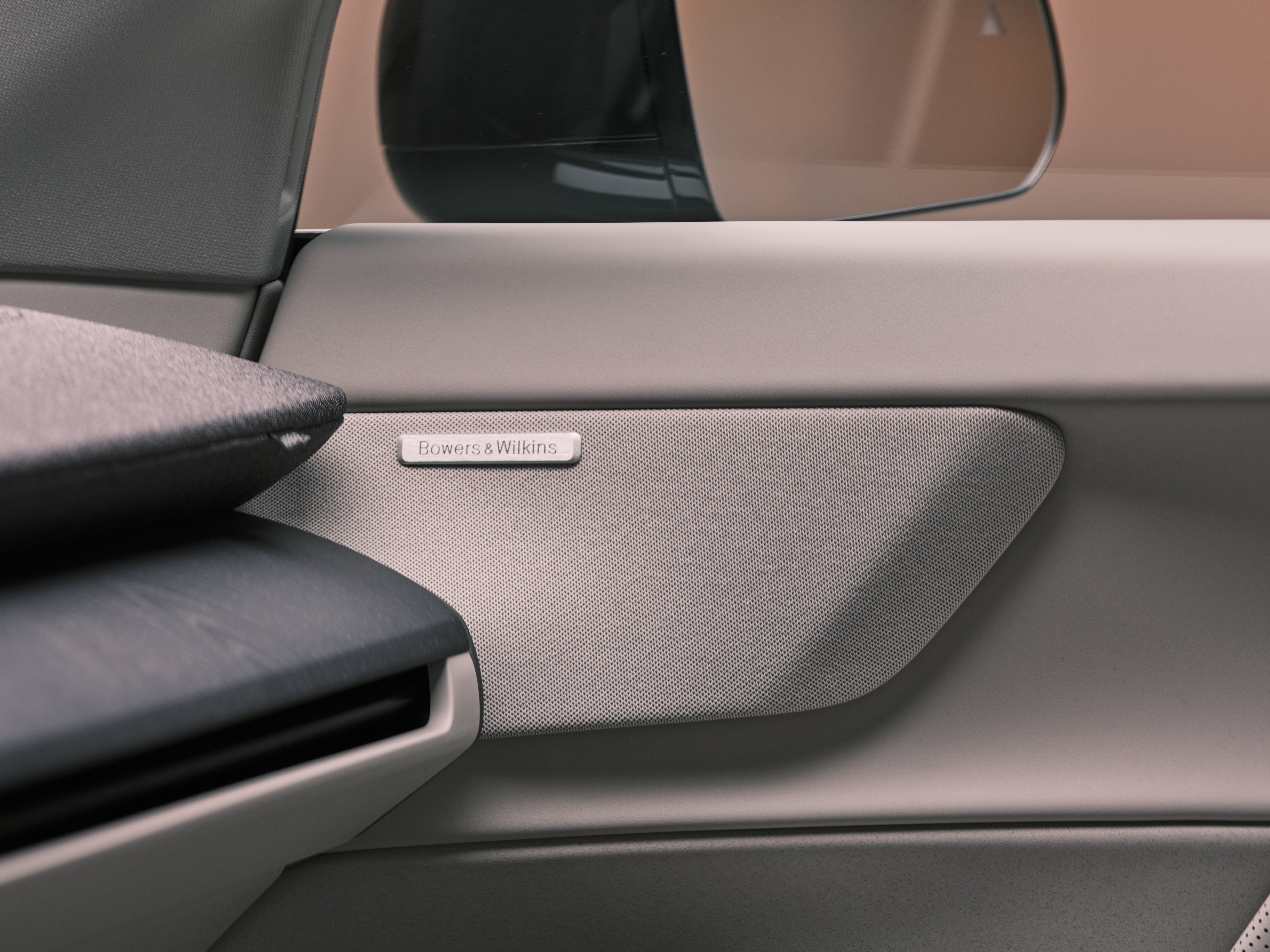
The EX60 will also be the first Volvo to offer Apple Music with Dolby Atmos pre-installed, using a new 28-speaker Bowers & Wilkins audio system that includes speakers in the headrests of the front and rear seats.
Of course, safety remains a core element of the EX60’s positioning. Volvo describes the car as one of the safest it has ever built, with a strengthened safety cage using boron steel and a wide array of sensors that monitor the road, other vehicles and the driver. A new multi-adaptive safety belt is designed to offer more personalised protection for front-seat occupants, while the car’s software-defined architecture allows safety systems to improve through updates.
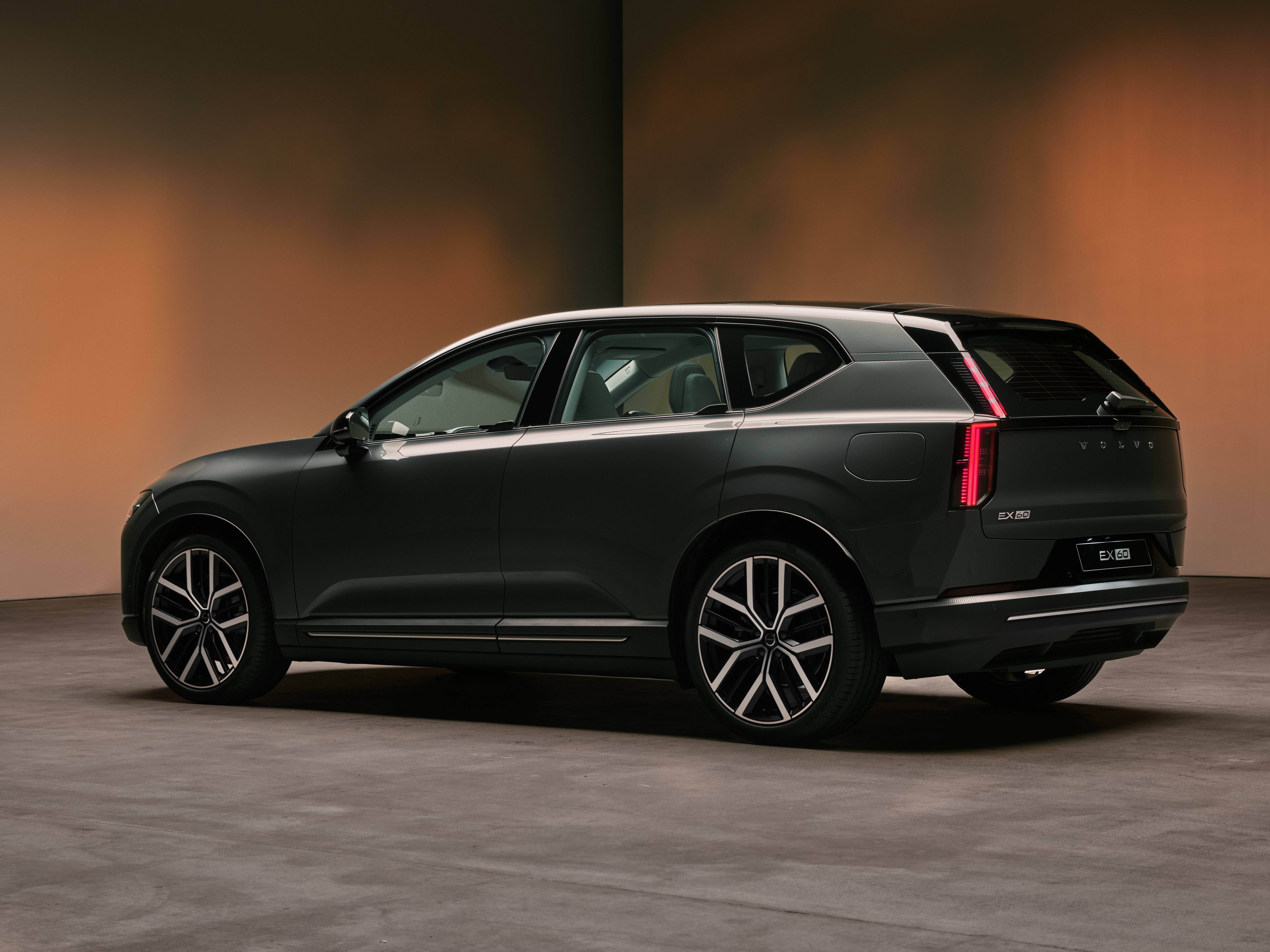
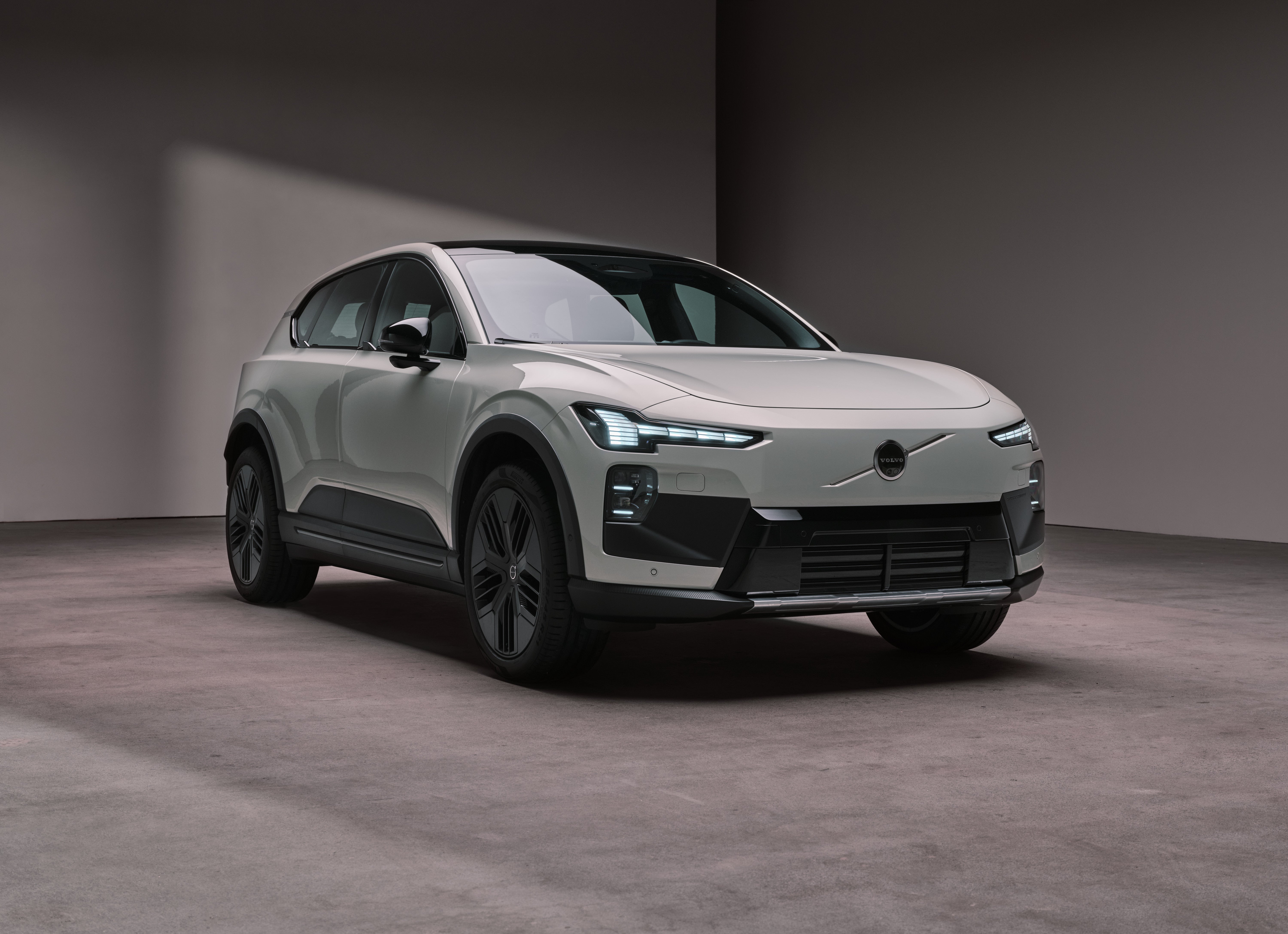
The EX60 has been designed to balance familiarity with a clear shift into Volvo’s electric future. While it’s clearly a Volvo with proportions closely mirroring those of the outgoing XC60, the EX60 features shorter overhangs and a smoother overall profile designed to improve aerodynamic efficiency.
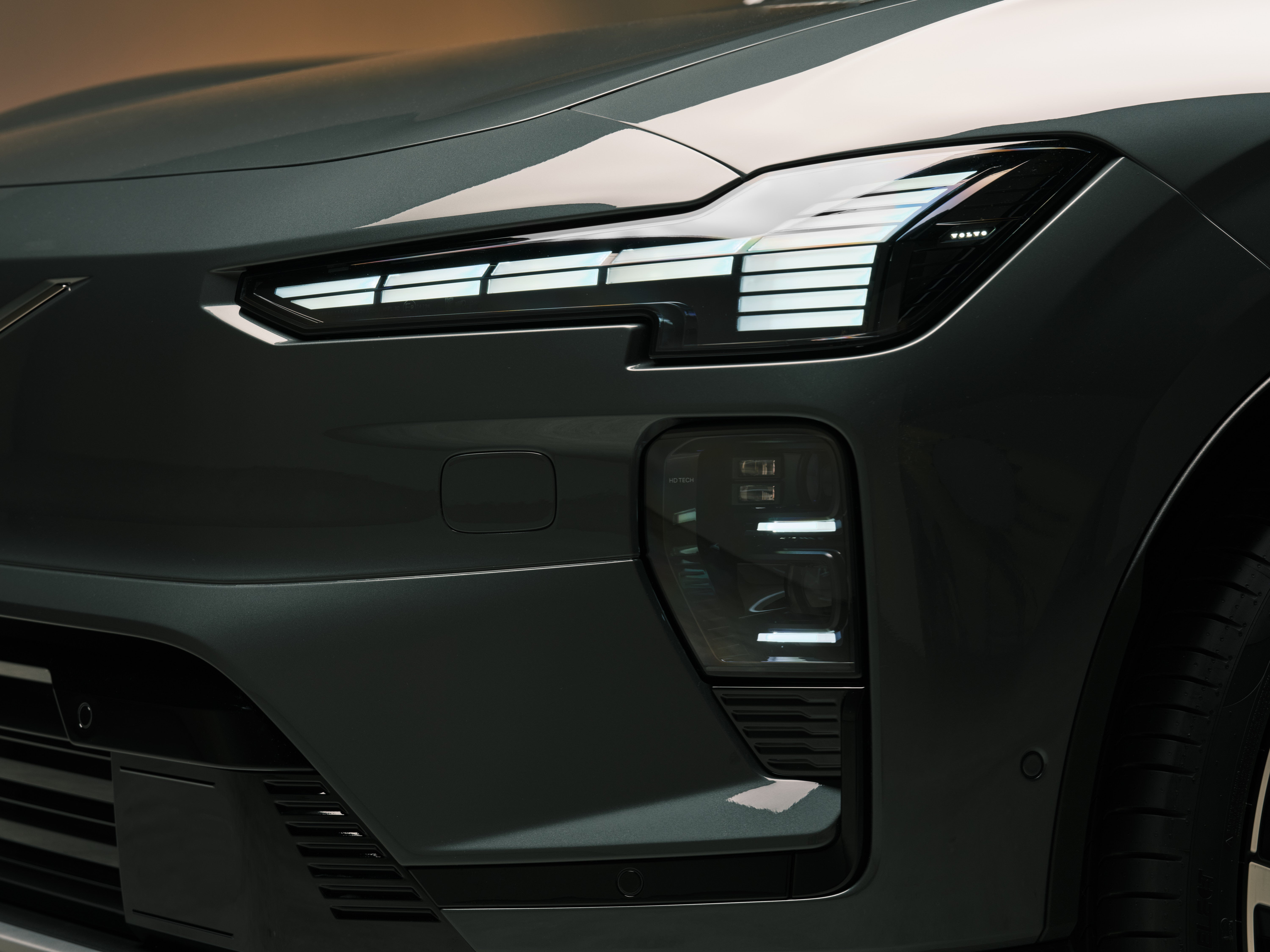
Volvo says details such as a low, clean front end, a gently sloping roofline and carefully sculpted body sides all contribute to a drag coefficient of 0.26, helping to maximise driving range without compromising everyday usability. Signature Thor’s Hammer lighting has been reinterpreted for the electric era, while flush surfaces and tightly integrated details are intended to give the car a more modern, technically focused appearance.
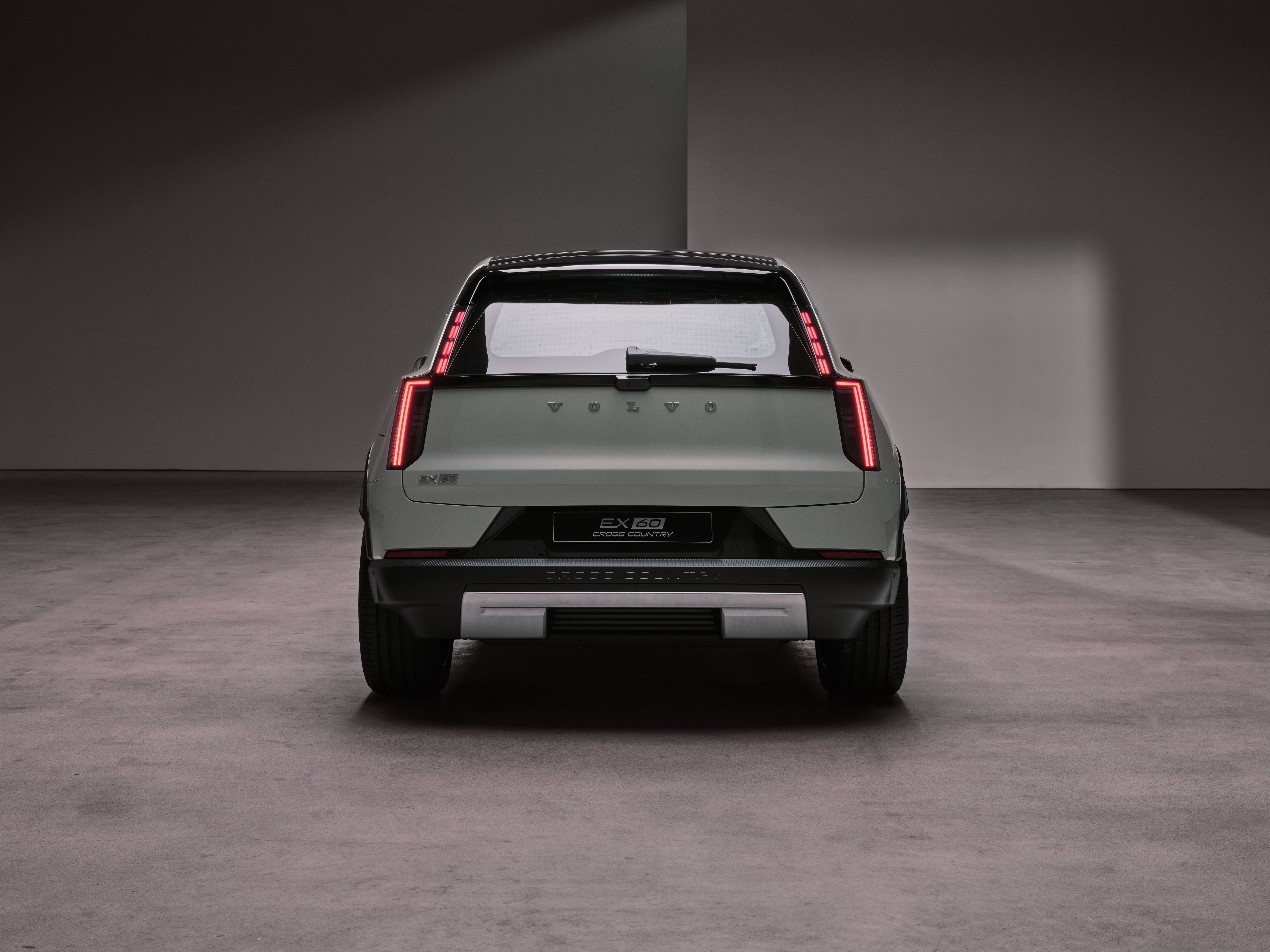
The rear of the EX60 has also been developed with aerodynamics in mind, with tapered surfaces and clean light graphics designed to reduce turbulence as air flows away from the car. Volvo says this approach allows the EX60 to maintain the upright, confident stance expected of a mid-size SUV, while still delivering the efficiency benefits needed to support its long-range figures.
Inside, Volvo has focused on Scandinavian design principles with natural materials and muted colour palettes and an emphasis on clean lines and a reduced number of physical controls.
A squared-off steering wheel has a slim driver display in front of it with a landscape-oriented central touchscreen. The flat electric platform allows for a long wheelbase and a completely flat floor, which Volvo says translates into increased rear legroom and a more open feel for passengers. Storage solutions have been integrated throughout the cabin, including large door bins, a spacious centre console and additional compartments designed to suit family use.
Alongside the standard EX60, Volvo has also revealed the EX60 Cross Country, a more rugged model that draws on the brand’s long-running Cross Country line. First introduced in 1997, Cross Country models are intended to offer a more robust appearance and some very mild off-roading ability.
“The EX60 Cross Country is the EX60 for anyone with a ‘go anywhere’ attitude,” said Erik Severinson, Volvo’s chief commercial officer. “Built to do more and see more, the EX60 Cross Country embodies not only the sense of exploration but also a reflection of achievement. We basically invented this segment, and we felt the EX60 was the perfect next Volvo to get the Cross Country treatment.”
Compared with the standard EX60, the Cross Country version sits 20 mm higher off the ground, with air suspension allowing drivers to raise the ride height by a further 20mm if required. At higher speeds, the suspension can lower the car automatically to improve stability and efficiency. Volvo says this flexibility is designed to suit drivers who regularly switch between motorway journeys and rougher surfaces.
The EX60 Cross Country features unique wheels, wider wheel arches, stainless-steel skid plates and distinctive Cross Country branding. A new exterior colour, Frost Green, is exclusive to the model and is inspired by Scandinavian landscapes. Despite its tougher appearance, Volvo says the Cross Country retains the same core electric technology as the standard car.
The EX60 range will be offered with three main powertrain options, known as P6, P10 and P12. The P6 is rear-wheel drive, while the P10 and P12 use all-wheel drive. Volvo says the P10 will be the first Cross Country variant to become available, followed by the longer-range P12.
The first EX60 deliveries in the UK will be in ‘late summer’ with the P6 model starting from £56,860, undercutting BMW’s new IX3 which costs from £58,755. However, that entry-level BMW claims 500 miles of range, which is well ahead of the entry-level Volvo EX60 P6’s 385 miles.