A secret military aircraft painted to look instead like a civilian plane. Multiple attacks that killed all suspected narcotraffickers on a boat sailing on the open ocean somewhere in the Caribbean. Incendiary allegations that the attack could amount to a war crime.
It’s a story with all the ingredients necessary to spark a media frenzy and corresponding public outcry denouncing more seemingly unlawful conduct carried out by agents of the Trump administration.
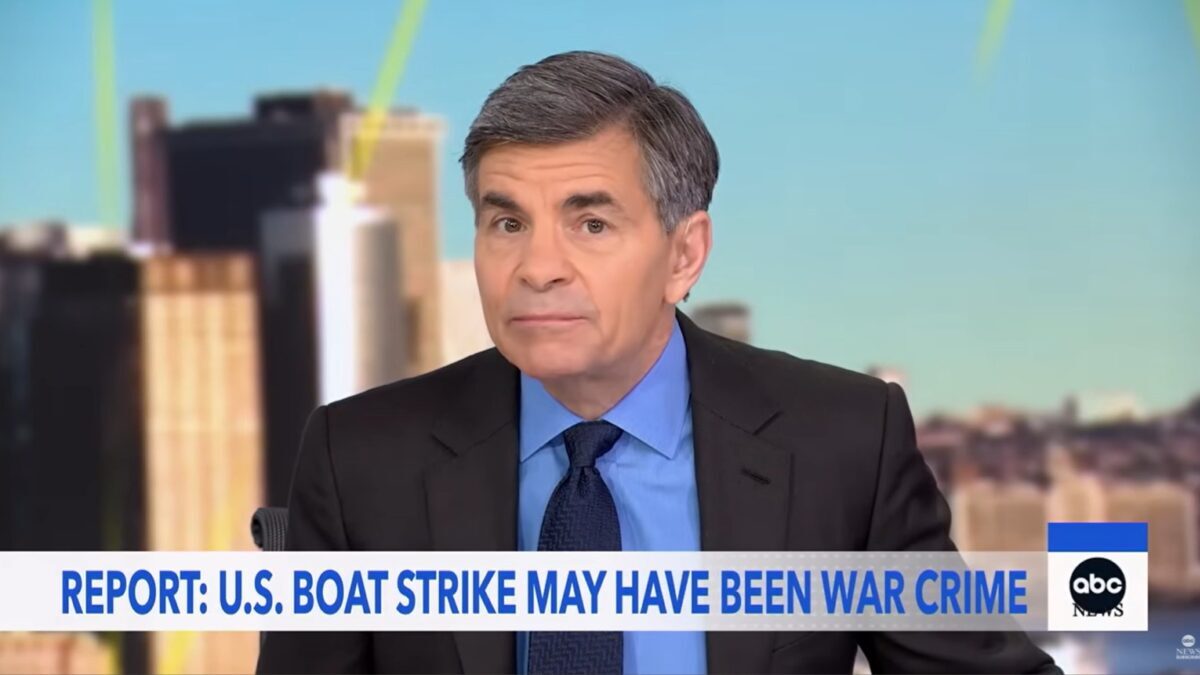
This is precisely what happened after The New York Times published a sensational news report last week claiming the very first known narcotrafficker boat strike may have constituted the war crime of perfidy. Within a day, media outlets such as Huff Post, Al Jazeera, The Hill, AP, ABC News, and more ran separate stories involving the incident. Each subsequent article referred to the story reported by the Times the previous day, and each one reiterated the “perfidy” claim.
But the allegation that the attack may have constituted perfidy is without merit. Not only does this initial story misrepresent the standard established in international law for perfidious conduct, the factual circumstances reported by the initial story fail to authenticate the claim that perfidy was committed even if the correct criteria had been articulated.
By misleading the public into believing Department of War personnel may have engaged in criminal conduct, sensationalist news stories such as coverage of this allegedly “perfidious” attack artificially erode public trust in the military and fuel unjustified criticism of the current administration.
To understand why the initial attack on suspected narcotraffickers on the high seas did not amount to perfidy, it is helpful to clarify exactly what the international law standard is and how it is addressed in U.S. military doctrine.
Defining Perfidy
The starting point for the analysis, like many similar inquiries, is the Department of Defense Law of War Manual. First issued in June 2015 and now on its 4th edition, this publication “provides authoritative legal guidance for DoD personnel in implementing the law of war and executing military operations.”
As the manual indicates, perfidy consists of “acts that invite the confidence of enemy persons to lead them to believe that they are entitled to, or are obliged to accord, protection under the law of war, with intent to betray that confidence.” The manual notes “feigning civilian status and then attacking” is one potential example of perfidious conduct, yet doing so “to facilitate spying or sabotage” is listed as an example of conduct that does not constitute perfidy.
Although the United States has not ratified Additional Protocol I (1977) to the 1949 Geneva Conventions, this treaty also includes “intent to betray” the enemy’s confidence as an element of perfidy. This is a definition the Law of War Manual directs the reader to “consider.”
Whether referring to U.S. military doctrine or relevant sources of international law, then, intent to betray an adversary’s confidence is required to establish that perfidy has been committed.
Intent Not Established
This is an important point to emphasize because the facts reported by the initial Times story fail to establish this intent, and the primary expert source consulted for the article misrepresents the standard for perfidy altogether.
Instead, the sensational claims presented rely on two primary factual points. First, the story reports an assertion from three unidentified sources that the aircraft in question “was not painted in the usual military gray and lacked military markings.” Second, anonymous sources also claim that the “aircraft swooped in low enough for the people aboard the boat to see it.”
Even if these speculative factual assertions are regarded as true, nothing reported in this story establishes that the intent of flying an aircraft that “lacked military markings” was to betray the confidence of the suspected narcotraffickers. Nor is it clear that when the plane “swooped” low enough to be seen, it approached close enough for the apparently missing military markings to be noticeable by the crew on the boat.
Instead of reporting facts that could potentially establish the necessary intent, the story presents a quote from a retired former deputy judge advocate general for the U.S. Air Force claiming, “If the aircraft flying above is not identifiable as a combatant aircraft, it should not be engaged in combatant activity.”
This is an interesting opinion offered by a source with seemingly compelling professional credentials. Even so, this observation fails to articulate a legitimate standard by which to assess whether perfidy actually was committed.
The story goes on to present expert commentary from two other sources who specialize in international law, but both offer rather more reserved and circumspect opinions regarding the controversial perfidy allegation. This restraint is warranted by revelations reported in the news article that this was the very first strike on suspected narcotraffickers, which suggests people on the boat were not expecting to be attacked in the first place, and that the aircraft was “‘squawking’ its military identity via radio signals,” which indicates the crew did not intend to conceal the plane’s military character at all.
In short, nothing in this Times article comes close to demonstrating the aircraft feigned civilian status then attacked the target while intending to betray the confidence of the suspected narcotraffickers on the boat.
Media Frenzy
Even so, the journalists situate their “perfidy” allegations in the broader context of claims that the Trump administration has excluded “many military lawyers and operational experts who would normally be involved” in planning for boat strikes and that War Secretary Pete Hegseth “has sought to undercut the role of military lawyers as an internal check, including by firing the top service JAGs in February.”
The article also notes the “legitimacy” of the determination by the Trump administration that the United States is in an armed conflict against narcotraffickers “is widely disputed,” which “has put attention on ways particular attacks might have violated the laws of war.”
The media frenzy sparked by this sensationalist “scoop” simply adds fuel to the fire of political condemnation, even though subsequent reporting from other outlets builds on the initial speculative story published by the Times without accounting for the shortcomings inherent in the article or independently establishing that perfidy was, in fact, committed.
Clarification Needed
In light of the potential adverse effect on good order and discipline within the military indicated by separate media reporting on “confusion and worry some service members have” expressed about the lawfulness of orders to engage in operations such as attacks on suspected narcotrafficking boats, it is a national security imperative to clarify with precision the legal standards that actually apply in practice as a matter of doctrine.
While political motives may fuel media controversy that creates and perpetuates criticism of the Trump administration, news organizations such as the Times are expected to implement ethical standards directing journalists “to seek the truth and help people understand the world.”
A news article constructing the false impression that U.S. military members have committed the “war crime” of perfidy while fueling unwarranted condemnation of the current administration misses the mark of ethical journalism, no matter which news outlet publishes the story.
Brian L. Cox is an adjunct professor at Cornell Law School and a journalism graduate student at Carleton University. He retired from the U.S. Army in 2018 after 22 years of military service, including seven years as a military lawyer.