
Labour’s plan to use AI ‘chat bots’ to screen non-urgent calls to police could lead to victims of crime wasting time on ‘inane’ and ‘pointless’ online chats, the Conservatives have warned.
Shadow Home Secretary Chris Philp urged the Government to concentrate on reversing declining police numbers instead.
A new police reform White Paper, published by Home Secretary Shabana Mahmood on Monday, proposed rolling out artificial intelligence ‘chat bots’ to ‘create efficiencies in triaging non-urgent online queries’ from members of the public.
Police 999 control rooms will also use ‘AI-assisted operator services’ to help call handlers deal with tasks more effectively, it said.

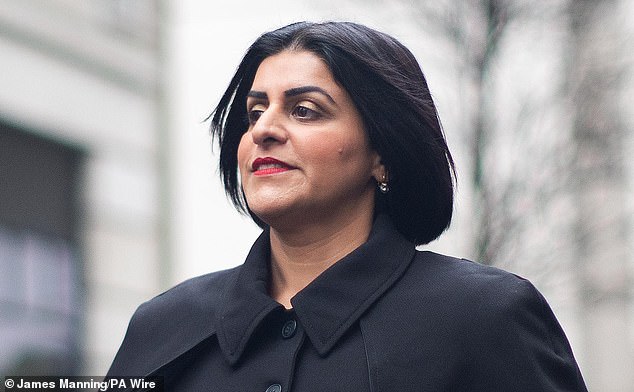
Shabana Mahmood, the Home Secretary, suggests wider use of artificial intelligence will save millions of hours in police time
‘Chat bots’ are computer programs which use AI to mimic a real conversation.
But their use by commercial organisations such as banks, utility companies and retailers can lead to frustration for members of the public who find themselves caught in a ‘loop’ or blocked by computer glitches.
Mr Philp said: ‘Shabana Mahmood is desperately trying to fill the hole she has left behind with rapidly falling police numbers.
‘Victims of crime want a proper response from the police, not some inane chatbot.
‘We need crimes to be investigated and criminals arrested, not pointless chat.’

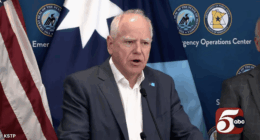
Shadow Home Secretary Chris Philp said the plan to use AI ‘chat bots’ to screen calls to police could lead to victims of crime enduring ‘pointless’ online chat
He added: ‘The Home Office has not thought through all the risks.
‘Shabana Mahmood’s plans will let down victims.
‘She needs to urgently reverse the drop in police numbers which she is presiding over.’
The Government’s White Paper suggested broader use of AI to carry out administrative tasks – such as analysing CCTV images and recording crimes – will save up to six million policing hours a year, the equivalent of 3,000 full-time officers.
David Spencer, head of crime and justice at the Policy Exchange think-tank and a former detective chief inspector with the Metropolitan Police, said: ‘Although there is potential from new technologies like AI bots to make policing more efficient and better at fighting crime, the implementation must be done with great care.
‘The West Midlands Police Maccabi Tel Aviv scandal shows how badly wrong AI can go when these tools are used by people who don’t know what they’re doing.’
Earlier this month West Midlands chief constable Craig Guildford was forced to resign after it emerged so-called evidence gathered by the force to justify banning Israeli fans from a fixture at Aston Villa in November had been based on false material from an artificial intelligence search.
Home Office data issued last week showed the number of police officers in frontline roles has plummeted under Labour to the lowest level in six years.
There were 67,085 officers in ‘visible frontline operational’ roles in England and Wales at the end of March last year.
It comes despite Labour’s election manifesto pledge to put ‘13,000 additional neighbourhood police and community PCSOs’ back on the beat.
The latest number of frontline officers was the lowest since 2018 to 2019 when the total fell to a record low of 63,000.
At that point, the decline prompted the then Conservative government to launch a drive to recruit 20,000 additional officers.
The Tories met their pledge in 2023 and the number of officers in visible frontline roles peaked at just under 77,000 in March that year.
In the following 12 months it fell by 4,700, however.
And during the year to March last year – most of which was under the Labour government – it fell by more than 5,000 ‘full-time equivalent’ officers.
Ms Mahmood has set out changes which will slash the number of forces in England and Wales from the current 43.
No figure has yet been set for the final number of forces but it could be as low as 12.
It will also create a National Police Service which will take on serious and complex crime investigations and counter-terrorism.
Labour insists its reorganisation will free up officers currently employed in backroom administrative jobs so they can be reallocated to frontline roles.
However, concern has been raised that a shake-up of such magnitude will come with huge initial costs and absorb huge amounts of senior officers’ time for years.