
With another spell of hot weather forecast this week and amber heat-health alerts in place across much of England, many households will be weighing up whether it is finally time to buy an air conditioner. For some, a portable unit is a quick fix for the next few uncomfortable nights. For others, repeated summer heatwaves may make a professionally installed system feel less like a luxury and more like a long-term home upgrade.
The question isn’t simply which option is cheapest. Portable air conditioning costs far less upfront and can be useful during short heatwaves, while fixed air conditioning, usually a professionally installed split system with an indoor and outdoor unit, is quieter, neater and better suited to cooling the same room regularly.
The latest hot spell is expected to be less humid than the extreme heat seen in late June, but it reinforces the same question for UK households: is air conditioning something you buy for emergencies, or a permanent feature worth planning for? Below, we take a look at how the costs compare for fixed vs portable air conditioning.
Get free air conditioning quotes
Answer a few quick questions and we’ll match you with AC installers for a free, no-obligation air conditioning quote.
How much does portable air conditioning cost?
Portable air conditioners are the cheaper option to buy. Prices vary widely depending on cooling power, brand and features, but most domestic models sit in the low hundreds rather than the thousands.
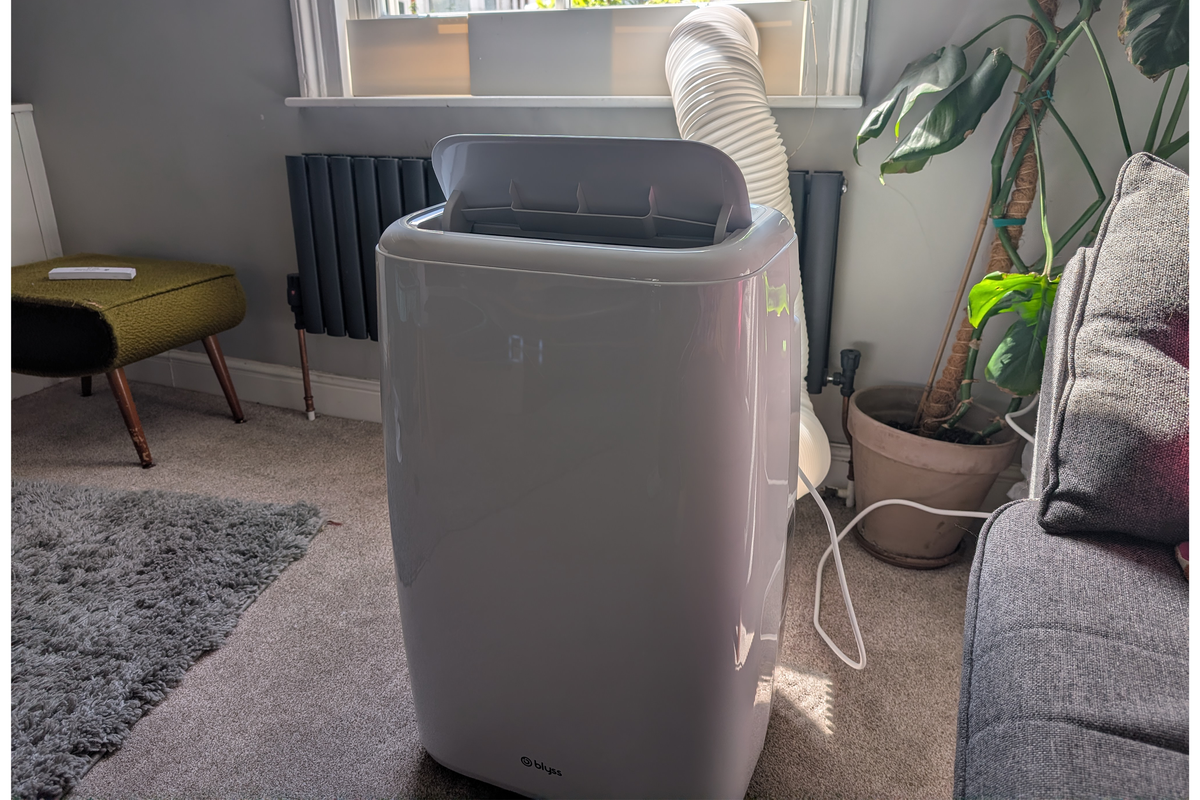
The main advantage is that there is no professional installation cost. You can buy a unit, plug it in and use it in whichever room needs cooling most. That makes portable air conditioning a practical option for renters, people who only need cooling during short heatwaves, or households that want to cool one bedroom at night rather than fit a permanent system.
The trade-off, though, is that portable units are not as simple as fans. They cool the room by extracting warm air and venting it outside through a hose, usually placed through a window. That means you need a suitable window, ideally with a sealing kit, otherwise warm air can leak back into the room and make the unit work harder.
They can also be noisy, bulky and less efficient than a professionally installed split system. But for occasional use, the lower upfront cost is hard to ignore.
According to The Independent’s IndyBest guide to portable air conditioner running costs, you can generally expect a portable air conditioner to cost around 20p to 60p an hour to run, depending on the type of system, its age and efficiency, how long you use it for and how well insulated your home is.
Should you buy a portable air conditioner during a heatwave?
If you need cooling immediately, portable air conditioning is the only realistic option for most households. A fitted split system requires a survey, professional installation and a suitable place for the outdoor unit, so it is unlikely to solve an urgent heatwave problem.
But buying in the middle of a hot spell can also mean limited stock, inflated demand and rushed decisions. Check the unit’s cooling capacity, noise rating, energy use and whether it comes with a window sealing kit before buying. A cheap portable unit that is too small for the room, or poorly vented through a window, may be noisy, inefficient and disappointing.
For homeowners who find the same bedroom, loft conversion or home office overheating every summer, a portable unit can be a short-term fix while you get quotes for a fitted system.
How much does fixed air conditioning cost?
Fixed air conditioning is much more expensive up front because you are paying for the unit, labour and the installation work.
For a single-room system, OVO says a single split air conditioning unit typically costs around £1,500 to £2,500, including supply and installation. A multi-split system for two to four rooms can cost around £3,500 to £6,500, while larger whole-home systems can run from £6,000 to £10,000 or more.
That broadly matches other industry estimates. Checkatrade says a 12,000 BTU wall-mounted unit costs around £750, plus around £1,150 for installation. Daikin says installation costs usually start from around £1,800 upwards, depending on the scope of the project.
The final price can vary significantly. A simple bedroom installation with easy access to an outside wall will usually cost less than a more complex project involving long pipe runs, awkward access, multiple indoor units or additional electrical work.
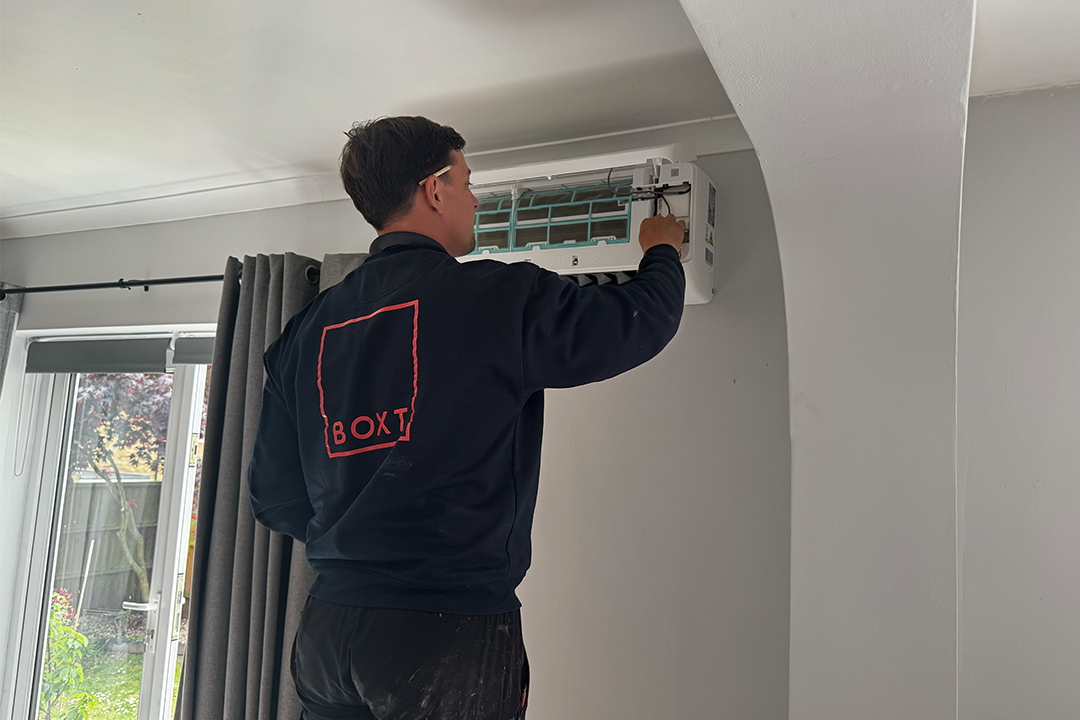
A fixed system also needs to be installed by a qualified professional. In most homes, this means an indoor unit on the wall, an outdoor unit, pipework between the two and electrical connections. In flats, listed buildings or conservation areas, there may also be planning or leasehold restrictions to consider.
Which is cheaper to run?
Running costs are trickier to compare because portable and fixed systems work differently, and every home is different. A simple way to estimate the cost of running any electrical appliance is:
Power use in kW x electricity unit rate = running cost per hour
From 1 July to 30 September 2026, Ofgem’s average electricity unit rate for households paying by direct debit is 26.11p per kWh.
Using that figure, a 1kW portable air conditioner would cost roughly 26p an hour to run, while a 2kW unit would cost around 52p an hour, which sits at the top end of the 20p to 60p per hour range in our IndyBest guide. So if you ran a 1kW portable air conditioner for six hours overnight, that would cost around £1.57 at the current average electricity unit rate. A 2kW unit used for the same period would cost around £3.13.
Fixed split systems can be more efficient in regular use because they work more like heat pumps. Their cooling output isn’t the same as the amount of electricity they draw from the grid, so a system may deliver several kilowatts of cooling while using less electrical power.
However, it would be misleading to say fixed air conditioning is always cheaper to run. The actual cost depends on the model, efficiency rating, room size, temperature setting, insulation, how long the system runs for and whether you are cooling one room or several.
|
Question |
Portable air conditioning |
Fixed air conditioning |
|
Best for |
Short heatwaves, renters, occasional bedroom cooling |
Regular overheating, homeowners, home offices, multiple summers |
|
Upfront cost |
Usually hundreds |
Usually thousands |
|
Installation |
No professional installation |
Professional installation required |
|
Running cost |
Often higher per hour for the cooling delivered |
Often more efficient in regular use |
|
Noise |
Usually noisier |
Usually quieter |
|
Speed |
Can be bought and used quickly |
Needs quotes, survey and installation |
The real comparison: Occasional use versus regular cooling
For most households, the decision is less about which system is cheapest per hour and more about how often it will be used.
If you only need cooling for a few hot nights a year, portable air conditioning is usually the cheaper option overall. Even if it costs more to run per hour than an efficient fixed system, the lower purchase price means it can take a long time for a fitted unit to make financial sense.
If one room overheats every summer, the calculation changes. A loft bedroom, south-facing home office, garden room or poorly ventilated bedroom may be uncomfortable for weeks at a time. In that case, a fixed single-room system could be worth considering, especially if noise, appearance and convenience are important to you.
For larger homes, or households that want to cool several rooms, fixed air conditioning is the more serious option. But it also moves the decision into the thousands of pounds, rather than the hundreds.
Hidden costs to consider
Whatever system you opt for, the purchase price isn’t the only thing to factor in.
Portable air conditioning units may need a window sealing kit, take up floor space and make more noise than expected. They also need somewhere to vent warm air, which can be awkward with some window types.
Fixed systems may require servicing, maintenance and professional repairs. The outdoor unit also needs a suitable location, and installation may be more complicated in flats or period properties.
There is also the question of year-round value. Some fixed air conditioning systems can provide heating as well as cooling, which may make them more useful outside of summer. Portable units are usually bought solely for the job of cooling a room when it gets too hot.
Fixed vs portable air conditioning: Which should you choose?
Portable air conditioning is the cheaper choice up front. It’s best for renters, occasional use, short heatwaves and households that want to cool one room without committing to building work.
Fixed air conditioning is better suited to homeowners who regularly struggle with overheating, want quieter cooling, or need a more permanent solution for a bedroom, office or multiple rooms. As a rough rule, portable AC is the budget fix. Fixed AC is the long-term comfort upgrade.
For many UK homes, the cheapest first step is still to reduce heat before it builds up. That means closing blinds during the hottest part of the day, ventilating when outdoor temperatures drop, using fans strategically and improving shading where possible. But if that no longer keeps a room comfortable, the choice between portable and fixed air conditioning comes down to how often you need cooling, how much disruption you can tolerate and whether you are solving a temporary heatwave problem or a recurring summer one.
This week’s heat-health alerts may make a portable unit tempting, and for immediate cooling that may be the most practical choice. But if the same room becomes unbearable every summer, the better question is whether you are solving one hot week or adapting your home for hotter summers ahead.