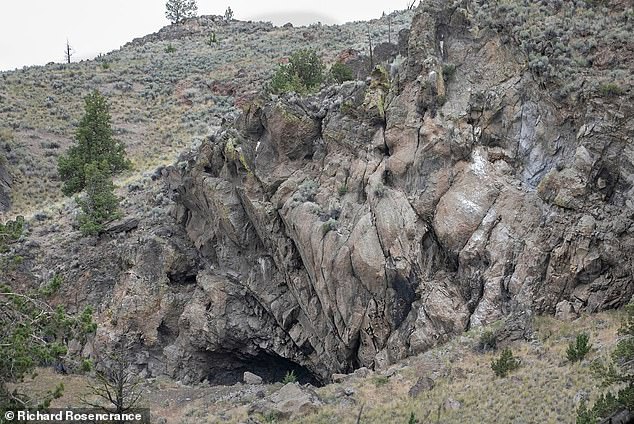
The oldest known pieces of sewn clothing have been discovered in a cave in Oregon, potentially rewriting all of human history.
Researchers from the US uncovered pieces of animal hide stitched together from the end of the last Ice Age, approximately 12,000 years ago.
That would mean that humans in North America had advanced skills, specifically for working with plants, animals, and wood, thousands of years before the Great Pyramid of Egypt was constructed.
The discoveries include a collection of ancient items made from materials that usually rot away over time, such as animal hides.
However, they were hidden in several dry caves in Oregon’s northern Great Basin region, which helped preserve them.
Until now, researchers believed early humans in the present-day US were simple hunter-gatherers, with the new artifacts being the best-preserved evidence of sophisticated technology like sewn clothing, twined baskets, and wooden hunting traps.
Overall, archaeologist Richard Rosencrance from the University of Nevada and his team unearthed 55 crafted items from 15 different plant and animal types, including some relics the lead study author is convinced were either clothing or footwear.
Rosencrance added that it fills in gaps in history by proving Ice Age people in North America were innovative and adaptable, using everyday materials in smart ways, during a time period before the Holocene Epoch, where early civilizations rose.

The artifacts were discovered in caves along Oregon’s northern Great Basin region

Researchers determined that the well-preserved fibers date back to the time of the last Ice Age, approximately 12,000 years ago
The main discoveries come from Cougar Mountain Cave in southern Oregon, where the oldest sewn animal hide and many braided cords, knots, wooden trap parts, and baskets were found.
Additional ancient fibers, including twisted plant cords, possible twined structures, and some of the earliest bone needles used for sewing, were uncovered in Paisley Caves in central Oregon.
Other nearby sites, such as Connley Caves and Tule Lake Rockshelter, also contained fine eyed bone needles from the same period of the Ice Age, showing skilled sewing work.
These caves were used as the main shelters by early hunter-gatherer groups who moved around following food sources 12,000 years ago.
The artifacts from Cougar Mountain Cave were first dug up in 1958 by an amateur archaeologist named John Cowles, who excavated the site himself.
After Cowles passed away in the 1980s, his collection from Cougar Mountain Cave was given to the Favell Museum in Klamath Falls, Oregon, where the items have been kept ever since.
The artifacts from Paisley Caves, Connley Caves, and other sites were professionally excavated over the years by archaeologists and are stored in university museums or research collections across Oregon.
Rosencrance’s study, published in Science Advances, re-examined these old collections using modern lab tests like radiocarbon dating to prove how old and sophisticated the finds really were.

Other artifacts found in the caves included wood and bone carved tools and traps for hunting

The sewn clothing, including coats and footwear, used local plants as laces and bindings, showing advanced crafting skills during the Ice Age
The newly dated items included a piece of elk hide that was cleaned, de-haired, and stitched with cord made from plant fibers and animal hair.
The researchers said it was likely part of tight-fitting coat, shoe, or bag, making it the oldest example of sewn hide ever found. There are also strips of bison hide, possibly used as strings or ties.
Dozens of braided or twisted ropes made from plants like sagebrush bark, dogbane, and rush were also examined. It’s believed they were used for everything from sewing to tying things together.
Some were knotted or woven into simple baskets or mats, also making them the oldest known examples of ancient American craftmanship unearthed.
The new revelations from Oregon mark another example of sophisticated human societies living in the present-day US well before the rise of the ancient Egyptians.
In January, another team of researchers found previously undiscovered wooden canoes at the bottom of a Wisconsin lake that predated the pyramids by hundreds of years.