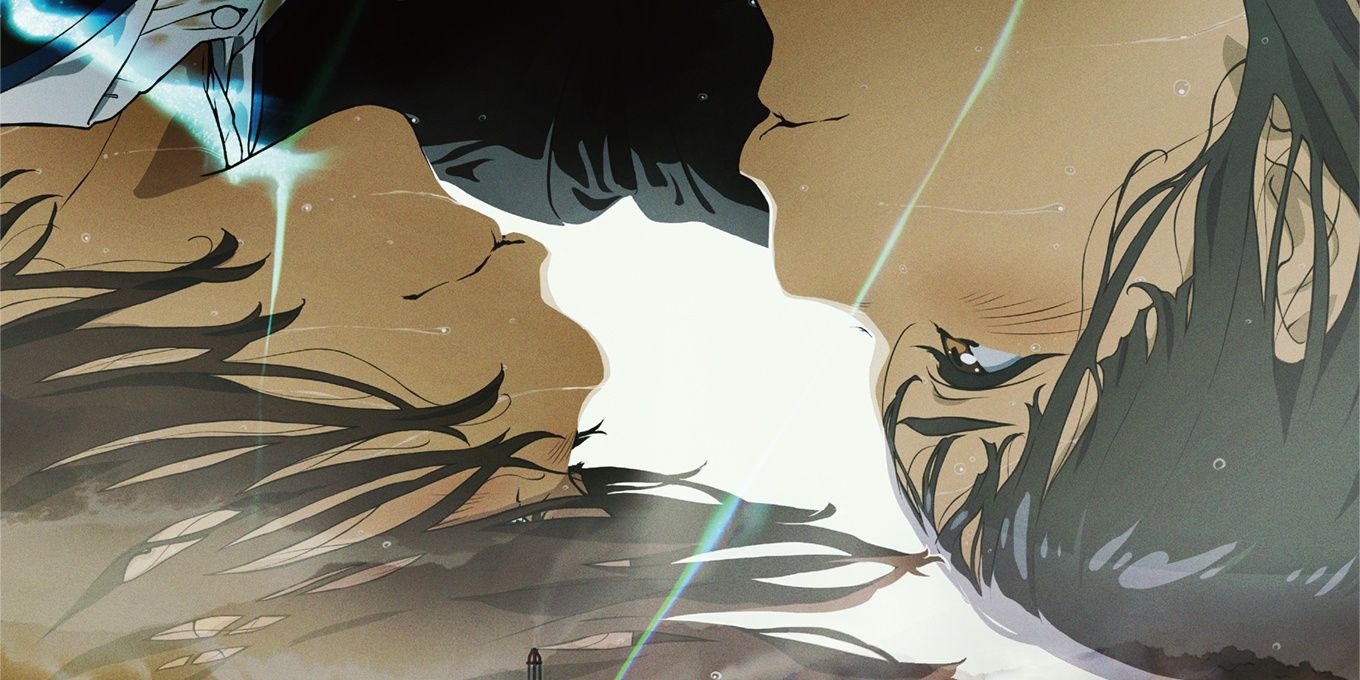

For some time now, anime movies have been exploring the melancholic nature of young love side by side with the changing perspectives that come with growing up. From Studio Ghibli’s fantastical journeys to Makoto Shinkai’s space and time-breaking formula, these films deliver their message wrapped in otherworldly themes — for sometimes fiction is easier to fathom than the truth. MAPPA’s Alice to Therese no Maboroshi Koujou, or simply Maboroshi, tells a bittersweet tale about loss, heartbreak and the sheer passage of time.
Produced and animated by the studio, while being distributed by Netflix in the United States, the movie is veteran anime writer Mari Okada’s sophomore venture as director. It features the voices of Junya Enoki as Masamune Kikuiri, Misaki Kuno as Itsumi and Reina Ueda as Atsumi Sagami. While the original story is from Okada herself, Yuusuke Tannawa takes care of the cinematography, with character designs by Yuriko Ishii and music composition by Masaru Yokoyama.
How Maboroshi Plays With Classic Anime Concepts

Read Our Review
REVIEW: Netflix’s Pluto Proves Even The Coldest Machines Have A Heart
Netflix’s Pluto transfers the soul of Urasawa’s manga into the arresting world of anime, giving new life to a timeless classic. Here’s CBR’s review.
It has become a cliché for anime characters to feel trapped in their hometown. They may have their reasons, with the usual culprits being a repetitive life or a desire to seek beyond one’s borders. But Maboroshi gives this gutted feeling a whole new meaning when it separates the rural town of Mifuse — and all the townsfolk — from reality. Masamune Kikuiri and his friends spend their days stuck in a time loop, with the same day repeating over and over again. After the local steelworks factory exploded one night and glowing cracks appeared in the sky, the fate of everyone in Mifuse was changed forever… creating a ripple effect that governs the trajectory of the story.
The audience gets stuck, too, watching the town herd together and people trying their best to keep up mundane mediocrity in the hope of assimilating better with real life whenever the time comes. Masamune’s goes off script and down into a rabbit hole of conspiracy, which hides a potentially world-breaking truth. At the center of it all is Masamune’s classmate and frenemy Atsumi Sagami — who leads him to an abandoned blast furnace inside the steel plant and to a feral young girl. With Masamune already having conflicted feelings about Atsumi, Maboroshi throws in a monkey wrench when he also has to look after this sprightly girl, whom he names Itsumi for her likeness to her caretaker. If this naming is any indication, he cannot push Atsumi out of his head, and the closeness between the three creates a complicated triangle.
There is more to Itsumi than meets the eye. While her antics drive the narrative pace, her feelings, her secrets and her very presence dictate this world’s rules — introducing chaos to Mifuse and essentially being the catalyst for the truth. There are other Maboroshi characters who are happy to stand in the back, but their sentiments and ambitions bring them to the foreground… sometimes eclipsing Masamune altogether. This is where the movie truly shines, as Okada lets smiling children with honest feelings balance the morose acts of Masamune and Atsumi. That forms a strong support system for the two protagonists to explore their inner strife and, by extension, themselves.
Maboroshi’s Mystery Comes Second to Character Tensions


Related
10 Best Anime Mystery Series Of All Time, Ranked
Anime mystery series are some of the best works the genre has to offer.
Maboroshi is another anime with a pacing issue, because it deliberately delays answering some pressing questions about the mystery behind the cracked sky and the smoke coming out of the plant, which is now under the protection of Mifuse’s Gods. The ever-so-slow reveal is cumbersome as the story starts to drag and emotions start to flare. Scenes involving the latter are where the voice actors bring out the tension that has been brewing between characters ever since the explosion. From Setsuji Satoh playing the eccentric antagonist Mamoru Sagami — who just loves doling out incessant religious jargon — to Taku Yashiro bringing out the cheerful demeanor of Daisuke Sasakura, everyone in the supporting cast shows an aspect of the town they have grown up in. Junya Enoki, the seiyuu of Yuji Itadori from Jujutsu Kaisen, takes on a role that is the polar opposite of the Itadori in every way. Masamune may be unathletic, but he is in tune with his creative side. As a sensitive teen, he is empathetic to a fault, and Enoki’s voice echoes his frustrations and hopes.
Reina Ueda is as calm as the sea playing Atsumi Sagami — but when the time comes, she can be a force of nature. Atsumi is antithetical to Masamune in every way. The pitches of Reina and Enoki’s voices are enough proof of their contrasting personalities. However, the star of the show is Misaki Kuno, portraying Itsumi. Her childlike intonations may seem easy, but they are a challenging part of the voiceover, with Itsumi’s emotions changing each second. They range from wild cries to resounding heartbreak.
Maboroshi stands at a crossroads where the rules of the natural world end and the faith in the divine begins. The steel plant’s near-decimation is a man-made disaster that no one questions… until the time comes to explain its connection to Mifuse’s separation from the real world. It is almost as if the movie comments on how mankind correlates anything unknown with the supernatural. Although evidence points to the town’s patron Gods having a hand in preventing a widespread tragedy and being behind the wolf-shaped smokes from the bellowing hot furnaces, out to mend the gaps in reality, the townsfolk misinterpret their fortunate second chance at life as a doom. The movie ultimately comes down to the age-old debate about hope versus despair, the future or the now. Maboroshi‘s entire plot hinges on the human struggle between the flicker of hope against impending doom when townsfolk can see the “Mirai” through the cracks in time.
How Maboroshi Successfully Illustrates Its Themes

Time may have come to a standstill in Mifuse. But the audience gets to go back and forth in time, transitioning seamlessly from static scenes to dramatic ones, thanks to MAPPA’s willingness to give audiences the escapism they deserve. There is something special about the aesthetic of a mountain-hugged town beside the sea where the cracks in the shimmering sky glimmer in a sinister aura — almost like natural auroras — as greenery encroaches on the rusting structure of a steel plant, devouring it whole.
Maboroshi is gorgeous to look at. The handpainted feel of the background art, the glow of the sun in characters’ faces, the wetness of the gravelly texture of the roads after a drizzle — everything comes together to entice the hearts of city-dwelling viewers. And then there are the fantasy elements that make those visuals equally ethereal and terrifying. The art direction from Kazuki Higashiji captures every moment like a snapshot, catching the characters going through intense sentiments, be it the glaring eyes of Mamoru or the heartbreak of Yuko Sonobe. And when the camera moves, it is poetry in motion, carrying the tale through the fractured reality.
It is hard not to draw comparisons between Maboroshi and other anime films from the romance-fantasy genre with similar themes. For Masamune and his town, their “happily ever after” has turned into a nightmare where death comes only when the last flicker of hope has been extinguished. But does the end of the road have to be a bitter woe of the heart or a sweet affirmation of a life well-lived? As the audience mulls the question in their mind, Masaru Yokoyama’s heartfelt music and its operatic chorus take them on an emotional rollercoaster, with veteran singer Miyuki Nakajima’s voice echoing over the end credits in her first anime performance. The radio talk show about Mifune’s future that began the story starts blasting on the radio toward the end. But this time Masamune and Atsumi have the answers — a symbol of their changed outlook on life. Maboroshi‘s creators can only hope it rubs off on the movie’s viewers as well.
Maboroshi is now streaming on Netflix.

Maboroshi
Following an explosion at a factory that mysteriously freezes a town in time, two students encounter a mysterious feral child, spurring an impulse of love fueled by the frustration of their daily lives that begins to upend their world.