
Even though most US metros have tipped into buyer’s market territory – with more homes than shoppers – the experience still doesn’t feel especially welcoming for buyers.
However, that’s certainly not the case in every city. Zillow has revealed the ten best places to buy a home in this year – and the frontrunners are surprising.
Zillow considered several features to rank the major US markets. Leading markets are seeing home price growth slow now, with gains expected to pick up again in the months ahead.
These top-ranked areas also require a smaller share of a typical earner’s income to cover the mortgage on a standard home.
One key reason these markets favor buyers is reduced competition among house hunters – meaning they have time to shop around and more leeway to negotiate prices.
‘Home shoppers have room to breathe in these buyer-friendly markets. Lower competition gives buyers more time to decide and wiggle room to negotiate, adding up to a less stressful shopping experience,’ said Orphe Divounguy, senior economist at Zillow.
Indianapolis, Indiana, topped the list. With typical homes priced around $283,040 and values expected to rise about 2.9 percent this year, the market offers a solid chance to buy at a reasonable price and build equity.
On average, buyers would only have to use about 27 percent of their typical annual income to pay mortgages – a tiny price to pay in comparison to areas like Los Angeles (67 percent) or San Jose (62.6 percent).

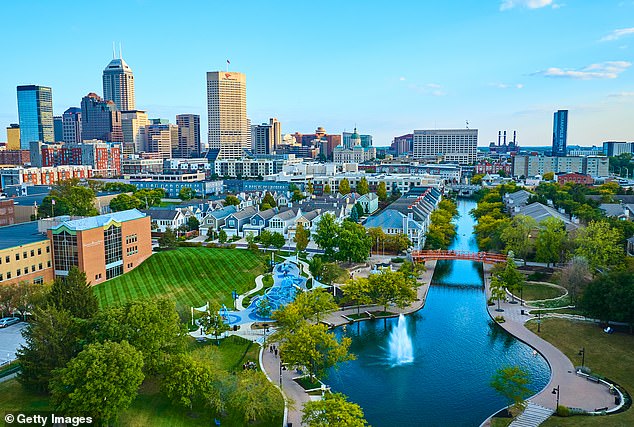
Zillow has declared the 10 best markets to buy a home in this year and Indianapolis, Indiana, topped the list

Typical homes in Indianapolis priced around $283,040 and values expected to rise about 2.9 percent this year
The city is best known for hosting the legendary Indianapolis 500, one of the world’s most famous auto races.
Indianapolis is also famous for its deep sports culture, including the Colts and Pacers. The city also stands out for its historic monuments, growing arts scene, and central location that’s earned it the nickname ‘Crossroads of America’.
Indianapolis appeals to homebuyers because it offers a rare mix of affordability and livability.
Home prices and property taxes are lower than in many big metros, while the job market is steady in healthcare, tech, manufacturing, and logistics.
The city also delivers a high quality of life, with a walkable downtown, family-friendly neighborhoods, and easy access to parks and trails – plus a central location that makes travel around the Midwest simple.
Next up in the rankings is Atlanta, Georgia. An average home in the Southern city costs $374,117, and house values are expected to grow 1.9 percent over the next year. Buyers would have to spend an average of 30 percent of their income on mortgage payments.
Atlanta is known for its rich history, major cultural influence in media, and as a global transportation hub thanks to the world’s busiest airport.
It’s also a powerhouse for business, with major companies like Coca-Cola, Delta, and Home Depot headquartered there, alongside a vibrant food and sports scene.

Indianapolis is also famous for its deep sports culture, including the Colts (pictured) and Pacers

The city also stands out for its historic monuments, growing arts scene, and central location that’s earned it the nickname ‘Crossroads of America’

Indianapolis also delivers a high quality of life, with a walkable downtown, family-friendly neighborhoods

The city is best known for hosting the legendary Indianapolis 500, one of the world’s most famous auto races

Orphe Divounguy, senior economist at Zillow
Atlanta offers a wide range of neighborhoods and price points, from urban condos to suburban family homes.
The metro has strong job growth in tech, finance, film, and logistics, which supports long-term housing demand.
Buyers are also drawn to its mild climate, green spaces, and relatively lower cost of living compared with other large coastal cities, making it attractive for both homeowners and investors.
In third place is Charlotte, North Carolina, where the typical home costs $379,228. Home values are projected to rise about 2.6 percent over the next year, and buyers can expect to spend roughly 31 percent of their income on a mortgage.
Charlotte is known for being one of the nation’s biggest banking and finance hubs -home to Bank of America and a major presence from Truist – along with its NASCAR roots, growing skyline, and booming food scene.
The city blends a modern urban core with leafy neighborhoods and easy access to the Blue Ridge Mountains and nearby lakes.
Charlotte has seen strong population and job growth, especially in finance, tech, and healthcare, which creates steady housing demand.
Homes are still more affordable than in many major East Coast metros, and buyers like the mix of new construction, family-friendly suburbs, and walkable neighborhoods, plus a mild climate and lower taxes than some neighboring states.