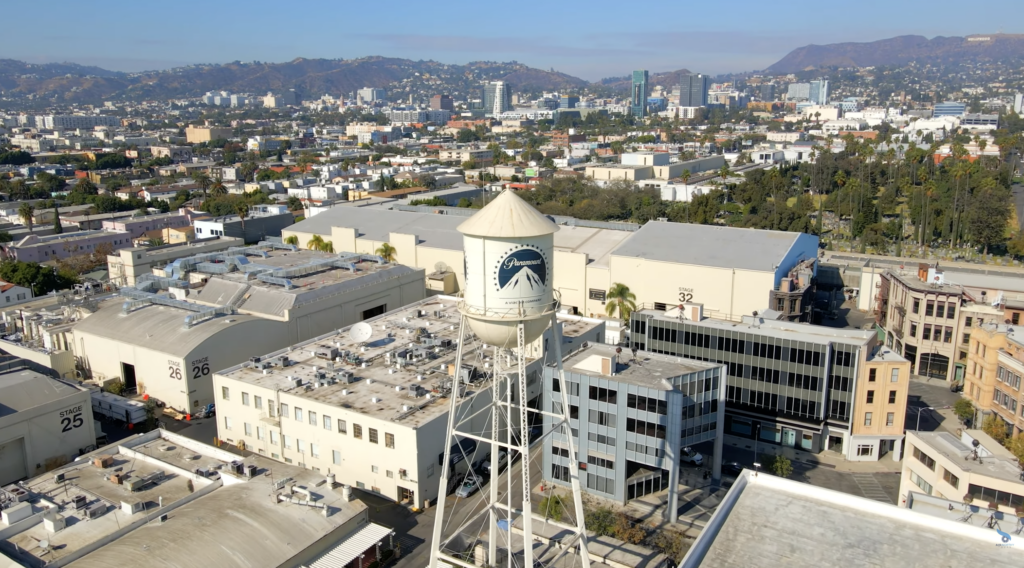
This past week, Warner Brothers was sold to Paramount Skydance in a $110 billion acquisition deal. Although the path toward securing regulatory approval may take up to a year, the two are slated to combine their streaming services, consolidate infrastructure, and continue to license their intellectual properties. Paramount’s CEO, David Ellison, has drawn criticism from the corporate media and Hollywood insiders for having connections with the Trump administration.
In an article from Variety, one unnamed “A-list director” stated that “Ellison scares the sh-t out of me… Are the movies they put out going to be catered to Trump’s taste?”
The unnamed director’s fear about the future of film and television under Paramount is a blatant attempt at fear-mongering. Ellison has made no indication that he will censor content or deplatform creatives; he is a businessman who wants high box office returns. His only discrepancy is choosing to avoid Hollywood’s recent pattern of explicitly planting leftist narratives in films.
In 2025, Sinners was released and made history as the first film to ever receive 16 nominations at the Academy Awards. The film grossed $369 million worldwide, thanks in large part to an aggressive marketing campaign. The movie’s plot tried to portray Christianity as oppressive, linking faith with Jim Crow practices. It also uses a string of not-so-subtle metaphors to portray white people as vampires. Although the movie received praise for its cinematography, it ostracized a majority of audiences by creating a social justice narrative.
In contrast, two of Ellison’s major projects have included helping to produce the Mission: Impossible franchise, as well as the smash hit Top Gun: Maverick. The Mission: Impossible films have grossed $4.7 billion worldwide across eight different movies, with the most recent, The Final Reckoning, grossing almost $600 million. Top Gun: Maverick is one of the highest-grossing films ever made, earning $1.49 billion worldwide after its Memorial Day 2022 opening. Ellison clearly understands that audiences don’t need social justice narratives when they head to the movies.
What the aforementioned “A-list director” is afraid of is portraying American greatness. The Mission: Impossible franchise and the Top Gun revival each portrayed their American leads as smart, strong, and valiant. The main characters represent chivalry and virtue. The films always end with the bad guys being defeated and the good guys saving the day. They didn’t need to explore racial themes or critique America’s Christian heritage to be successful.
Some of the highest-grossing films of the 21st century have largely represented American greatness. In the 2010s, when Marvel films were routinely landing billion-dollar box office returns, the stories focused on brave Americans saving the United States. Whether it was Captain America fighting off Nazis or Tony Stark using his technological skills to escape a Middle Eastern hostage situation, the movies’ successes were enhanced by their patriotic themes. Other films including Argo and American Sniper were met with critical and financial acclaim while highlighting American excellence.
Paramount has already seen huge success by giving writer and director Taylor Sheridan enormous control over pro-America projects. Sheridan helped develop some of the most lucrative shows of the 21st century, including Yellowstone, Landman, and Tulsa King. His work highlights American stories that lean into the country’s setting and history.
Ellison’s pursuit of pro-American content is a smart financial investment. The American people love to see their fellow countrymen succeeding. In recent years, however, Hollywood seems to have taken the opposite approach.
Films that are explicitly anti-patriotic can turn away audiences. Vice, Adam McKay’s 2018 satirical takedown of Dick Cheney and the Bush era, was a box office flop. On the other hand, sometimes controversial content drives viewership. Don’t Look Up preached climate justice allegories but was slammed by audiences and received poor critical ratings. Still, it was one of the most widely-streamed movies of the year it was released. Media that sought to deconstruct the classical superhero narrative — like Suicide Squad or the television series The Boys — leaned into criticizing American culture. However, both saw sizable box office returns, with The Boys receiving a now-rare five-season run.
The Paramount and Warner Brothers deal also requires studios to place movies in theaters for 45-day theatrical runs. The cost of going to the movie theater has risen, meaning audiences need to feel like a film is “worth” the price of admission, food, and transportation. People are willing to show up to a film like Top Gun: Maverick that promotes American excellence, as evidenced by its financial success.
Ellison understands that pro-American films and television are worth investing in. Although Hollywood has tried to suppress patriotic creative works, there is an audience hungry for content that celebrates America.
Brooke Brandtjen is a writer and journalist from Wisconsin who focuses primarily on culture, politics, and religion. She is extremely passionate about the arts and history, and is honored to write for a variety of distinguished publications.