
Normally, drug dealers go to jail. But in Washington, the state’s own Department of Corrections (DOC) could become the cheapest dealer on the block. Its poison of choice? Deadly chemical abortion pills.
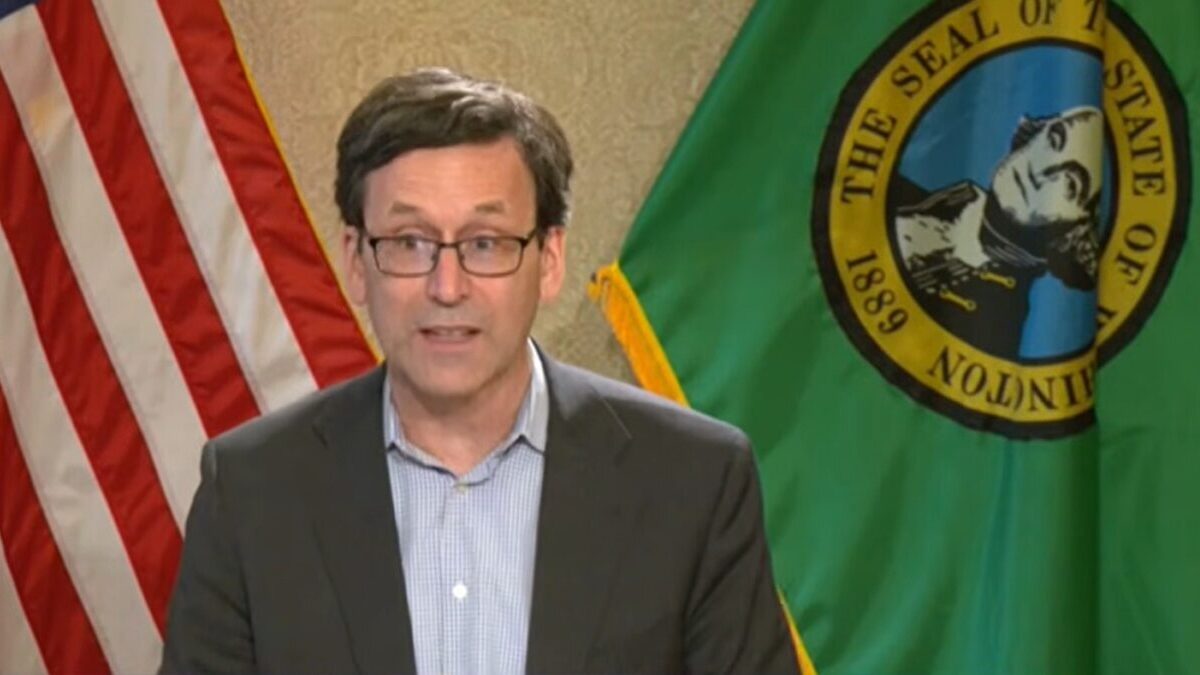
In February, the Washington state legislature approved legislation that would allow its DOC to sell its stockpile of abortion pills below cost, and last week, the state’s House speaker signed the legislation — Democrat Gov. Bob Ferguson is soon expected to sign the bill into law.
If enacted, the legislation would let the DOC essentially give away its abortion pills (more than 155,000 doses worth) at as low a price it wants, setting it up to become what one Republican state senator described as the “free-abortion-pill provider for the entire country.”
Former Governor’s Purchases
Why exactly does a state department of corrections, an office most known for overseeing prisons, have a 155,000-dose stockpile of abortion drugs?
It all started in 2023 when former Gov. Jay Inslee, worried that pending litigation could make abortion pills harder to obtain, ordered the DOC to use its pharmacy license to buy 30,000 doses of mifepristone, a common abortion pill. As he was leaving office, he ordered the DOC to purchase 17,600 more doses of mifepristone, along with 155,000 doses of misoprostol, another common abortion drug. In total, the purchases cost the state about $2 million.
Unfortunately for America, Inslee’s fears proved unfounded when a lawsuit challenging the FDA’s approval of mifepristone fell short of success, leaving the deadly abortion pill on the market.
Inslee’s failure as a prophet proved equally unfortunate for the DOC, which found itself with $2 million worth of abortion pills. And so, the DOC’s pills have sat in storage for more than two years.
But there’s a ticking time clock on all of this. Pharmaceutical drugs don’t last indefinitely, and 30,000 doses purchased already expired in January. Expired pills can’t be used or sold, so last September, the state announced its plans to incinerate the original 30,000 doses — making the purchase a complete waste of $1,275,000.
Of course, as a pro-lifer, I believe that’s the best thing that could possibly have happened to the pills. But Washington state legislators seem to think otherwise, hence their new plan, which they hope will help the DOC to sell its stockpile of pills so that they don’t “go to waste.”
The bill passed the state’s Senate with a 32-17 vote on Feb. 10 (with two Republicans and every Democrat voting in support). And on Feb. 28, it passed the state’s House of Representatives by a 57-36 vote before being signed by House and Senate leadership last week. Now, the only step left is for Gov. Ferguson to sign it into law.
It’s hard to decide which is worse: the original decision to purchase the pills or the new plan to give them away like candy.
Deadly for Babies, Risky for Women
The original purchase reflects nothing less than an atrocious squandering of taxpayer dollars on a dangerous drug that (aside from the obvious killing of babies) has serious risks for both women and the environment.
Studies show that chemical abortion pills have a complication rate four times higher than that of surgical abortion, with as many as one in five women suffering a complication. As many as 15 percent of women experience hemorrhage after taking chemical abortion pills; 2 percent suffer infections. Studies have even reported a 500-percent increase in abortion-related emergency room visits with the increased use of the drugs.
Not only does chemical abortion harm women, but it could pose serious threats to the environment. Thanks to chemical abortion pills, more than 50 tons of chemically tainted waste — including tissue from aborted preborn babies — are flushed into American waterways every year. Yet there hasn’t been a single study on the environmental consequences of that waste in the last 30 years, during which the number of chemical abortions has increased by more than 800 percent.
In summary, Washington state spent $2 million of taxpayer funds — through questionable channels, one might add — to purchase a sizable amount of a risky, under-studied, unsafe drug. And that’s ignoring the grotesque reality of a state stocking up on a drug whose sole purpose is to destroy the state’s own preborn citizens.
But the new legislation is just as bad. Unable to sell the pills and recuperate its money, the state is now throwing in the towel and admitting it wasted taxpayer dollars. Its new plan? To essentially flood the market with dirt-cheap, deadly drugs, just like normal drug traffickers do with fentanyl. That doesn’t reflect the actions of a state that cares for its citizens.
Action Needed
To confront this kind of state-sanctioned pill pushing, the Trump administration will need to step up. Step one would be to demand that the Department of Justice enforce the Comstock Act to ensure that chemical abortion pills are not sent through the mail. Step two is to fast track the review of abortion pills at the Food and Drug Administration — that has been talked about from a lot of podiums, but has yet to be seen. Step three would be to evaluate abortion water pollution.
Washington’s original purchase was bad enough. But without this kind of federal intervention, this new legislation would turn the Department of Corrections into a full-blown, state-sanctioned drug dealer — and unless the state wants that title, it should reverse course.
Kristan Hawkins is president of Students for Life of America and Students for Life Action, with more than 1,600 groups on middle and high school, college and university, medical and law school campuses in all 50 states. Follow her @KristanHawkins or subscribe to her podcast, The Kristan Hawkins Show.