
Daily Mail journalists select and curate the products that feature on our site. If you make a purchase via links on this page we will earn commission – learn more
Decades ago, the soap in the bathroom of a family home was almost entirely a perfunctory product – there to preserve ‘the cleanliness is next to godliness’ maxim.
Householders in post-war Britain would likely have had a bar of carbolic – known for its antiseptic properties, or a faintly scented Imperial Leather on the side of the sink.
The 1970s brought ever more perfumed blocks and a rainbow of cheerier colours, with Cussons, Palmolive and Lux all on supermarket shelves.
In a post-Covid hygiene-obsessed era, it’s little wonder that the soap industry is cleaning up with householders – with organic soap the fastest growing sector in the market, accounting for around £1.34 billion worth of sales globally every year according to detergent industry research.
The humble bar has been replaced by variations that include everything from £5 hand-made artisanal twists on the traditional brick to 50p ‘anti-bac’ liquid soaps designed to rid grubby hands of germs galore quicker than you can say ‘rub-a-dub-dub’.
At the top end of the scale, it’s possible to part with a serious amount of cash for your soap – a bottle of ‘softening’ handwash by trendy candle brand Diptyque ching chings through the till at £59 for 350ml.
Why do people pay such princely sums? Because there are few things that impress a guest to one’s home like good soap.
What’s not to like about leaving a downstairs loo smelling like you’ve just vacated a five-star spa? It’s a minor detail that apparently matters.
Here, with the help of interior design experts, is our guide to what your bathroom soap says about you:
THE ANTI-BAC SUPERMARKET LIQUID SOAP

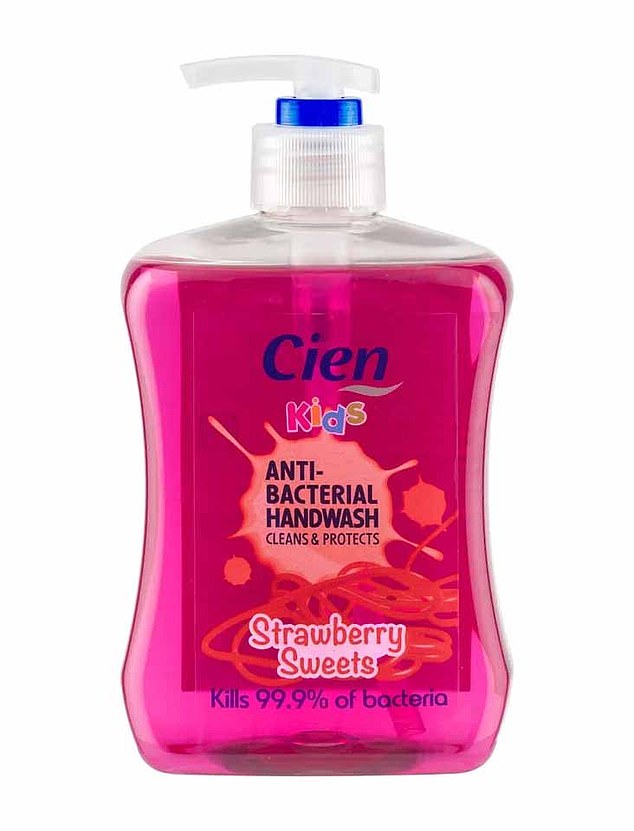
In the pink: A supermarket bottle such as Lidl’s own-brand Cien anti-bac tells guests to your home that hygiene focused and prioritise convenience above style
You could push through the door of this bathroom without meeting any of the owners in advance and instantly know who lives here.
A bottle of anti-bac liquid soap, think own brand Lidl, Aldi or Asda – or bought in bulk at Costco – screams families desperate to rid themselves of the germs picked up at nursery or school.
Covid-style handwashing still very much applies in this house. Said soap is likely to smell like bubblegum or candy floss and have a cartoon character on the front…right next to the words: ‘kills 99.9% of bacteria’.
Blanca Sanchez, Director of Halo Design Interiors says there’s plenty of positive things about keeping it simple: ‘A basic supermarket liquid soap in a plastic pump bottle tells guests you’re someone who prioritises convenience above presentation. Antibacterial hand gel soap reinforces that same approach but in a more health-focused way.
‘It reveals you’re someone who thinks about germs and cleanliness in a direct, practical sense. You’re the kind of person who wants reassurance that hands are properly cleaned, and suggests a household where hygiene is managed actively.’
THE BOUGIE SPA BRAND SOAP

Hand in hand: Stylish products brands, such as Ortigia Sicilia, pictured, sends a signal that minor detail aesthetics are just as important as major ones in your home
When soap is a lifestyle choice. More of a home spa than a bathroom, here you’ll find products – from upscale brands such as Aesop, Diptyque or Ortigia Sicilia – are a style statement intended to impress in the same way as the artisan olive oil or the single origin coffee beans downstairs do.
Will they replace them with a cheaper version when their friends have gone home? Possibly.
Seasoned interiors professional Lenny Kharitonov, CEO at Emma Mason, says a bougie bottle can help if you’re looking to impress.
‘A design-label liquid hand wash, the kind that’s recognisable for its typography and bottle silhouette, tends to read as design-conscious and detail-led.
‘It signals that the bottle is being treated as part of the room, not hidden away as a utility. Guests interpret it as someone who notices styling and is meticulous about their aesthetic because of the deliberate visibility of it.’
THE CHRISTMAS PRESENT SOAP

The remnants of last Christmas’ supermarket gift set. Possibly a handsoap but equally likely to be a shower gel or a face wash – it all does the same job, right?
This soapowner has little preference for brand, texture or colour…and has even been known to put a bottle of, gasp, Fairy Liquid in the bathroom on occasion. Needs must.
Says design expert Sanchez: ‘You’re not interested in signalling taste and you’re comfortable with everyday, unbranded choices that simply get the job done.
‘It suggests you replace things when they run out rather than when they stop matching a look, and you’re not trying to curate a lifestyle through small details.
‘It also shows you are pragmatic about spending, with a focus on function over appearance.’

THE CLASSIC IMPERIAL LEATHER BAR
Assured, timeless and the soap of a childhood…when said classic bar would have a magnet embedded in it to keep it firmly attached to the Imperial Leather branded soap holder.
Made by Cussons, a 90 gram bar can last forever and is cheap as chips at around £2.75 for four bars. If you’re buying this, you’re a money conscious traditionalist.
Stuart Murray, a UK interiors and design expert and founder of Retrovintage, says a ‘trad’ bar speaks volumes about a homeowner’s personality.
‘The classic bar of soap in a ceramic dish shows you’re someone who thinks about presentation in a more deliberate way – and you’re possibly a bit traditional in the way you present things.
‘You’re not relying on packaging alone to carry the look of a space and you prefer objects that feel anchored to the room and intentional.
‘You like things to have a dedicated place and are drawn to objects that feel solid and permanent.’
THE ARTISAN BAR

Hand-made, small batch soap puts your shopping values on display in your loo, says interiors professional Lenny Kharitonov, CEO at Emma Mason
Ideal for the traditionalist who doesn’t mind paying £5 a bar – the same price as their sourdough – if it means they’re supporting independent retailers.
Picked up at a local farmer’s market or online at Etsy, expect scents such as coffee, cedarwood or seasalt, and exfoliating salt/herbs/oats running through it.
‘Local or artisan soap, whether a bar or a small-batch liquid, tends to land differently,’ says interiors CEO Kharitonov.
‘It reads as values-driven, supportive of makers, and often aligns with a quieter form of luxury where provenance matters more than logos.’
THE REFILLABLE SOAP DISPENSER

Fill me up: Soap dispensers suggest a homeowner who cares about the planet
An only slightly prettier version of the soap dispenser you find in public loos but it’s hard to argue with this shopper’s eco-credentials.
They’ll buy in bulk in glass jars from local providers and refill the glass bottle in their bathroom. Do we need to ask who they vote for? We don’t.
It definitely sends an eco-friendly message, says Kharitonov, and can be a successful non-boastful approach: ‘Presented neatly, it can suggest the host pays attention to sourcing and ingredients, and cares about waste or over-packaging without making a big announcement about it.’
THE DESIGNER BRAND

‘We always pick up a bottle when we stay there…’ is the frequently trotted out response when the compliments flood in about the ‘divine’ smelling soap that makes this bathroom smell like a lemon tree-draped terrace in Sorrento.
Designer or five-star hotel branded soap is the status symbol that packs far more of a punch than the latest airfryer or coffee machine.
Says interiors man Stuart Murray: ‘If you’ve got a fragranced luxury-style liquid soap, that tells guests you’re someone who pays attention to sensory detail.
‘You care about how things feel and not just how they function or how they look.
‘You’re comfortable spending more on things that elevate everyday moments and you want your home to feel considered even in the smallest interactions.’