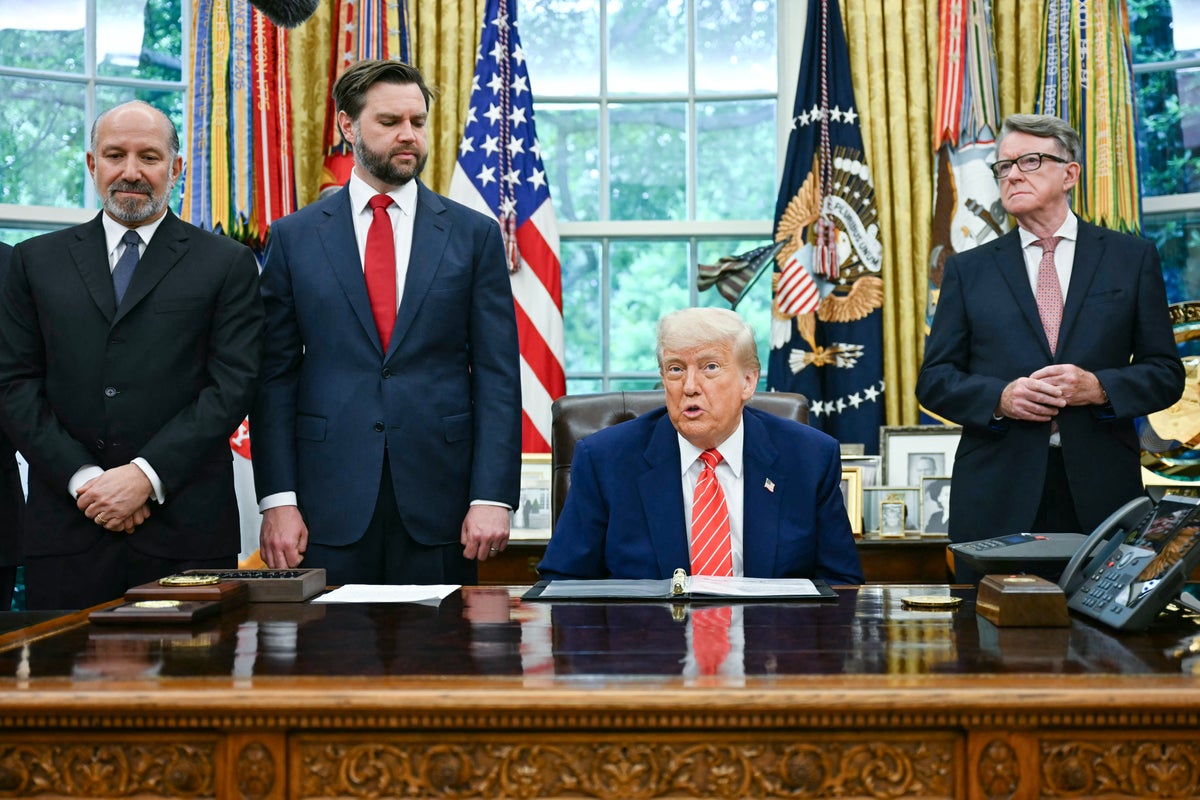

The UK-US trade deal is facing its biggest challenge yet, as US president Donald Trump’s relationship with Prime Minister Sir Keir Starmer continues to sour.
Mr Trump has suggested the UK-US trade deal could be “changed”, with Mr Trump criticising Sir Keir for what he termed “tragic” errors regarding North Sea drilling and migration policies.
He also indicated that the terms of the agreement, which was settled last year, might be subject to alteration.
When the deal was announced in May 2025, the agreement was the first of its kind struck by the US after President Donald Trump returned to the Oval Office, marking a significant diplomatic win for the British government.
The economic deal offered the UK relief from tariffs on cars and steel, in exchange for giving America’s agricultural industry greater access to British markets.
But the terms of the agreement have only been partially implemented so far, including that US tariffs on British steel have still not been fully removed as agreed.
Here, we outline what was agreed as part of the deal – and what the impacts have been on the British economy.
Steel and aluminium tariffs
The US agreed to remove the 25% tariff rate on UK steel and aluminium exports as part of the deal, reducing the trade barrier for these goods to zero.
But US tariffs on British steel have still not been fully removed as agreed, piling strain on the industry.
Car tariffs
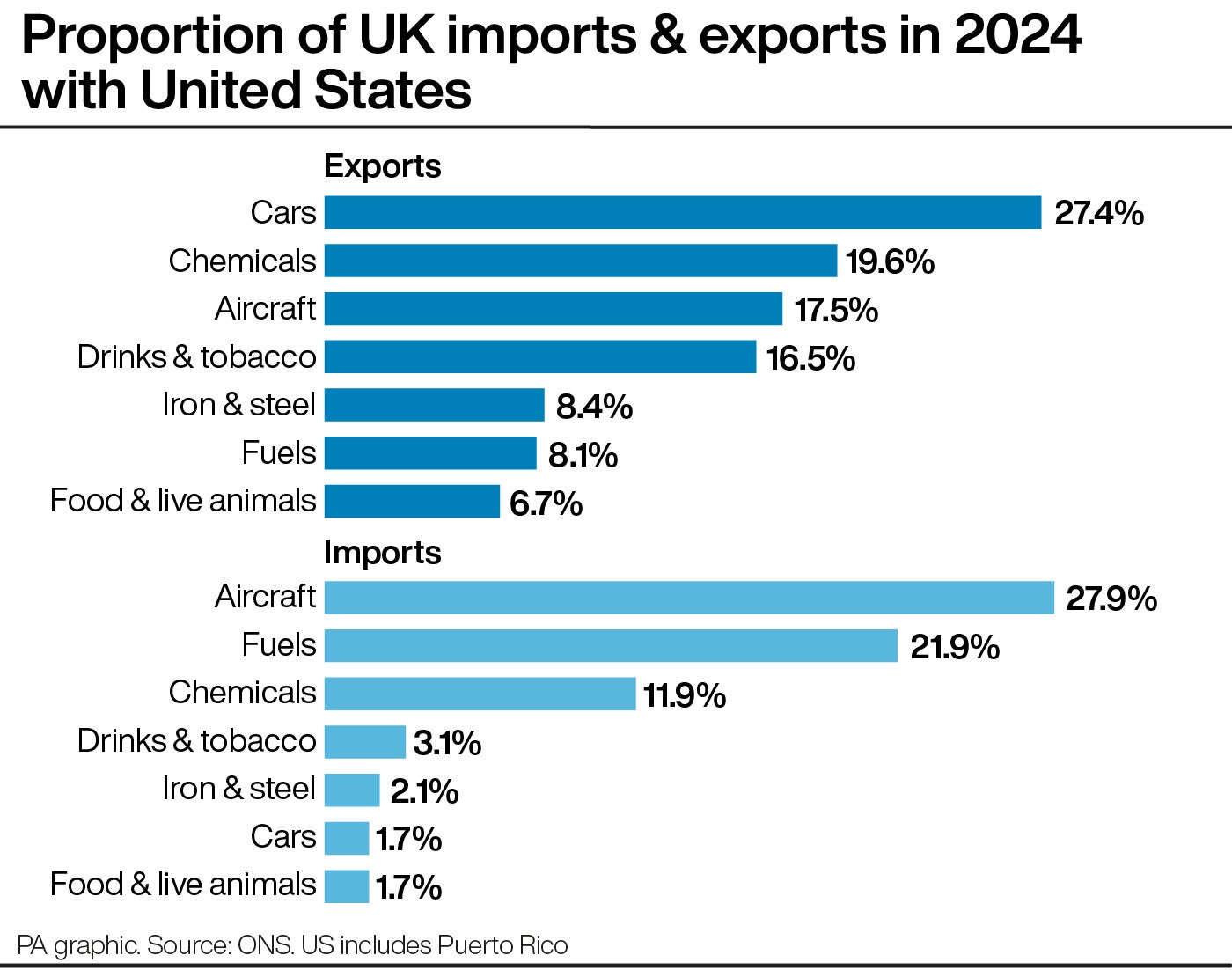
American tariffs on British cars were cut to 10% for the first 100,000 vehicles exported to the US. The parts needed for those cars will also receive special trade treatment.
Mr Trump had set the tariff rate on car exports to the US at 27.5%.
However, this hasn’t been enough to stop exports tumbling. The value of car exports to the US fell by 28.1 per cent to £7.5bn.
Other tariffs
A 10% baseline tariff on most goods, described by Mr Trump as a “reciprocal” tariff, remained in place.
The UK was also promised preferential treatment in any further tariffs on national security grounds, Mr Trump announced as part of his drive to protect US business.
Pharmaceuticals
The UK and US made a trade deal to allow America to import UK pharmaceuticals without paying any tax in December 2025, while also committing Britain to spending more on NHS drugs.
Import taxes on medicines and treatments going to the US were set to remain at 0 per cent for three years, Keir Starmer’s government said.
The Trump administration said the deal would lead to greater investment by UK drugs companies in America, and help create more jobs there.
The agreement followed threats from Mr Trump to raise tariffs by up to 100% on branded drug imports. Pharmaceuticals are among the UK’s biggest exports to the US, which remains the biggest market for major British drugmakers such as GSK and AstraZeneca.
The US said it would “work to ensure that UK citizens have access to latest pharmaceutical breakthroughs”, and comes after warnings that US drug companies will shut down their sites in the UK if the NHS does not pay more for drugs.
Agriculture
Both the US and UK’s agriculture sectors were promised new access to one another’s markets under the deal.
UK beef farmers were allowed access to the US market for the first time, joining a group of select countries such as Australia which have a similar arrangement.
British farmers were given a tariff-free quota for 13,000 metric tonnes.
US farmers were, in turn, granted new access to the UK, but Sir Keir insisted the Government had stuck to its “red lines” on farming standards.
However, British farmers and food safety campaigners raised fears that the deal’s language – promising to “enhance agricultural market access” – may be only the first step. Food safety advocates feared a slow erosion of standards under commercial pressure.
The National Farmers’ Union (NFU) welcomed improved US market access. But domestically, many farmers felt exposed.
They worried that cheap US beef, even if hormone-free, would undercut UK cattle raised under stricter welfare and environmental rules. Feedlot beef from the American Midwest is typically cheaper, prompting fears of price pressure.
Additionally, the UK pledged to remove tariffs on 1.4 billion litres of ethanol, used to produce beer, which comes from the US.
What non-tariff measures are in the deal?
Under the plan, the US and UK committed to working toward economic security by coordinating to “address non-market policies of third countries”.
They also pledged closer cooperation on keeping investments, exports and tech vendors secure by building on already closely aligned trade and investment security measures.
The US and UK have agreed to negotiate “ambitious” provisions for digital trades, a move which could impact services like online banking, financial tech, insurance or other industries that rely heavily on digital infrastructure.
Additionally, both sides agreed to better cooperate in tackling duty tax evasions on imports and exports.
What is not in the deal?
There is nothing in the deal on US access to the NHS. Nor is there anything on concessions on a 2% tax on US big tech companies.

Business Secretary Jonathan Reynolds told reporters: “Just to be absolutely clear about what is not in this agreement. There is nothing in this agreement in relation to online harms or the Online Safety Act. There’s nothing in this agreement in relation to digital services tax. Nothing in the agreement in relation to the NHS.”
Terms of the deal
Either side may cancel the deal by giving written notice to the other nation, according to the terms of the agreement.
Further details about how the deal could be reviewed, changed or terminated will be discussed during negotiations.