
At first glance, the images of Oxford tutor Matt Rattley may seem at odds with traditional ideas of university life. Yet Rattley, who teaches biochemistry at St Hilda’s College, has attracted attention for appearing in makeup, revealing dresses and large prosthetic breasts.
Students expecting a lecturer in academic robes—or even the familiar Oxford combination of tweed and sensible shoes—could therefore find the presentation surprising. The debate has quickly moved beyond questions of personal style and into arguments about professional boundaries, student welfare and freedom of expression.
Three St Hilda’s graduates have reportedly written to the college, arguing that Rattley’s conduct “violates women’s dignity.” They said students and staff could reasonably experience the situation as intimidating, hostile, degrading, humiliating or offensive.
Critics say the issue is not Rattley’s gender identity, but the deliberately sexualised nature of the clothing and whether such an appearance is appropriate in a teaching environment. Supporters of Rattley’s right to dress as he chooses, however, may regard the criticism as an attempt to police gender expression.
That tension has left some members of the Oxford community reluctant to speak openly. They fear that objecting could lead to accusations of prejudice or transphobia, while others argue that concerns about a lecturer’s appearance should not simply be dismissed in the name of inclusion.
The central question is whether visibly sexualised clothing belongs in a lecture hall. Critics contend that displaying exaggerated prosthetic breasts is not merely an unusual fashion choice and may make students feel as though they are being drawn into a sexualised form of self-expression without their consent.
The controversy has also prompted discussion of the term “autogynephilia,” coined by Canadian-American sexologist Ray Blanchard in 1989 to describe sexual arousal linked to presenting oneself as a woman. There is no established evidence that the concept explains Rattley’s motivations, and attributing a sexual motive to an individual based solely on appearance would be speculative.

Rattley teaches biochemistry at St Hilda’s College while appearing in makeup, revealing dresses and large prosthetic breasts, writes Clare Foges
One Oxford academic described a class held during a summer heatwave, saying Rattley sat with his legs apart while wearing a miniskirt and with underwear visible.
“It does feel like sexual harassment,” the academic said. “You feel as though you’re being forced to participate in someone’s sexual fetish without being given a choice.”
The academic said she missed staff training sessions because she found the situation distressing. “The worst part was that other people were behaving as though he was dressed normally. It makes you doubt your sanity,” she added.
The dispute reflects a wider disagreement over where institutions should draw the line between personal expression and conduct that affects others. Advocates of greater individual freedom say people should be allowed to present themselves authentically; critics maintain that workplaces and classrooms require standards of professional dress and behaviour.
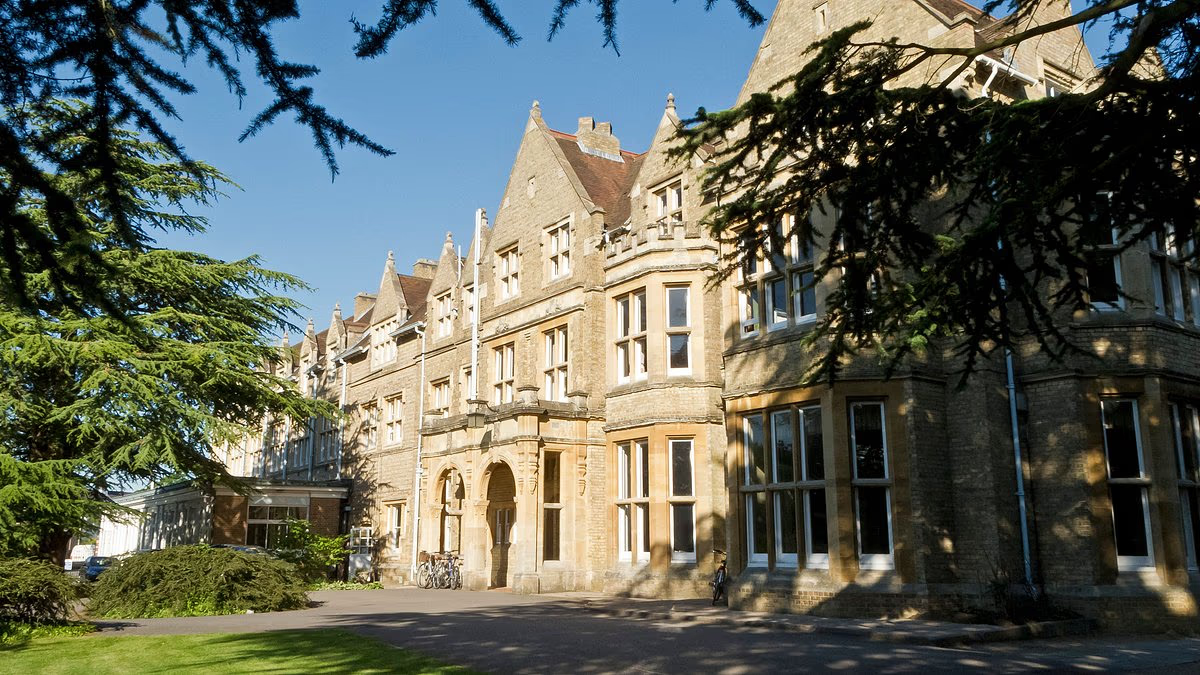
St Hilda’s history has given the argument added significance. The college was established to expand educational opportunities for women and remained women-only for more than a century before becoming co-educational in 2008. Some critics have questioned how its founders would view a controversy centred on the treatment of female students and staff.
The case has been compared with a Canadian incident involving a transgender woodwork teacher who taught high-school pupils while wearing extremely large prosthetic breasts and visible fake nipples. Parents protested, and the teacher was suspended.
Oxford University, by contrast, has not taken disciplinary action against Rattley.
The university has instead reiterated its commitment to “being an inclusive and welcoming place where all members of our community feel respected, valued and able to be themselves.” Critics say that statement avoids the specific concerns raised about classroom conduct, while supporters see it as a necessary defence of inclusion.
The response has become part of a broader criticism of Oxford’s approach to equality policies. In recent years, colleges have faced controversy over decisions including the removal of a portrait of Queen Elizabeth II from a common room, unconscious-bias training linked to the Black Lives Matter movement, and guidance urging staff to avoid some colloquial British expressions in the interests of inclusive communication.

St Hilda’s College was founded to expand educational opportunities for women and remained women-only for more than a century, writes Clare Foges
For its critics, the university’s decision not to intervene illustrates what they see as a recurring failure by progressive institutions to give sufficient weight to women’s concerns. They argue that commitments to equality become inconsistent when women’s dignity or single-sex spaces are involved.
Similar arguments have surfaced in debates over the sexual violence committed against Israeli women on October 7, the grooming of girls in Rochdale and Rotherham, and religiously segregated events at British universities. Critics say institutions that champion inclusion are sometimes reluctant to confront practices they consider harmful when doing so could create political or cultural conflict.
The issue of women’s rights in Afghanistan has also been cited by campaigners who believe Western progressive movements pay too little attention to women living under the Taliban’s restrictions.
For many critics, transgender rights have become the clearest example of what they regard as a double standard. Universities have cancelled speakers, restricted debate and condemned efforts to preserve single-sex spaces, they say, while presenting themselves as defenders of open discussion and women’s equality.
To illustrate their argument, critics ask how Oxford would respond if a lecturer arrived at work in blackface and a dreadlocked wig. They contend that the reaction would be immediate and severe, with students, academics and the media condemning the appearance as a degrading caricature.
They argue that the same principle should apply when a person’s appearance is viewed as a sexualised caricature of women. Others reject that comparison, saying gender identity and racial identity are not equivalent and that transgender expression should not automatically be treated as parody.
The debate has also raised questions about cultural appropriation. Celebrities have faced criticism for wearing Native American headdresses, while casting decisions involving straight actors in gay roles have prompted disputes about representation. Critics of Rattley say institutions should apply comparable scrutiny to highly sexualised gender presentation.
Students, however, are being asked to navigate those competing principles in the classroom. The university must balance an individual’s freedom to express their identity with its responsibility to provide an environment in which students and staff feel safe and able to learn.
Oxford academics may be wary of appearing discriminatory—or of facing legal action—if they ask Rattley to alter his clothing. Yet critics say refusing to address the issue can also undermine confidence in the university’s duty of care.
The dispute ultimately turns on the boundary between expression and professional conduct. Oxford’s commitment to inclusion does not settle that question; it leaves the university facing a difficult decision over whether personal autonomy should prevail when others say a lecturer’s presentation makes them uncomfortable.