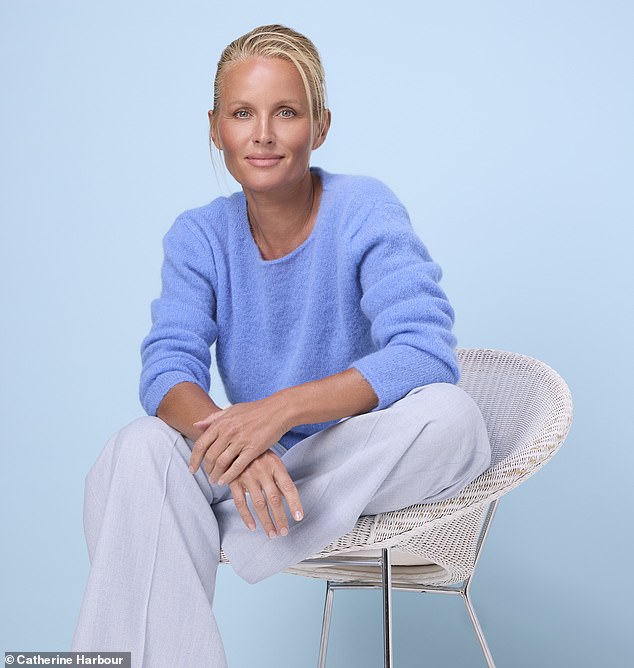

The credit card is groaning. Your jeans feel tighter – and that plan to get fit and fabulous already feels like a broken promise.
If you’ve ever seen me sharing tips about finding a healthy path on Instagram, you might expect me to tell you to pull yourself together and start again.
But here’s the deal: January is the worst time to make big, unrealistic plans for change. Instead, it is a set-up phase – a time to get your tools ready, test what actually works for your body and build gentle momentum towards creating a healthier lifestyle from February onwards.
That said, there is one non-negotiable – alcohol has to go. I’m nearly 20 years sober and, honestly, I think more people should try it – even just as an experiment.
I’m not pretending sobriety is easy. Socialising on soft drinks can, at first, feel like standing in a room without your armour on. Giving up the ritual of pouring a glass of your favourite tipple after work isn’t simple either.
I’m not here to shame anyone – just to say the things I wish someone had said to me sooner. In my first book, It’s Not A Diet, I said I wasn’t totally anti-alcohol. Six years on, I’ve learned so much about the effects of booze that now I am anti-alcohol.
Alcohol disrupts the brain instantly. It’s a class-A carcinogen. Even moderate drinking – a single large glass of wine every day – nudges breast cancer risk upward by an approximate 30-50 per cent, according to an influential study in 2013. This isn’t bah-humbug. It’s biology.
We don’t drink for flavour. Brits don’t crack open a third prosecco because it pairs beautifully with a Pret sandwich. We drink for transformation.

Davinia Taylor, who played Jude Cunningham in Hollyoaks in the late 1990s, writes that she has learned so much about the effects of booze that she is now anti-alcohol
That used to be me. I grew up in Lancashire and had a happy childhood but drinking was just what everyone did. By 17, when I landed a role in Hollyoaks, I had independence, a pay cheque and a nightlife that suited my ADHD wiring. I’d go out on a Friday and not come home until Monday. The rave scene was perfect for me.
I don’t like the term ADHD – it’s not a disorder but a different processing mechanism and I’m glad I have it. But what it means – thanks to a reduced level of baseline dopamine (the feelgood chemical in the brain’s reward system) – is a lower boredom threshold and more impulsive behaviour.
When I moved to London and met my first husband, it was the ladette era. Partying was the norm. I was out every weekend.
I didn’t know it then but I wasn’t drinking to get drunk. Instead, what kept me coming back to the booze was the energy boost I got from a by-product called acetate – a quick-fire fuel produced in the bloodstream when alcohol is metabolised.
Acetate is an especially rich energy source for the brain and, for me, it temporarily plugged the gaps left by low dopamine, low serotonin and low oxytocin. It made me feel balanced.
When my first son was born in 2007 my hormones collapsed. After an IVF pregnancy, my oestrogen and progesterone didn’t just dip post-birth – they fell through the floor, dragging serotonin and dopamine with them and leaving the stress hormone cortisol in charge, which made my mind spiral.
I panicked that the house would burn down with my baby inside, that I’d fall down the stairs carrying him, that the buggy would roll into traffic, that he’d be snatched.
I went to the doctor but, instead of sending me to an endocrinologist (a hormone doctor), I was sent to a psychiatrist, diagnosed as bipolar and depressed and put on a mega-dose of psychiatric medication that sedated and flattened me.

In 2009, she went into rehab where she learned the tools to keep herself sober
No one seemed interested in getting to the root cause of my catastrophically low mood. My hands shook constantly and the only thing that briefly stopped it was alcohol, so I drank during the day just to function.
In 2009, I went into rehab, which was the moment everything finally shifted – not because rehab keeps you sober but because it was where I first learned the tools I’ve used ever since.
However, quitting alcohol without proper metabolic support – the fuel and conditions the body needs to function properly – or understanding, felt like somebody had unplugged my brain. Food then stepped into the gap that alcohol left. I ate for comfort and escape. After my mum died in 2013, I reached 14st – 5½st heavier than I am now.
In 2014, I had my third son with my second husband Matthew (my second was born in 2011). But by then daily functioning was so hard that if I drove to Tesco and there were no parent-and-child spaces, I’d turn the car around and go home. It wasn’t –laziness. It was metabolic burnout.
Everything changed when a new GP questioned the medication I’d been on for a decade and weaned me off it. Within weeks, it felt like a dimmer switch in my brain had been turned up.
Around this time, Matthew discovered an American wellness entrepreneur called Dave Asprey, who suggested adding MCT oil – medium-chain triglyceride oil, a type of fat usually made from coconut oil – to black coffee to produce ketones (chemicals made by the body when it breaks down fat) which he claimed could stabilise mood and soften cravings. I tried it and once the MCT kicked in, something wild happened. I wanted to move my body.

Davinia says she made changes to her diet, swapping ultra-processed foods and seed oils for real fats, whole foods and protein
I started with a five-minute walk. Then ten. Then 20. Then 40. I added a playlist from my clubbing days and started running during the choruses.
I made changes to my diet, swapping ultra-processed foods and seed oils for real fats, whole foods and protein. My brain fog lifted. My skin changed. My hunger signals recalibrated over a week and, within six months, I dropped 4st without dieting. MCT was the original GLP-1 – the drug in weight-loss jabs – before GLP-1 existed.
All of the above is what’s called biohacking – using food, movement, lifestyle changes and self-exploration to take control of your health and brain function. I researched biohacking ferociously and implemented lots of daily tweaks that all contributed to my feeling better.
I learned that sunlight passing through green leaves produces infrared light that calms the nervous system. Forest walks feel magical because they’re literally changing your brain chemistry.
I learned not to wear sunglasses so much. The sun sends signals through your eyes to the brain about what time it is and your circadian rhythm – the internal system that regulates our sleep-wake cycle – controls your hormones, hunger, sleep and mood. If you cover your eyes too often, those signals get scrambled.
Biohacking starts with tiny habits like these, which shift your chemistry day by day. Even a few minutes of deep breathing can settle the nervous system, while a blast of cold water wakes up the brain to reduce inflammation and sharpen alertness.
Heat – whether an infrared sauna or a hot bath – helps the body repair and unwind. If you want to go deeper, there are things like ‘photobiomodulation beds’, which expose the body to red and near-infrared light to heal and reduce inflammation, or hyperbaric oxygen chambers, which supply concentrated oxygen to accelerate recovery from medical issues. None of this is prescriptive; it’s a menu of tools that help you learn your own biology.
I launched my WillPowders range in 2021 to help people access the tools that brought me back to life.

Davinia launched her WillPowders range in 2021 to help people who want to turn their lives around like she did
I’m not puritanical. I still want Monster Munch, Mint Aero and Terry’s Chocolate Orange. I still have the odd Chinese takeaway – I just have a protein shake beforehand, so I don’t binge, and take my Rise & Shine capsules before I go to bed and the next morning to give my liver a toxin flush. If I didn’t live this way, I’d tip back into that lower mood.
These habits stack together and form resilience, which is what I need with four boys!
Every morning, I tell myself: ‘You’re an alcoholic. Don’t drink today.’ I say it with acceptance and a love for the life I rebuilt by learning how my biology works with, not against, me.
Last year I did a GlycanAge test, which analyses glycans (sugar structures on proteins), measures inflammation in the body and estimates your biological age. Mine came back at 20!
Numbers aren’t the point. What matters is how I feel. I’m stronger than I’ve ever been. My head’s clearer. I’ve got more energy and resilience than I did in my teens, 20s or 30s. I don’t feel like I’m fighting my body any more but working with it.
Longevity has always felt personal to me. My great-grandmother lived into her 80s. My grandmother died in her 70s. My mum died of cancer at 60.
This isn’t about vanity or chasing youth. It’s about staying sharp, capable and fully alive for as long as I can – and doing it on my own terms.
Davinia’s science-led wellbeing products are at willpowders.com and itsmagnesium.com. Follow @daviniataylor on Instagram
Breathe like a dragon… and Davinia’s other tips to feel better fast
DITCH SELF-CRITICISM
Stop assuming everyone else is smashing January while you’re failing. They’re not. Text a friend and say, ‘January’s flattening me – same?’ Connection can take the pressure off and it stops the shame-spiral that triggers comfort eating.
INVEST IN TECH
If you’ve not overspent at Christmas, invest in biotech to support positive habits.
Try an infra-red sauna at a cosmetic clinic or buy one for the home. Like a healthy microwave, it uses light to penetrate the skin and into your organs, encouraging detoxification and lowering blood pressure.
Also on the shopping list: a weighted blanket to reduce anxiety and sensory overload; a smart watch to track your sleep and a glass air fryer, such as Fritaire, which is Teflon-free and easy to clean.

Davinia says use January to investigate how food affects your mood
LIGHT FANTASTIC
Work on your lighting. RAY Lighting has created flicker-free, blue-balanced, circadian-friendly bulbs that improveour visual, biological and emotional response to lighting (ray.lighting).
Alarm clocks such as Lumie (lumie.com) mimic natural light to regulate the circadian rhythm.
BREATHE LIKE A DRAGON
Five minutes of Breath of Fire – an advanced breathing technique used in yoga involving fast-paced, powerful, active exhales and passive, automatic inhales through the nose – completely changes every cell in your body.
Do it every day and you’ll feel your mood and energy lift. Check out @BreatheWithSandy on YouTube to see how to it.
FEEL THE FREEZE
Cold water exposure sparks dopamine, gives you resilience, revs up your metabolic rate, calms the nervous system and fires up your mitochondria – tiny structures inside your cells that use oxygen to convert food into energy, so you use vitamin D better.
Either fill up your bath with cold water or turn the shower cold for the final 15 seconds, directing the flow of water down the back of your neck to hit your vagus nerve. Then move on to the backs of your legs and soles of your feet.
SWOT UP ON SUGAR
Learn different names for sugar, such as molasses, brown rice syrup or coconut sugar. Once you understand the names, when you look at food labels in the supermarket, you’ll think, ‘They’ve put sugar in that to make me addicted.’
DIARISE YOUR DIET
Use January to investigate how food affects your mood. Keep a week-long diary of your ultra-processed snacks – a health food bar, a bowl of fortified cereal or a sandwich with low-fat spread (natural fats fuel the brain, seed oils inflame it) – and note what happens 15 minutes after eating one.
Ask yourself, ‘Do I feel satisfied or has that triggered the next craving?’
MIND YOUR MAGNESIUM
A good magnesium supplement calms the nervous system. Most firms sell magnesium citrate, which is the cheapest form and belongs in your bath because it upsets the digestive system.
I invest in a brand called It’s Magnesium (itsmagnesium.com) and use its Chill product as it contains magnesium glycinate, a calming amino acid that stops that twitchy feeling, and L-theanine, an amino acid found in green and black tea, which increases GABA, your anti-anxiety hormone, and counter-balances cortisol’s effects on the nervous system.
WALK UPHILL
At the gym, head for the treadmill and walk on a two per cent incline at a pace where you can still use your phone to send a text or watch a television show.
It’s one of the most effective forms of exercise.
It doesn’t wreck your joints or spike your blood pressure and, after 20 minutes, your body flicks into fat-burning mode, burning fat as fuel.
It supports your heart and lymphatic system, improves blood flow and reduces stress hormones. It’s also good for sleep and fosters resilience in general, setting you up for a day of confidence and good self-esteem.
A friend has been incline-walking for a year and lost 3st.
As told to Gemma Calvert