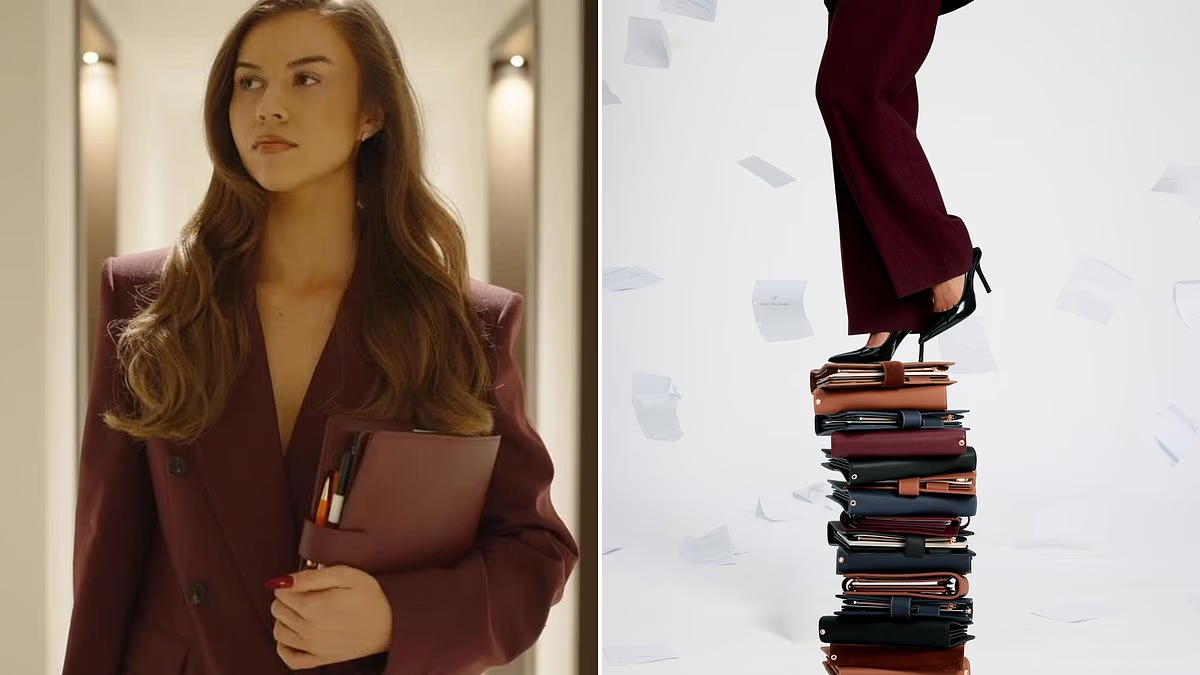

During the 2020 lockdown, 25-year-old influencer Isobel Lorna was earning £10.50 an hour on night shifts, picking and packing orders at an Amazon warehouse. By September this year, after launching her luxury A5 refillable planner brand Agende, she had generated £1 million in a single month.
“I always had a target of reaching that figure one day, but it completely exploded,” Isobel says, spreading her manicured hands as if illustrating a blast. Her nails coordinate with the burgundy blazer she is wearing, while her polished appearance suggests she has just left a salon.
Isobel belongs to a new generation of young, glamorous digital entrepreneurs. She has 857,000 Instagram followers and another 1.5 million on TikTok, where audiences watch her share business-class flights, Formula One paddocks and girls’ holidays in St Tropez. They also buy the products she recommends, from dry shampoo to designer handbags, and embrace her motivational message: work hard, stay focused and build the life you want.
Her Instagram biography reads, “Save the Pennies and the Porsche will buy itself.” Yet Isobel insists the slogan is less about owning a sports car than it is about discipline. “It means choosing a goal, committing to it and putting in the work. Nothing is simply going to land in your lap.”
Before buying her Porsche and starting work on a new London home, Isobel drove around her quiet North Somerset village in a Ford KA. Her journey to success began far from the luxury lifestyle now seen across her social media channels.
Agende is the natural extension of the “boss girl” image Isobel has cultivated online since 2020. “I was looking for a gap in the market. I owned a £600 Louis Vuitton Filofax and started featuring it in my content. People began buying the same one, so I thought, ‘If they’re prepared to buy that, they’ll buy my version for less.’”

Isobel Lorna celebrates reaching £1 million in sales in September
These are not ordinary planners picked up from a high-street stationery shop. Like their creator, Agende organisers are designed to look striking on Instagram.
About 7,000 £139 Agende organisers have already been sold, while more than 100,000 potential customers are waiting for the hand-stitched calfskin leather product. It is available in five neutral shades, including burgundy, navy, tan and black, alongside a limited-edition chocolate suede version priced at £159.
Customers can personalise their organiser with a selection of inserts, including a Daily Planner, To-Do List and Manifesting Pack. The latter contains three 13-page workbooks intended to help users define and pursue their goals. There is also a Saving the Pennies: Isobel’s Method pack, which focuses on budgeting and money management.
Other accessories include a detachable whiteboard for brainstorming and a streamlined pouch for pens, keys and lipstick. It is stylish enough to double as a clutch bag. Isobel has also created a £25 A5 mirror insert, designed for quick make-up touch-ups between meetings.
A complete Agende set costs £350, a price Isobel believes is justified because the organiser functions almost like a handbag. Its premium positioning has not put off shoppers, who have affectionately described it online as the “Hermès Birkin bag of diaries”. Isobel is an Hermès customer herself, with two Birkins and a Kelly, although Agende has no official connection to the fashion house.
So what makes Agende so popular? Isobel believes the appeal lies in the continued power of traditional routines. “AI is incredible, but old-fashioned rituals are not going anywhere. There’s something about writing with a pen on paper that helps people feel more productive. It provides the sense of fulfilment so many people are looking for.”

Isobel shared a TikTok image from her time working at an Amazon warehouse
Isobel has documented her £1 million milestone extensively online. “I’m not going to hide it because I want women to see that it is possible. Bringing that level of revenue into a female-founded business without external investment is incredibly unusual.”
Her immediate reaction, however, was relief. “There’s something incredibly powerful about being able to sell products while you sleep. For years I depended on brands for my income, but I want people to understand that once you build a community, you can launch your own product and gain more independence.”
Isobel is open about the earning potential of a loyal online audience. In addition to Agende, she typically makes between £100,000 and £150,000 a month through Instagram brand deals and partnerships. During periods when affiliate commissions increase and shopping peaks, such as Black Friday, she says that figure can reach £250,000.
“But a million pounds in sales also brings a million problems,” says Isobel, who has had to expand Agende rapidly to cope with demand.
She placed new stock on pre-order seven times to keep the company operating. “I called my friend Aimee Smale, who founded the fashion label Odd Muse, because I felt completely overwhelmed by the pre-orders. I considered selling out and waiting for a restock, but Aimee told me she built her £30 million business using pre-orders. It’s almost like having a free investor. You just need to manage the numbers carefully and avoid selling more than you can deliver. It’s a good problem to have.”
The highly polished influencer lifestyle Isobel now presents is a world away from her “very normal British upbringing” in a small village outside Bristol. She grew up with two siblings and parents who both worked in public service.

Isobel Lorna with her £139 burgundy leather Agende organiser. Around 7,000 have sold so far
IN CASE YOU MISSED IT: Florida Plane Crash Victims: Tech Tycoon, Wife and Two Toddlers
“I was surrounded by cows. There was one pub, one shop and a hairdresser, and that was about it. We were a close, loving family living in our own little village bubble. I attended a state school and didn’t grow up being driven around in expensive cars or travelling business class. I took my first business-class flight at 22, and paid for it myself.”
Her instinct for business appeared early, along with a determination to take on as many part-time jobs as possible from the age of 12.
“People knew me as the girl who took every job going. It became a running joke that I worked at every business within walking distance of my house.”
Her first venture involved baking cakes. “My mum sold them at work and I made about £7. Once the ingredients were paid for, I had around £3 profit.”
She later swept hair at a salon for £3.20 an hour and worked as a babysitter before joining a local pottery studio at 13. “At first, I spent an hour on Tuesdays collecting finished pots, wiping their bases and writing the customer’s name and date on them. Eventually I added Thursdays. I earned £6 an hour, which came to £48 a month. That felt like a fortune to me. I asked for more shifts and eventually doubled my earnings.”
Isobel does not consider herself academically inclined. “I used to fall asleep at my desk at school. My mum even took me to the doctor because she thought I might be anaemic, but I was simply bored. I love learning; I just didn’t enjoy the way it was taught at school. Learning to make coffee in a café interested me, but algebra did not.”
Rather than continue with A-levels and university, Isobel chose a different route. At 17, she began an apprenticeship at London law firm Burges Salmon.
“I started a Level 3 qualification, which took 18 months and was equivalent to A-levels, but I was learning while working in an actual workplace.”
She considers the experience invaluable. “We had two weeks of training covering everything from entering a meeting room and shaking hands to answering the phone and writing emails. It sounds basic, but I still use those lessons now.”
Before long, however, Isobel began filming TikTok content about her life inside the prestigious corporate law firm.
“I posted ‘day in the life of a marketing assistant’ videos. I would arrive early and take the lift to the top floor so I had enough time to get a mirror selfie. I’d go up and down for about half an hour just to capture the right image.”
When the 2020 lockdown began, Isobel was not furloughed. To stay occupied, she worked Friday and Saturday night shifts at an Amazon warehouse for nine months, picking and packing orders.

During the 2020 lockdown, 25-year-old influencer Isobel Lorna earned £10.50 an hour picking and packing on Amazon night shifts. By September, she had made £1 million in one month after launching Agende
“I was 19 and thought, ‘Why sit at home every weekend when I could be making money?’ In the Amazon break room, I would create vision boards showing the future life I wanted.”
At the same time, her TikTok following began to surge. She soon attracted 600,000 followers and was earning six times her monthly apprenticeship salary by filming videos testing lip balms and beauty products in office bathrooms. After a year and a half at the law firm, she left to become a full-time influencer.
Public attitudes towards influencers vary, shaped in part by reality television programmes such as Love Island and Married at First Sight. Isobel, however, views the role positively. “Influencers have existed for centuries; they just didn’t have smartphones. There has always been someone shaping the way people behave or dress. Why pretend it is something new? Marilyn Monroe and Cleopatra were influencers too.”
Reaching £1 million in monthly sales has also affected how others perceive her. “I knew it would make people take me more seriously. For a young woman especially, having a statistic like that publicly visible is incredibly powerful.”
She has also faced criticism from online trolls. “Some people have said it’s wrong to share how much I earn. But if I’m showing my followers how they might achieve something similar, I think that is positive. If a man announced he had made that much money in one month, he probably wouldn’t receive the same backlash.”
Her central piece of business advice is that conventional education does not suit everyone. “School doesn’t explain the huge range of careers available. I’ve worked with hairdressers who became millionaires, yet we are often told at school that hairdressing is poorly paid. You can build a successful career from almost anything you genuinely care about. The key is consistency.”
As for the future, Isobel hopes to see Agende stocked by major luxury retailers. “I’d love to find it in Harrods or Selfridges,” she says. “I’ve also always wanted to write a book.”
Judging by her track record, Isobel Lorna already has the next chapter carefully mapped out.