
I’m willing to bet that in the last 48 hours, your social media feeds have been dominated by clips from Netflix’s “The Roast of Kevin Hart.” The roast featured some of the funniest comedians in the world… and Chelsea Handler.
I haven’t watched the roast. The runtime is two hours and fifty minutes. TWO HOURS AND FIFTY MINUTES. You would think, out of respect for Kevin, Netflix would want to make it a bit shorter.
I was not invited to roast Kevin. Had I been, here’s what I would have said:
“Not long ago, Kevin’s media company, Hartbeat, reached a massive $650 million valuation. But before you all get too impressed with his business skills, you should know that Hartbeat’s success—just like Kevin—was incredibly short.”
Unfortunately, for employees at Hartbeat, this short story is no laughing matter. In just a few short years, Hartbeat short-circuited, leaving investors, partners, and former employees feeling very short-changed. Had it been a public company, this would have been a good stock to short.
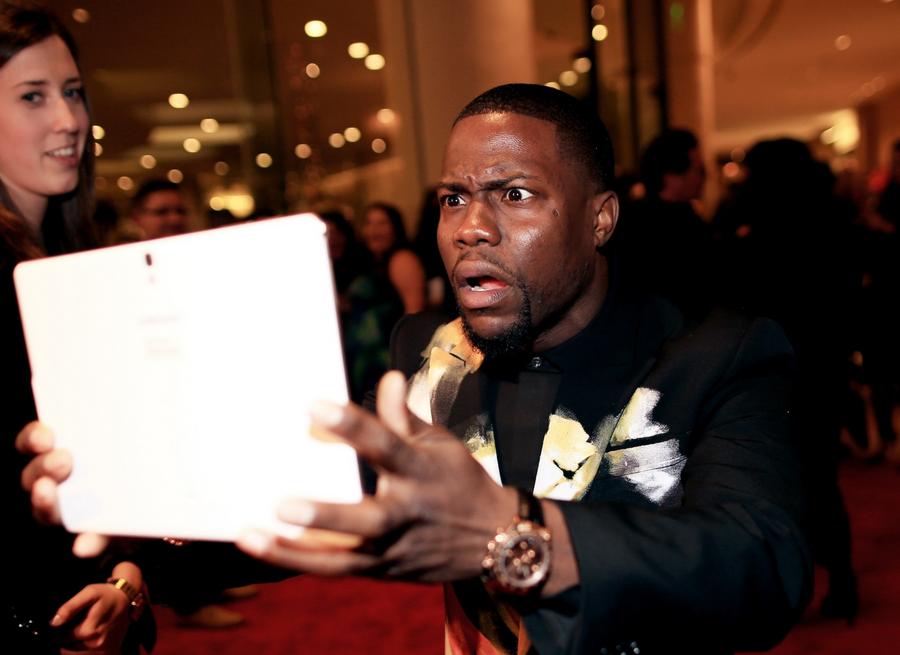
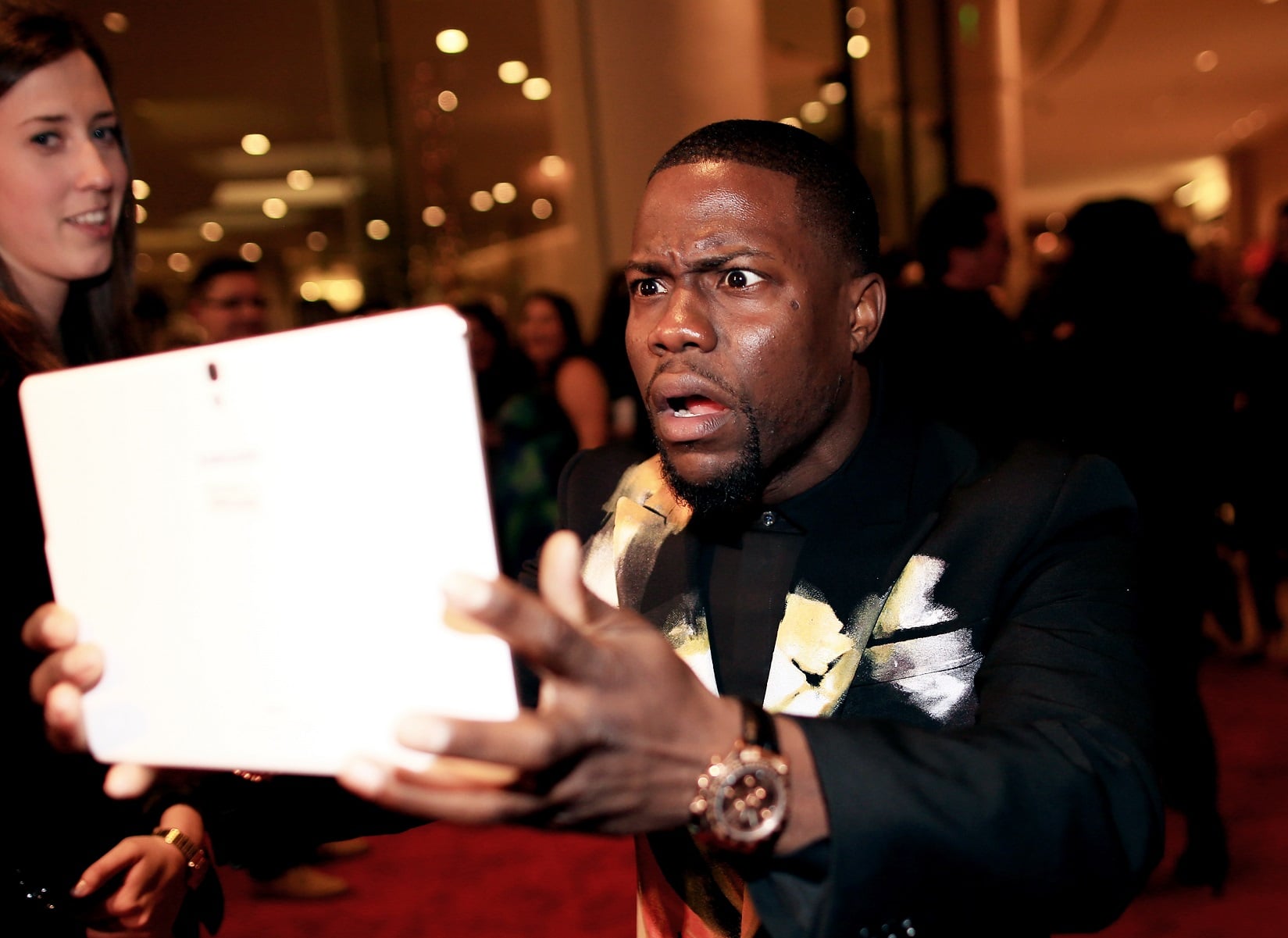
(Photo by Chris Polk/PMA2014/Getty Images for dcp)
A Short History of Hartbeat
Back in early 2022, Kevin combined his two existing ventures—Laugh Out Loud and Hartbeat Productions—to create a unified media powerhouse under the “Hartbeat” banner. The goal was ambitious: Hart wanted to move from being “the talent” to being “the mogul,” following the blueprint of Reese Witherspoon’s Hello Sunshine or LeBron James’ SpringHill. Reese had recently sold Hello Sunshine at a $900 million valuation, and LeBron’s SpringHill had raised money at a $725 million valuation.
The financial world took the bait. Private equity firm Abry Partners injected $100 million into the new entity, taking a 15% stake and pinning a $650 million valuation on the company. After personally taking home most of that $100 million check, Kevin’s remaining 85% stake was worth $550 million on paper. Nothing short about that net worth!
On paper, Kevin was the king of a comedy empire. The business was built on three pillars:
- Hartbeat Studios: To produce prestige film and TV projects.
- Hartbeat Media: To manage a network of digital and audio channels (including a massive SiriusXM deal).
- Pulse: A branded entertainment studio designed to help corporate giants like Lyft and DraftKings find their funny.
For a moment, the strategy worked. Hartbeat moved into a 40,000-square-foot West Hollywood office—the former home of Oprah’s OWN—decked out with a world-class art collection and a private suite for Kevin that doubled as a luxury apartment.
But as the “streaming wars” cooled and Hollywood entered a spending recession, the cracks began to show. The company struggled with the classic “celebrity mogul” paradox: investors wanted a company that could thrive without Kevin, but the market only seemed interested when Kevin was in front of the camera. As internal leadership rotated through a series of CEOs and executives, the company began to bleed cash.
Short On Hits
Matching its $650 million valuation turned out to be a tall order for Hartbeat. The company moved into a sprawling 40,000-square-foot West Hollywood office and employed a massive staff across multiple divisions. The explicit goal of this infrastructure was to relieve the pressure on Kevin by producing a steady pipeline of movies, podcasts, and digital content that didn’t require him to be on set.
Unfortunately for investors, that factory struggled to manufacture anything the market wanted unless the boss was in front of the camera.
The internal culture reportedly suffered from a major shortfall of leadership. While the core business struggled, President Jeff Clanagan was allegedly distracted by his own side-venture, Codeblack. Employees claimed they were pressured to boost Clanagan’s personal ad sales by posting Hartbeat content to Codeblack’s channels. As the scripted division stalled, the company attempted a shortsighted pivot into “Blktopia”—a speculative, AI-generated streaming service. It was a short-fused strategy that failed to ignite, leaving staff to wonder why they were building AI avatars while their actual TV shows were being ghosted by streamers.
While Hartbeat technically had executives pitching and developing independent slates, very few actually saw the light of day. A planned series of narrative podcasts languished in development hell before the creators were fired. In the television division, executives were reportedly in the middle of producing an Amazon series based on the movie “Barbershop” and an animated show called “Lil Kev,” but those executives were axed in the December layoffs, leaving the company’s development slate severely diminished.
When you compare Hartbeat to the celebrity-led media companies it tried to emulate, the structural flaw becomes obvious. Look at Brad Pitt’s Plan B Entertainment. Pitt built a prestige powerhouse that churns out critical and commercial hits—from Best Picture winners like “Moonlight” and “12 Years a Slave” to recent projects like “Minari,” “Women Talking,” and Netflix’s “3 Body Problem.” Brad Pitt rarely, if ever, appears in them.
Similarly, Reese Witherspoon’s Hello Sunshine (which sold at a $900 million valuation) built an entire brand around female-centric storytelling. While Reese stars in some of their hits like “The Morning Show,” the company routinely produces massive successes without her, such as “Daisy Jones & The Six” and a sprawling unscripted division.
Those companies succeeded because their founders used their industry clout to elevate other storytellers. Hartbeat, despite its massive overhead and corporate ambitions, never figured out how to be anything other than a support system for the Kevin Hart business. And when the industry cooled down, and Hollywood stopped handing out blank checks, a 40,000-square-foot office was a very expensive place to house canceled projects.
Coming Up Short
According to a recent report from Bloomberg, Kevin’s “mogul” experiment has officially come up short. Kevin struck a strategic partnership with Authentic Brands Group (ABG)—a massive conglomerate known for managing the lucrative intellectual property and likenesses of legends like Marilyn Monroe, Elvis Presley, Muhammad Ali, and Shaquille O’Neal. The deal was a convenient short-cut to liquidity, allowing Kevin to protect his personal wealth while the production company shriveled.
The deal functioned as a strategic retreat and a financial reset. In exchange for licensing his name and image, Kevin received an undisclosed sum of cash and an equity stake in ABG, making him a shareholder in a massive global portfolio. Crucially, he used the proceeds from this deal to buy out Abry Partners, the private equity firm that had been sitting on that 15% stake since 2022. By buying them out, Kevin cleared his financial board, but it came at the direct expense of the Hartbeat dream.
The exit was anything but clean. In a particularly litigious move, Hartbeat fired the heads of its podcast division and sued them for breach of contract when they tried to start their own firm. A court eventually gave Hartbeat the short shrift, rejecting their request for an injunction and calling the company’s legal claims “vague and overly broad.”
For the employees still left at the company, the writing is on the wall. According to insiders, the atmosphere has shifted from a bustling media start-up to a ghost ship. Kevin reportedly executed a disappearing act, changing his phone number and stopping his office visits, leaving day-to-day management to a small circle of lieutenants. In a final, somewhat ironic flourish, an email was sent to the remaining staff explaining the ABG deal and claiming it would allow Hartbeat to “stand on its own.” The email was signed “Kevin AKA Boss Man,” but it was sent by his assistant.
While no official number was released regarding Hartbeat’s current worth, the ABG deal signals that the $650 million valuation is a thing of the past. You simply do not sell your core “name, image, and likeness” to an outside brand management firm if your independent production company is a thriving, self-sustaining hit factory.
Long Story Short
In the end, Kevin Hart remains incredibly wealthy, and his personal “cash-in-pocket” earnings are astronomical. By our count, between 2015 and 2025, Kevin earned over $600 million from all sources, with the majority coming from touring.
Kevin Hart wanted to be the next Oprah, but he ended up being a short-term landlord for her old office space. The era of Hartbeat as a standalone Hollywood heavyweight is effectively over. It turns out that building a media empire requires more than just a big personality and an art collection; it requires a business model that doesn’t stop working the moment the star leaves the room. For Kevin, his time as a media mogul ended up being very short.