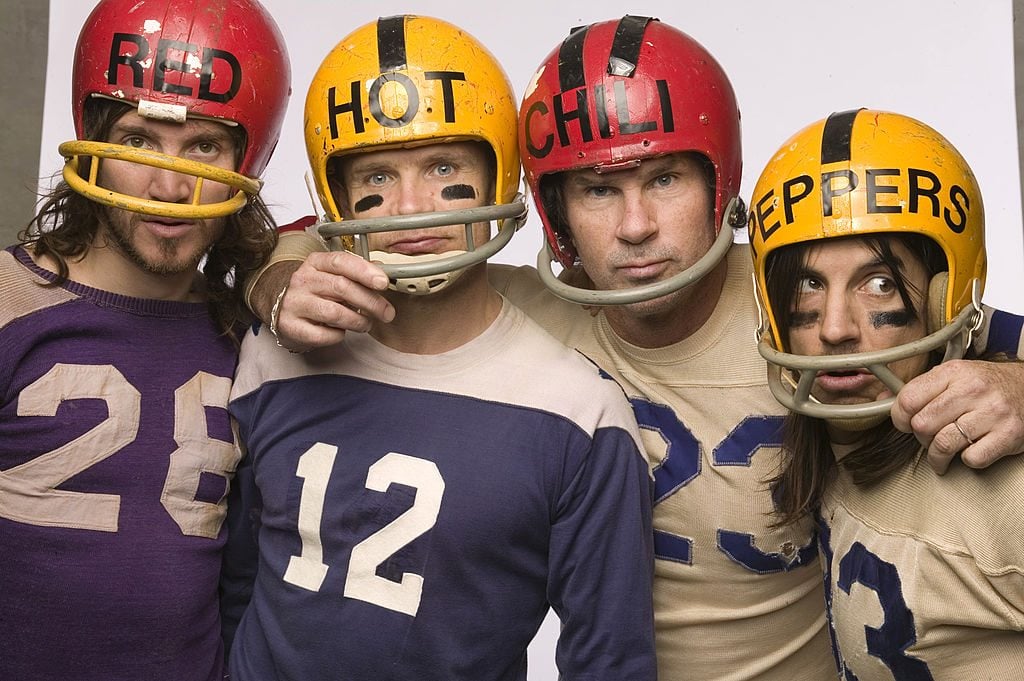

For decades, the Red Hot Chili Peppers have been one of those bands that seemed to exist in their own strange category. They were never quite metal, never quite punk, never quite funk, never quite classic rock, and never quite pop. They were a little bit of all of those things at once. Somehow, that weird alchemy produced one of the most commercially durable rock catalogs of the last 35 years.
And now that catalog has a new owner.
The Red Hot Chili Peppers have reportedly sold their recorded music catalog to Warner Music Group in a deal worth more than $300 million. The purchase was made through Warner’s joint venture with Bain Capital, a $1.2 billion fund created to acquire major music rights. According to Billboard, the Chili Peppers deal accounts for roughly a quarter of that entire fund.
At first glance, $300+ million might sound like a staggering number for a band whose commercial peak came somewhere between “Blood Sugar Sex Magik,” “Californication,” and “Stadium Arcadium.” But in the modern music business, catalog buyers are not just paying for nostalgia. They are paying for repeatable, predictable, daily cash flow. And on that front, the Red Hot Chili Peppers are shockingly strong.
A $300+ Million Deal
The deal reportedly covers the band’s recorded music catalog, also known as the master recordings. That is an important distinction.
When you stream “Under the Bridge,” “Californication,” “Scar Tissue,” “Give It Away,” “Otherside,” or “Can’t Stop,” there are two broad sets of rights that generate money. The first is the composition, meaning the song itself: the melody, lyrics, and underlying songwriting. That is publishing. The second is the specific recording you are actually hearing. That is the master.
The Chili Peppers already cashed out of their publishing rights several years ago, reportedly selling that side of the catalog to Hipgnosis Songs Fund for around $150 million. This new deal is different. Warner and Bain are buying the band’s recorded output, which includes 13 studio albums, nine of which were released through Warner beginning with 1991’s “Blood Sugar Sex Magik.”
That made Warner the obvious buyer. The company has been the band’s label home for more than three decades. It already knows the catalog, already markets much of the catalog, and already has a direct financial relationship with the music.
In other words, this was not some random Wall Street fund buying a pile of songs on a spreadsheet. This was the longtime label paying a huge sum to take full control of recordings it has been monetizing since the early 1990s.
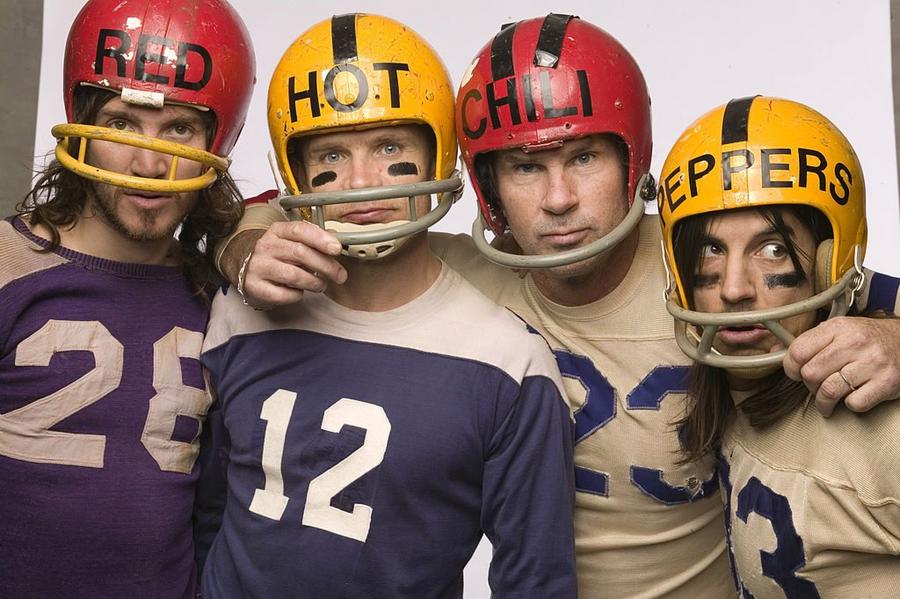
Red Hot Chili Peppers / MTV/Getty Images
The Streaming Math
The reported financials are what make this deal so interesting.
According to reports, the Red Hot Chili Peppers’ recorded catalog generates around $26 million per year. At a purchase price of a little over $300 million, that implies a revenue multiple of roughly 11.5x.
That means Warner and Bain are effectively saying: We are willing to pay more than eleven years’ worth of current annual revenue upfront because we believe these recordings will keep producing cash for decades.
That may sound aggressive, but the streaming numbers help explain the bet.
The band has reportedly generated more than 21 billion Spotify streams. Their catalog pulls in close to 9 million daily Spotify streams. Seven of their songs have crossed 1 billion streams on Spotify. That is not just a legacy rock band getting the occasional nostalgia bump. That is daily, global consumption at a level more commonly associated with the biggest acts of the streaming era.
And that is the key word: daily.
In the old music business, a catalog’s earning power might depend heavily on album reissues, radio airplay, sync licenses, compilation sales, or the occasional movie placement. Those still matter. But streaming has turned classic catalogs into something closer to annuities. Every day, millions of listeners around the world press play. Every day, the royalty meter moves a little higher.
For a catalog buyer, that kind of durability is the dream.
The Difference Between Publishing Rights And Master Recordings
This is actually the second time the Red Hot Chili Peppers have cashed in on their catalog.
In May 2021, the band sold its publishing rights to Hipgnosis Songs Fund for a reported $150 million. That deal covered the underlying songs themselves: the lyrics, melodies, chord progressions, and compositions.
In simple terms, publishing rights are tied to the songwriting. If “Californication” is played on the radio, performed live, covered by another artist, used in a movie, or streamed on Spotify, the owners of the publishing rights receive a share of the money because they control the song as a written composition.
The latest deal is different. Warner Music Group and Bain Capital bought the recorded music catalog, also known as the master recordings. That means they acquired ownership of the actual recordings fans hear when they press play on the Red Hot Chili Peppers’ original versions of “Under the Bridge,” “Scar Tissue,” “Give It Away,” “Otherside,” “Can’t Stop,” “Dani California,” and dozens of other tracks.
A simple way to think about it is this: The publishing is the song. The master is the recording.
For example, if another artist records a cover of “Under the Bridge,” the publishing owner gets paid because the cover uses the Chili Peppers’ composition. But Warner and Bain would not own that new cover recording. They own the original Red Hot Chili Peppers recording, the version that has been streamed billions of times and remains the version most fans actually want to hear.
That may sound surprising, but it makes sense in the streaming era. When people open Spotify, Apple Music, YouTube, TikTok, or Peloton, they are usually not searching for a random cover of “Californication.” They want the original recording. They want Anthony Kiedis’s vocal, John Frusciante’s guitar, Flea’s bass, Chad Smith’s drums, and the exact version they have known for decades.
That is what Warner and Bain just bought. They did not buy the idea of the songs. They bought the recordings that millions of people keep playing every day.
Put it all together, and the Red Hot Chili Peppers have cashed out to the tune of $450 million over these two deals. That’s one top of of the hundreds of millions of dollars they’ve already earned over the last few decades from touring, merchandise and royalties.