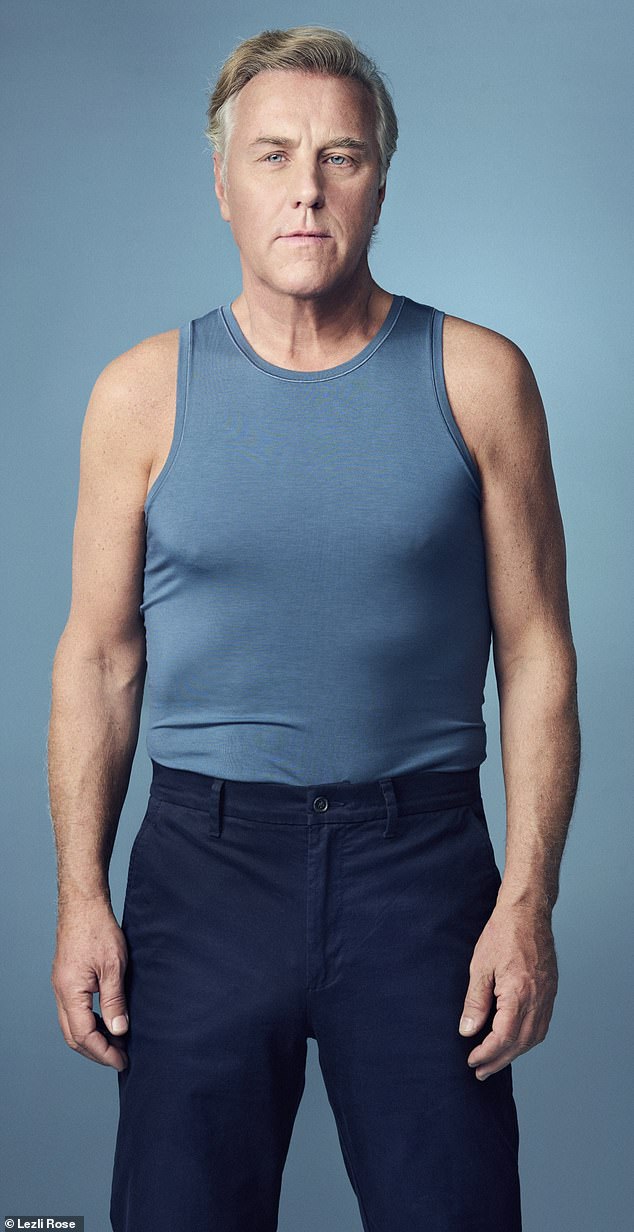

If I’ve ever been able to boast about anything, it’s that I’ve never been fat. Admittedly, I’ve also never had a particularly defined or ‘hench’ physique. No David Gandy, obviously, but not a Jack Black either.
So like many middle-aged men, without the pressure of obvious rotundness, I didn’t push myself. The torture of being a bench-pressing, 20-push-ups-in-one-go type of guy wasn’t necessary, I thought. A small bit of running, tennis, dog walking – yes. Endless hours in the gym – no.
After all, my diet was pretty healthy. Plenty of salads, but I wouldn’t shy away from a Friday night curry. And of course, booze galore. Rather than counting calories, I relied on my belt notches, good genes (slender on my mother’s side) and the wardrobe mirror as a corporeal guideline.
This attitude served me pretty well over the decades.
But, suddenly, my relaxed lifestyle started catching up with me. My belly began to protrude. The scales showed an extra stone. A new half inch went around my collar, too.
Life gave me an extra prod when I turned 62 last year. Significant because that’s the exact same age (and month) my mother had died of a heart attack, without any warning, more than 30 years ago.
Things weren’t looking good. For once in my grown-up life, for Mum’s sake and mine, I wanted to feel fit, energetic – and yes, slim. Those extra pounds had to go.
No doubt you know plenty of blokes just like me. Indeed, you may even have a partner who is just like me.

Simon’s chosen method for losing weight was a heavy lifting, pleasure-depriving regime called the Six Pack Revolution (SPR)

As part of the SPR fitness programme, Simon followed a low carb, high protein diet of pulses, vegetables, chicken breast, seeds, Greek yoghurt and flat breads
If so, you won’t be surprised – you may even eye-roll – at what happened next. I resolved I wouldn’t resort to Mounjaro. Instead, I pursued a new ascetic weight-loss regime with single-minded (read: obsessive) vigour. I approached my new lifestyle like I was the first male to ever embark on health change.
My chosen method was a heavy lifting, pleasure-depriving regime called the Six Pack Revolution (SPR).
As recommended by buff TV presenter Rylan Clark and ladette-turned-marathon-runner Sara Cox, the SPR is a brutal and relentless slog that involves a daily (sometimes twice daily) workout for 30-40 minutes, including lifting and swinging heavy kettlebells, crunches and goblet squats, when you squat holding a weight at your chest. Worst of all are ‘steering wheels’ – rotating a weight from side to side while engaging the core, shoulders and forearms (ugh).
Along with this online coaching fitness plan, you follow a low carb, high protein diet of pulses, vegetables, chicken breast, seeds, Greek yoghurt and flat breads. Even sourdough was forbidden. As was booze.
All this hunger and discipline cost me £139 a month. I all but disappeared into my routine. I went to bed at 9pm, my social life flatlined, friends called me ‘boring’. Breakfast became variations of seeds and yoghurt.
I stuck to it though and, after nearly three months, I acquired something approaching the holy grail of a ‘GI Joe muscle’ around my groin. My love handles diminished down to what I called ‘resentment grips’. That stone dropped off. I felt stronger, fitter and slimmer – and God, didn’t I make sure everyone knew it. My days of impending obesity, I felt sure, were long behind me.
Then, a few weeks ago, buoyed with the kind of confidence only a shirtless summer of being flamboyantly non-Dad-bodded could bring, I decided to find out, empirically, exactly what level of ‘skinny’ I’d actually achieved. I thought I might have another garland to boast about.
But to my shock and shame, I discovered that – after all my efforts – not only am I technically still overweight, I am not just a little bit overweight… I am very nearly obese!

Despite losing a stone, Simon’s BMI was still just a few points away from being clinically obese
The NHS’s Body Mass Index calculator – which works out if you are a healthy weight by cross referencing your height and weight – revealed my vital statistics of 6ft 1in, 15st 2lbs and a 36 inch waistline didn’t make me the Adonis I thought I was.
Instead my BMI was 28.3, just a few points away from being clinically obese. (Which means that, horrifyingly, before my fitness regime I was classed as obese. I never weighed myself before, but I must have been well over half a stone heavier.)
So how, with no belly rolls to speak of, and the definite signs of something resembling abdominal muscles, can I now be considered overweight?
It turns out mine is the story of so many middle-aged men. It’s more than likely your other half might be among them. If so, he’s going to need your help.
While we chaps may preen if we shed a few pounds, the reality is our bodies tell a different story on the inside.
For hidden deep within our newly reasonably sized waists can be layers of visceral fat, wrapped around our vital organs – like our liver, pancreas and intestines. This kind of fat is most concerning as it can warn of some serious health issues down the line; heart disease, type 2 diabetes and high blood pressure.
I discovered just this when, desperate at my BMI reading, I went to Randox Health, a diagnostic testing and preventative health care provider that offers health checks using a combination of blood and urine tests and state of art diagnostic machinery.
For £241, I was tested to within an inch of my life for 150 biomarkers, including heart, bone, liver, kidney and thyroid health, as well as inflammation, blood count and iron status.
As well as my high levels of visceral fat, most significantly they showed my low-density lipoprotein cholesterol level was not good – around 3.5 when a reading of 2.6 is considered healthy for my age. (I’m now on medication for this and am eating more beetroot.)
So common is this under-the-radar obesity among middle-aged men that medics have a bonafide term for us secret fatties: Normal Weight Obesity (NWO) or Metabolically Obese Normal Weight (MONW).
I prefer SOMAM – Secretly Obese Middle Aged Men.

It is common for older men to appear in good shape, but a high body fat percentage can be easily hidden beneath any muscles
All these terms describe an individual who might appear thin or have a normal BMI, but conceals a disproportionately high body fat percentage and often low muscle mass. (Most men lose about 30 per cent of their muscle mass during their lifetimes, thanks to hormonal changes and less physical activity.)
As a consolation though, I tried to remember other SOMAMs include some of the world’s fittest men: track cyclist Sir Chris Hoy, who at the peak of his Olympic gold medal winning career weighed just two kilograms more than me and had a BMI of 27.2 (pretty much the same as my own reading of 27.8, the only difference being Hoy’s extraordinary fitness levels, muscle mass, stamina and energy levels).
Of course, this reveals BMI is not an infallible measurement. It doesn’t account for factors like muscle mass or body fat distribution. I have a disproportionately big arse and thighs like a Rugby Union second rower… might those unsightly bits of me have nudged up my reading?
For some this might be the case, but, sadly, my visceral fat and cholesterol measurements don’t lie. Despite my burger dodging and wine avoidance – not to mention all those kettlebells – I remained in health danger.
I soon learned that it’s crowded here, in the male fatty zone. With a grim inevitability, the average man – from early adulthood, through his comfy marriage years and either married or divorced, single or in a relationship – typically adds one to two pounds of weight every year. Put simply, we are over-fed, under-nourished and under-exerted.
The activity/calorie consumption deficit is the middle-aged man’s constant struggle, clinical pharmacologist and pharmaco-nutritionist Professor Paul Clayton told me. As men age, they consume more and move less, and ‘meta obesity’ (metabolically unhealthy obesity) becomes a prevalent body type. It’s really bad in the US where less than 10 per cent of the American public is now estimated to be of healthy weight.
‘In a few years there won’t be a single clinically healthy North American man anywhere,’ predicts Professor Clayton. ‘And British men aren’t too far behind, either.’
The problem is, after a certain age pretty much everything makes you fat: food, indolence, global food corporations, work, lifestyle, genetics, relationships. Yes, even a happy marriage piles on the pounds.
Earlier this year a study by scientists at the National Institute of Cardiology in Warsaw, Poland, found married men were 3.2 times more likely to be obese than unmarried men (there was no increase in obesity risk for married women), with wedded bliss increasing the odds of being overweight by 62 per cent in men. The Poles described this as ‘an unfortunate epidemiological truth’.
But guess what? Divorce makes you fat too.
I have personal experience here. Some 12 years ago, after breaking up with my wife of 20 years and going through a long and traumatic divorce process, I lost my appetite and social life, and at first shed well over a stone. (Every cloud, etc.) There followed a self-medicated, binge/starve 5:2 diet thing – two days of eating junk, five days of being too miserable and lazy to go to the shops. There was no actual healthy activity, just the stress, lifestyle and grim bureaucracy of misery.
After the divorce storm passed, single life only made my weight worse. On my own in a new flat, left to my own kitchen devices and the freedom of the Waitrose ready-meal chill cabinets, I either ate like a slob in front of the TV, or chowed down on rich restaurant fare during a series of dates with women I’d met online.
And when I did eventually settle down with someone else, comfortable cohabiting didn’t help the pounds fall off either.
Add to all this, reduced testosterone levels at my age make you chubby as well. The male menopause, or andropause, is associated with all sorts of undesirable stuff like erectile dysfunction, gynaecomastia (aka man boobs), loss of muscle mass, a reduced drive and ability to exercise, unwanted fat redistribution, failing sexual potency, hot flushes, a drop in libido, falling energy levels and more.
‘Where the andropause differs from the menopause, is that it is a more gradual and variable, less eventful process that creeps up slowly on males and can occur at different life stages,’ explains Dr Jeff Foster, a men’s health specialist and a co-founder of the H3Health company targeting the wellbeing of 40-plus males. Testosterone, the male hormonal equivalent of oestrogen, gradually increases in men to around the age of 30, then gradually decreases by 1-2 per cent in subsequent years – roughly 10 per cent a decade.
This might sound un-traumatically minor, but the cumulative effect on a man in his 50s or older – like, say, me – can be quite profound.
A recent Australian scientific study revealed a two-year treatment of 12-weekly testosterone injections produced significant and sustained weight loss, a marked reduction in waist circumference and BMI and an improved body composition.
So could a testosterone boost, more exercise and fewer calories be the route to this divorced, cohabitating, dietarily confused SOMAM of yo-yoing adiposity and weak will getting back to his ideal vital stats?
Dr Google says my dream shape is 12st, a 32 inch waist and 42 inch chest, topped off by a 16 1/2 inch collar. Can I possibly hope to be such a size? And indeed, once any male loses his youthful trim, can their female partner ever hope he’ll slim down and become truly healthy inside and out – considering all that’s against him?
Here are my top five scientifically backed tips for all my fellow SOMAMs, which I aim to start following in the new year…
Top five tips for secretly obese other halves
1.Walk, don’t run
Traditional aerobic and cardiovascular exercise, like my slow, puffing, panting, morning three-mile jog in the park, burns just 300 calories – or three chocolate digestives.
So persuade your husband to ditch the car and try walking, at a brisk, heart-pumping pace, everywhere. The more you weigh, the more you’ll burn (an 11st man walking at 4.5mph for 30 minutes can burn around 443 calories).
2. More weights, more weight loss
Working out with weights, certainly for older men, is as good, maybe even better, than traditional male hobbies like running and five-a-side football. As we age, strength training becomes particularly effective in reducing abdominal fat and preventing muscle loss, which is, in turn, crucial for sustaining calorie expenditure and managing one’s waistline. If you want to target the visceral fat around the organs, buy a set of kettlebells and commit to a daily workout of swings, goblet squats and single arm snatches.
3. …or try using your own body weight
If you don’t fancy steel weights, try simple bodyweight squats – hands in the prayer position, bending the knees and extending as you lunge. Start with 25 and build up to 100. Alternate with high knee-cap claps, clapping hands under the knee on both sides as you kick up. Do 100 of these also. Sounds easy? It’s really not.
4. Fed up with Keto? Try the Victorian diet
‘The Victorians ate seasonal and organic; root vegetables, potatoes, and turnips,’ says Professor Clayton. ‘They also consumed much more anti-inflammatory heart and brain health-promoting omega-3-rich oily fish than we do, like herrings, eel, cod, haddock, cockles and whelks.’
Superfoods – like watercress, apples, cherries, beetroot and cabbage – were on every plate in the 19th century. ‘Substantial amounts of fibre, vitamins and minerals were taken on, most importantly, the plant or phyto-nutrients known to protect against degenerative diseases,’ says Professor Clayton. ‘This kept Victorians slim and 90 per cent less likely to develop cancer, dementia and coronary artery disease than we are today.’
5. A pill rather than a jab?
Lyma is a new feeding and nourishing supplement made of 11 ‘gold standard nutraceutical ingredients’ including vita-algae D, vitamin D3, anti-oxidants and, crucially, ActivAMP. Derived from the adaptogenic herb Gynostemma pentaphyllum and containing the ‘metabolic master regulator’ enzyme AMP-activated protein kinase, it has a remarkable silver bullet claim; to stimulate the same proteins that burn fat and produce energy, as typically released during physical activity and fasting.
In other words, it is ‘an exercise memetic’ – a workout in pill form! It’s available online at Harvey Nichols and Harrods, or online at lyma.life – but will set you back £149.25 for a month’s supply.