
Daily Mail journalists select and curate the products that feature on our site. If you make a purchase via links on this page we will earn commission – learn more
Much like your favourite piece of jewellery, a fitness tracker can be incredibly personal. After all, you’re committing to wearing it every single day, meaning it needs to look good as well as do good.
Gone are the days where you could only pick up a bulky watch or simple Fitbit to track your health, nowadays there is something for everyone.
From inconspicuous smart rings such as the Oura Ring 4, high-tech wellness devices like the Whoop Wearable and simple activity trackers from the likes of Fitbit, these devices come in all shapes and sizes – meaning the best fitness tracker can be tailored to you.
So whether your goal is monitoring hormones, improving sleep or even training for a marathon, there’s a tracker that can help.
And while sceptics may argue that constantly monitoring your heart rate can turn even the most stoic person into a hypochondriac – knowing more about how your body works can be a fantastic tool for managing stress and navigating training regimes, particularly if you’re trying to improve your health.
To help you understand which fitness tracker is the right one for you, the Daily Mail has tested six models from the most popular brands. Be sure to also check out our roundup of the best running trainers and running socks, if you’re just starting your fitness journey.
If you’re in a hurry we’ve added some quick links below to our favourites, otherwise read on for our fitness tracker reviews.
Best fitness trackers: Quick list
How we test
As with any technical fitness gadget, it was important that we tested the trackers thoroughly. To do this, we try them in real–world settings, including the office, our homes, the gym and out and about.
We evaluate the technology across a range of measures, this includes design, comfort, price and application. Our testers wore these trackers every day, using them to monitor sleep, step count, heart rate and where applicable, hormones.
While it’s tricky to measure exactly how accurate these products are, we used our test findings from each product for comparison, to see how they measured up to each other.
Each device goes through at least several days of hands–on testing, allowing us to provide an in–depth review to help you make an informed decision.
Read more about how we test tech products.
The best fitness trackers to buy right now


The Oura Ring 4 looks extremely chic and gives you an insight into your stress levels, while the Garmin Venu 4 marks a meaningful level up from its two predecessors

The Apple Watch Ultra 3 arrived in sleek packaging and was easy to assemble
1. Best fitness tracker overall: Whoop 5.0

Whoop 5.0
What we love
-
PositivesAccurate activity, sleep, and stress tracking with HRV insights
Two weeks of battery life
No screen for distraction-free 24/7 wear
Review
Reviewed by: Robert Folker
Unlike traditional fitness trackers, the Whoop 5.0 delivers deeper insights into how your body is performing and recovering day to day. Alongside simple metrics, it also tracks more advanced data, including heart rate variability, time spent in REM sleep, respiratory rate, and muscular load during workouts.
After wearing the tracker consistently for a few days, the home tab in the app begins generating personalised sleep, strain, and recovery scores. These scores work together to provide a clearer understanding of how well your body is coping with exercise, stress, and daily demands.
One of Whoop’s biggest strengths is the depth of analysis available within the app. Habits such as caffeine intake, alcohol consumption, hydration, and screen time can all be logged, helping you get a better understand how lifestyle choices directly affect recovery and sleep quality.
Over time, the app’s personalised recommendations become more and more useful, helping you make smarter decisions, especially around sleep routines. The amount of data provided is extremely impressive, and the app makes it easy to digest without becoming overwhelming.
The lack of a screen will divide opinion, but it can also be one of the device’s biggest advantages. Without constant notifications or distractions, it encourages you to focus less on checking your wrist and more on understanding long-term health trends. However, if you are used to smartwatches like the Apple Watch or Garmin may initially miss having features such as notifications and time display on your wrist.
To be able to use a Whoop 5.0 you must have a subscription, which is split into three tiers.
The subscription cost will undoubtedly put some people off, but if you are serious about improving your health and recovery, the investment could just be worthwhile.

The Whoop 5.0’s lack of a screen will divide opinion, but it can also be one of the device’s biggest advantages
2. Best smart ring fitness tracker: Oura Ring 4

Oura Ring 4
What we love
-
AestheticIt looks really chic and the colour range means you can make it work with your jewellery
-
BatteryIt lasts between five to eight days on a single charge
-
FeaturesIt tracks sleep, heart rate, activity, stress, body temperature and hormonal health
What could be better
-
ComfortWhile during the day wearing the ring feels very natural, sleeping in a piece of jewellery can feel uncomfortable
-
PriceThe cost of the ring alone is pricey but the fact it also requires an ongoing subscription to access the full data feels ridiculous
Review
Reviewed by: Jordana Seal
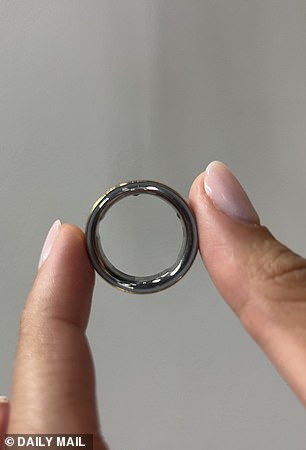
The initial draw of the Oura Ring is undoubtedly the fact it is sleek, small and comes in a range of colours/ metals that can blend with the jewellery you already wear. However, what makes this stand out is the huge range of health insight this tiny gadget captures.
Not only does it monitor daily activity, but it also give you an insight into your stress levels, heart rate, sleep and hormones helping you understand how ‘ready’ you are for the day.
From a fitness perspective I liked that it helped show you when would be the best day to exercise based on your biometrics. However, when I was at the gym or on a run the ring became a bit of a hinderance, sliding off when I was sweating and bashing against weights. It also doesn’t register the type of exercise you are partaking in that well.
The highlight of the device for me, is the insight it gives into your sleep, not only showing you when you hit your REM throughout the night but also alerting you via the app when it is time to wind down for the evening. It also gives you tips on how to improve your sleep, for example ensuring my bedroom was the right temperature.
Overall the app is very comprehensive and helps you understand the components your body needs to avoid stress and move your body accordingly.
For those looking to track their cycle it is very helpful and its predictions are very accurate. While it would be nice if the price point was lower, it is a fantastic tracker that feels like a helpful tool to understand your body better.

The initial draw of the Oura Ring is undoubtedly the fact it is sleek, small and comes in a range of colours

Overall the app is very comprehensive and helps you understand the components your body needs to avoid stress

Apple Watch Ultra 3
Review
Reviewed by Arthur Parashar
From the outside, it does not look as though the Apple Watch Ultra 3 has changed much beyond its predecessor. However, this looks to be the most impressive Apple watch yet.
With a bigger and brighter display, I really enjoyed how easy it was to navigate.
As a newbie to fitness watches, I was impressed by the sheer scale of health tracking. As well as tracking my daily Activity rings (Move, Exercise, Stand), the Ultra 3 also provides detailed morning insights into sleep quality – and monitors heart health, such as ECG, blood oxygen tracking and new hypertension alerts that analyse 30 days of readings for signs of high blood pressure.
From a fitness perspective, I liked how the extra action button on the left side can be used to quickly launch a workout, allowing you to track a range of metrics including distance, pace, running power, training load and heart rate zones. The watch also has 100-metre water resistance and supports diving to 40 metres.
With a battery life of up to 42 hours – including 14 hours of outdoor workout with full GPS and heart rate readings – the Ultra 3 allows for going out further and longer.
Like previous Apple watches, I was able to pair it with my iPhone. This meant I could easily access apps such as Phone, Messages, WhatsApp, Weather, Maps, Calendar and emails all on my wrist. A handy new wrist-flick gesture lets you dismiss notifications that come through.
While it is described as the ultimate sports and adventure watch by Apple, the Ultra 3 does come in at a punchy £749 and only works with an iPhone. For the hefty price tag, there has not been a massive overhaul compared to older Ultra models.
The Ultra 3 comes with one strap of your choice – an Alpine loop, an Ocean band or a Titanium Milanese loop which are sleek – or the less stylish Trail loop which prioritises fitness over aesthetic.

With a battery life of up to 42 hours – including 14 hours of outdoor workout with full GPS and heart rate readings – the Ultra 3 allows for going out further and longer

Fitbit Charge 6
What we love
-
AppearanceSleek, light-weight, wearable design
-
ConnectivityConnects to phone for navigation and to view texts
Review
Reviewed by: Sabrina Penty
The Fitbit Charge 6 is the latest fitness tracker launched by Google-owned Fitbit, and as someone completely new to fitness trackers, I’ve found it surprisingly easy and enjoyable to use.
The device has a sleek, lightweight design and offers a wide range of health-tracking features that go beyond simply counting steps. It can provide insights into your sleep quality, stress levels, menstrual cycle, heart rate, and overall activity, helping you build a clearer picture of your overall health and well-being.
It also logs workouts and tracks progress over time, which keeps me motivated as I’ve been able to see improvements and consistency in my fitness.
One feature I particularly like is how well it connects with your phone. You can receive text notifications directly on the device and use Google Maps for navigation, which is useful when you’re out and about or exercising.
Unlike some smartwatches, it doesn’t fully function as a phone replacement. Personally, I see this as a positive as it helps me disconnect from consistently checking my phone while still benefiting from useful features and health tracking.
As a newbie, I have also found the interface straightforward to navigate, which makes the experience way less intimidating if you’re new to wearable fitness technology.
There are some downsides, though. Some of the more advanced insights and features require a paid subscription. That said, you are offered a six-month free trial after purchase.
I also don’t find the standard strap particularly stylish, but there are plenty of alternative bands available online, making it easy to customise the look to your style.
Overall, I think the Fitbit Charge 6 is a great option for anyone looking for an easy-to-use fitness tracker that balances health insights, workout tracking, and useful smart features without becoming overly distracting.

The Fitbit Charge 6 is the latest fitness tracker launched by Google-owned Fitbit

Samsung Galaxy Watch8 Classic
Review
Reviewed by: Arthur Parashar
As smart watches go, the Samsung Galaxy Watch 8 is as stylish as it gets. With a signature rotating bezel and a sleek leather wristband, this feels like you are wearing a classic watch.
But this goes beyond the powers of a typical watch.
My favourite part of the Samsung Galaxy watch is the huge array of health-focused features on offer.
Samsung’s BioActive sensors can monitor heart rate, sleep quality, blood oxygen, stress levels and body composition. I’ve found this really useful to monitor muscle mass, body water and weight tracking.
The large smartwatch screen makes it easy to navigate around the different functions on the watch. And you can custom create your watchface to show you live data, including the weather and your heart rate.
I’ve also really enjoyed how the Samsung Galaxy automatically starts monitoring any exercise you do. For example, when I went on a long walk or a cycle, it started a workout and summarised how much distance I’d covered, the time I spent and the calories burnt.
Every morning, it also gives a clear summary of your sleep quality – providing an energy score and detecting any interruptions.
As a predominant Apple user, it took some time to adjust to the Android watch. However, when paired with a Samsung Galaxy phone, the watch becomes even easier to use.
While this is a very comprehensive watch, it comes in at a pricey £329 and you cannot pair it with Apple phones.
The watches come with one of four sleek straps, ranging from fabric bands to sportier bands, in an array of different colours.

The Samsung Galaxy Watch8 Classic looks more like a watch than a fitness tracker
6. Best fitness tracker for cycling: Garmin Venu 4

Garmin Venu 4
Review
Reviewed by: Shannon McGuigan
The Garmin Venu 4 marks a meaningful level up from its two predecessors – the Venu 3, which had a plastic case, as well as the Venu 2.
While both offered sleep tracking and all the general perks you expect from a fitness watch, it was a relatively basic affair, rather than a fitness tracker dedicated to any particular type of exercise.
After taking it on several jogs and spin classes, I can certainly recommend it to anyone who enjoys high-intensity/cardio exercise.
Not only does the Venu 4 cover the run-of-the-mill things such as 24/7 heart rate monitoring, step tracking, and GPS, it goes a step further with detailed exercise tracking for a range of workouts – 80, in fact.
And while good old intuition might be great, I found its ability to tell me if my workouts were strained or productive incredibly helpful, especially when figuring out what level of exercise was best for my body.
The feature I found most helpful was its recommendation of recovery periods. It allowed me to give my body time to fully recharge, ensuring I could give it my all in the next spin class or gym session, with a reduced fear of injury.
As someone who struggles with their sleep, I found the watch’s sleep tracker a game-changer. It records your sleep consistency and circadian rhythm, giving you tips on how to get better rest.
Its amazing battery life, as well as its lightness on the wrist also makes it ideal for longer training sessions and even weekends away. You can go for a long jog or cycle knowing it won’t die midway through your session.
Our verdict
Fitness trackers are a fantastic way to reach your fitness goals. The Oura Ring 4 was a standout product for us because of its chic appearance, it’s a fantastic piece of tech that can be incorporated into your own style rather than replacing a beloved item like a watch. The Whoop 5.0 is the best overall tracker because of the depth of analysis it provides. However, if you’re looking for a product that also acts as a watch then why not try the Apple Watch Ultra 3 or the Samsung Galaxy Watch8 Classic.
Why trust us?
At the Daily Mail, our team of expert testers have been researching, reviewing and writing about their respective specialisms for years.
Our team has lots of experience reviewing and writing about a range of products from travel to beauty. All of their reviews are honest, impartial and give a full-rounded opinion of the products they test.

The Samsung Galaxy Watch8 Classic is perfect for someone looking for a more elevated tracker
What is the difference between a fitness tracker and a smartwatch?
The aim of a fitness tracker is to monitor general health, wellbeing and movement. Meanwhile, a smartwatch tends to do many of these things too but also acts as a mini phone on your wrist, providing a huge selection of services like contactless payments and message notifications.
Do I need to pay for a subscription with a fitness tracker?
This is dependent on what tracker you go for, so make sure you’re fully informed before you buy. While some subscription-based trackers do offer basic data for free, it may not be worth it if the majority of health information is stuck behind a paywall that you don’t want to spend money on.
Whoop, Oura and Fitbit all offer varying levels of free and paid-for services.
How do I maximise accuracy?
It is important your tracker fits correctly, the sensors won’t work if the device is moving around. So make sure you measure your wrist or finger size properly before buying the item you want.