The confidence that appears when someone learns just enough about a subject to believe they’ve outsmarted the professionals is indeed interesting. There’s the person who watches a few cooking videos and starts correcting chefs, or the traveler who reads one blog post and suddenly knows more than the tour guide.
Most of the time, the consequences are minor. Other times, they come with a price and a very uncomfortable lesson in humility. That’s exactly what happened in a story shared by today’s Original Poster (OP) who works as a dispensing optician. After a customer insisted his understanding of photography gave him a superior grasp of optics, he was left regretting his decisions.
More info: Reddit
There’s a fine line between being confident in your own knowledge and assuming you know better than the people who have spent years training in a profession
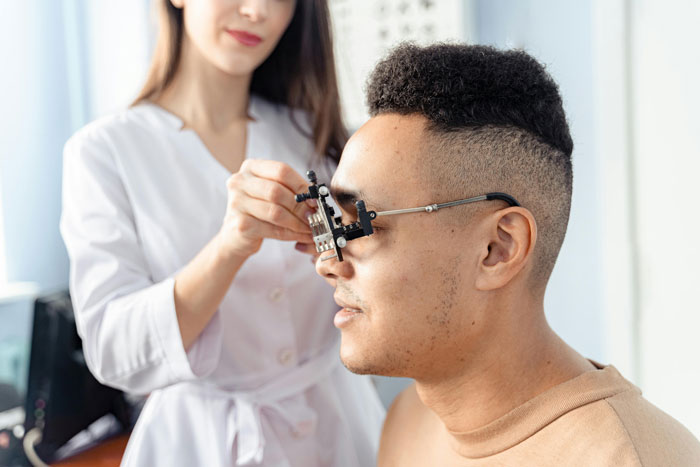
Image credits: AI25.Studio Studio / Pexels (not the actual photo)

The author, a qualified dispensing optician, explained that a customer came in wanting to combine parts of three different eye prescriptions into one custom solution
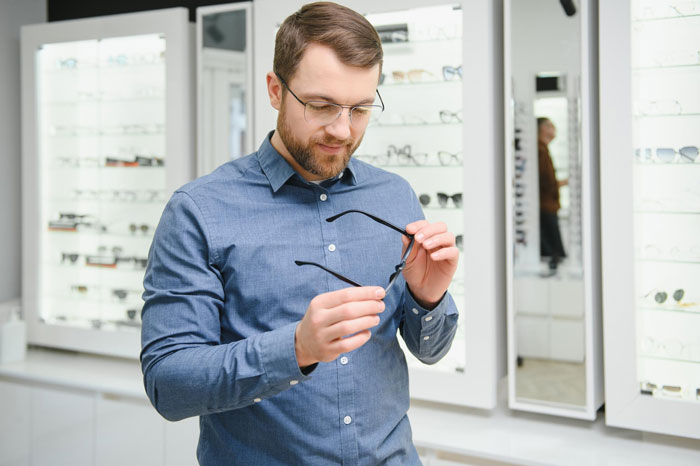
Image credits: hryshchyshen / Magnific (not the actual photo)
The customer insisted on creating his own “improved” prescription for progressive lenses, including different near-vision strengths for each eye

Image credits: stefamerpik / Magnific (not the actual photo)
Despite repeated warnings from the optician that the setup would likely cause discomfort and vision problems, the customer refused to listen

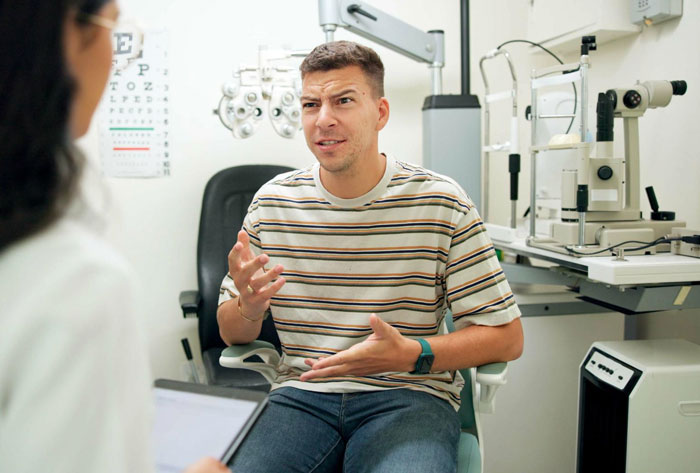
Image credits: The Yuri Arcurs Collection / Magnific (not the actual photo)
The optician had the customer sign a disclaimer and proceeded to make the lenses exactly as requested, since no medical or dispensing error was involved
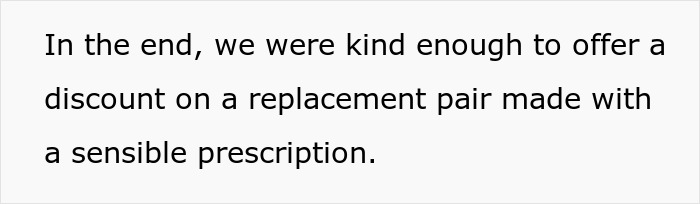

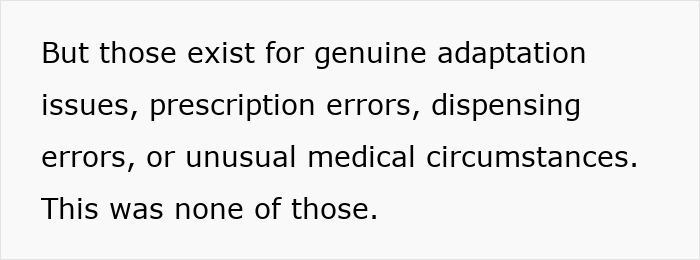
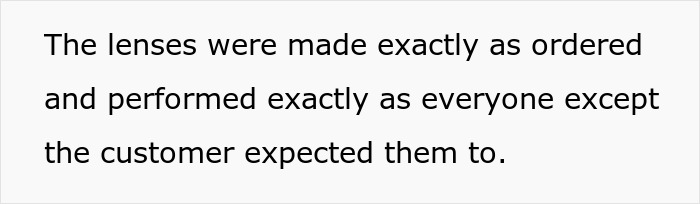
Image credits: Jibasseus
When the customer received the €750 glasses, he immediately found them uncomfortable and unusable, ultimately realizing the professionals had been right all along
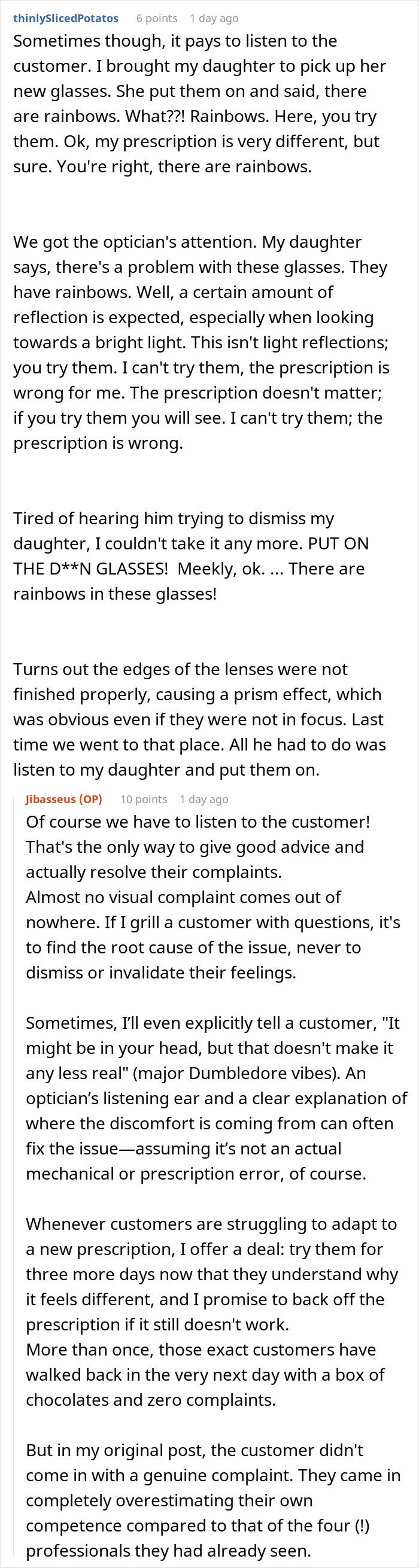
The OP, a dispensing optician, recalled the moment a customer had visited three separate ophthalmologists and received three different prescriptions. Rather than choosing one and following professional advice, he decided to build his own version by selecting the elements he liked most from each prescription. The biggest problem involved an addition used in progressive lenses for reading and near vision.
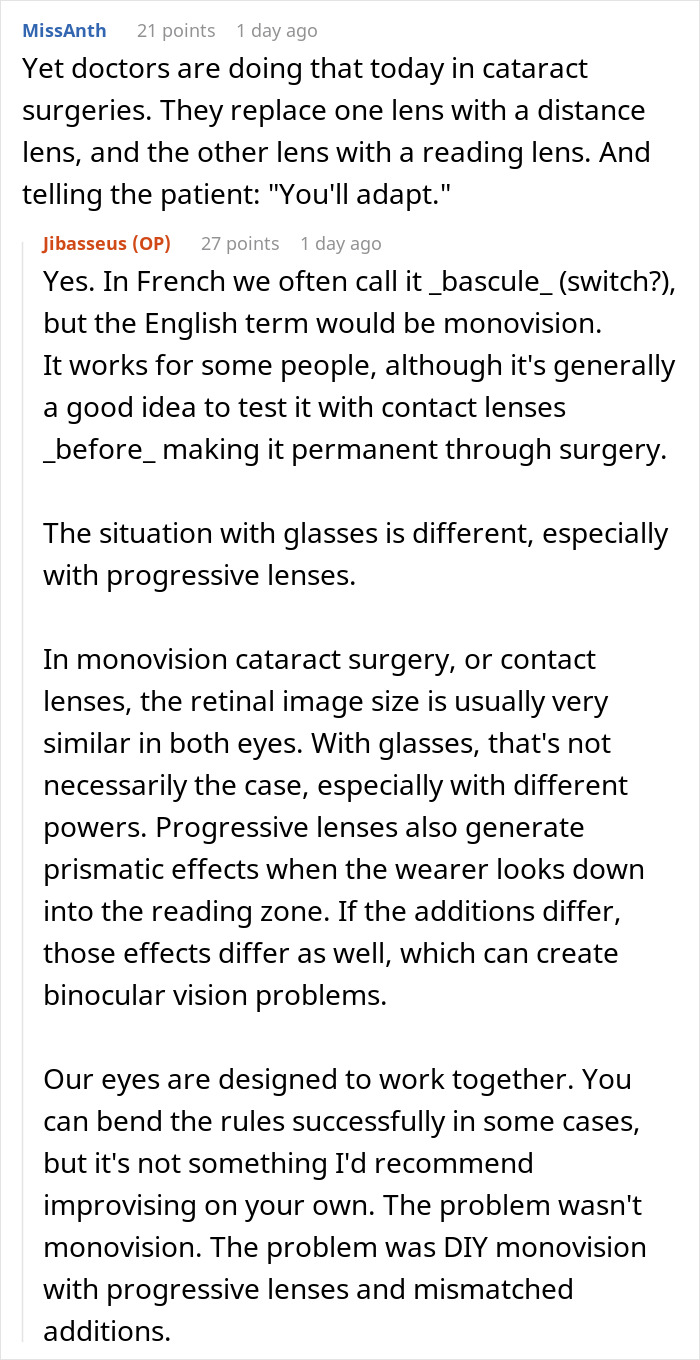
In most prescriptions, this value is the same for both eyes because it compensates for age-related focusing difficulties known as presbyopia. This customer, however, wanted something very different. He requested one eye to focus at roughly 67 centimeters while the other would focus at about 40 centimeters. Now, the OP compared this concept to wearing a stiletto heel on one foot and a flat shoe on the other.
Technically, it was possible, but it would be super uncomfortable. The OP’s colleague explained why the idea was likely to fail, but the customer was convinced that his experience as a photographer gave him the expertise needed to override professional recommendations. After multiple warnings, the store made it clear that the satisfaction guarantee would not apply.
The customer signed documentation acknowledging that he was proceeding against professional advice. However, when the finished lenses arrived, the glasses felt uncomfortable, and his vision didn’t function the way he expected. He instantly regretted it, and backtracked on what he had demanded. In the end, the store eventually offered a discounted replacement using a sensible prescription.

Image credits: mohamad kazzeh / Pexels (not the actual photo)
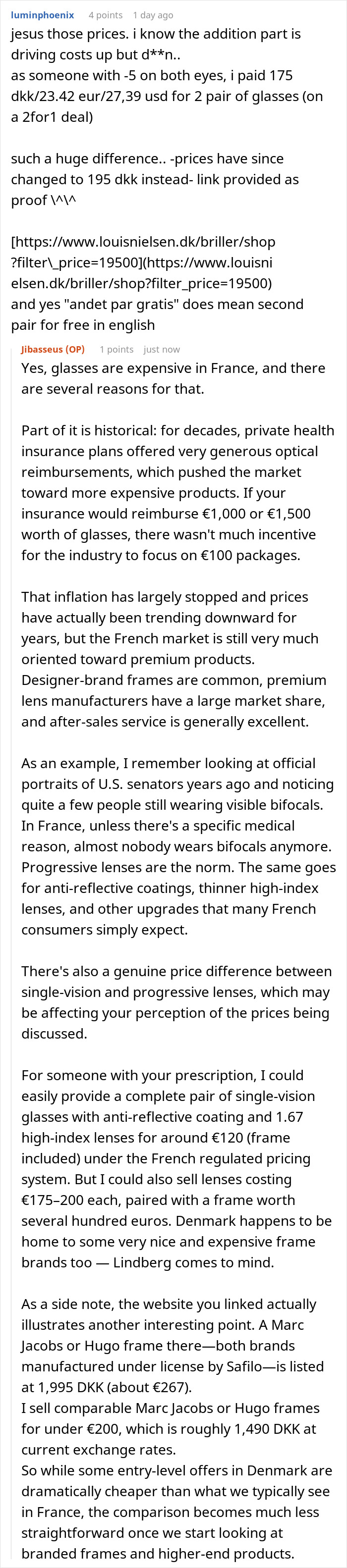
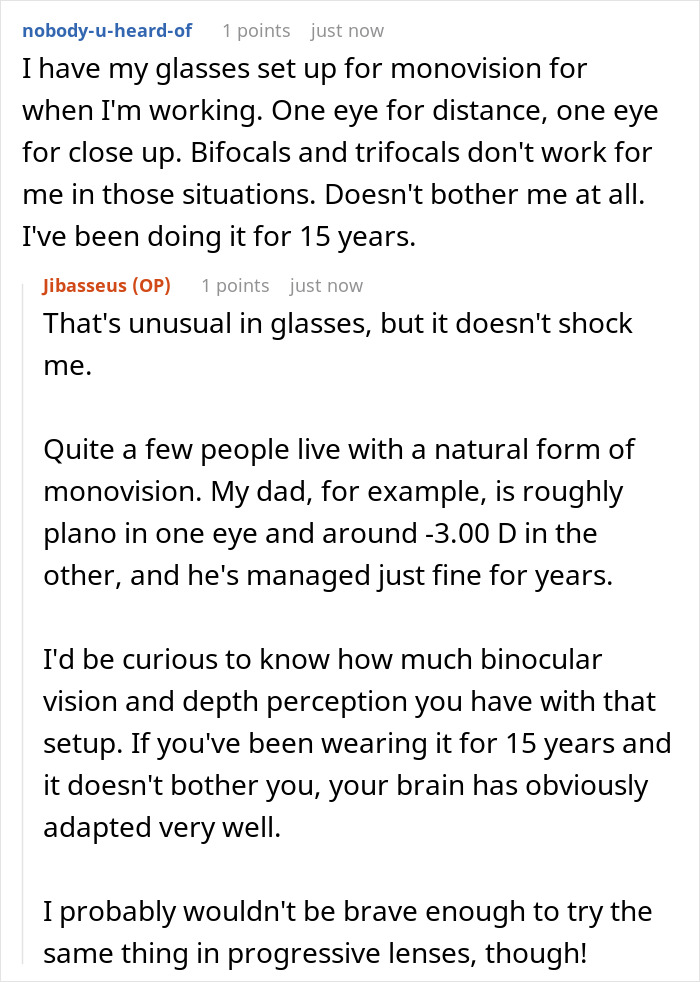
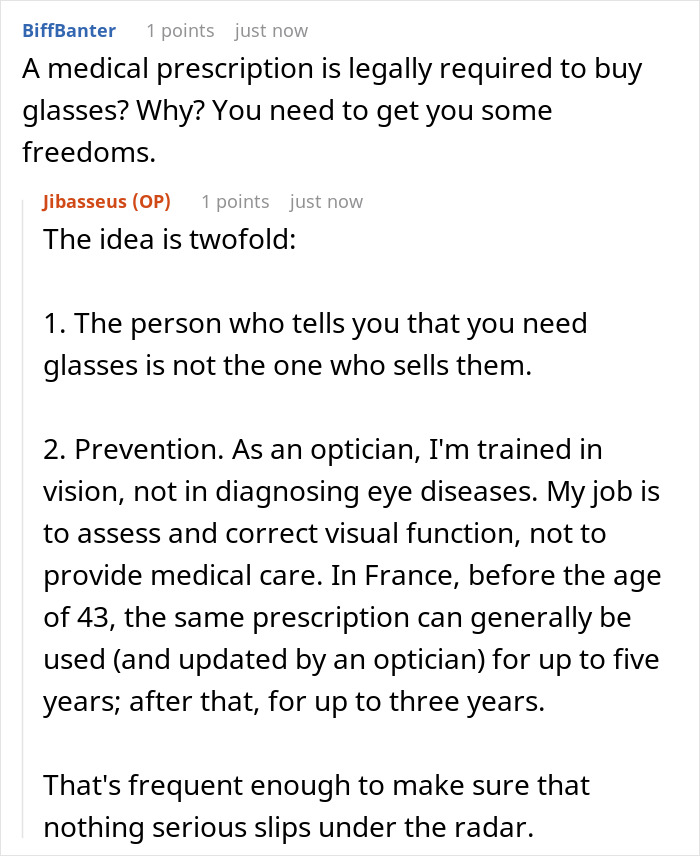
Dispensing opticians, as noted by Dresden Vision, are highly trained specialists in optics and lens design. They are not allowed to issue prescriptions themselves, instead, their role is to interpret existing prescriptions and translate them into wearable solutions. They make precise adjustments to frames and lenses to ensure comfort and proper visual performance within strict legal boundaries.
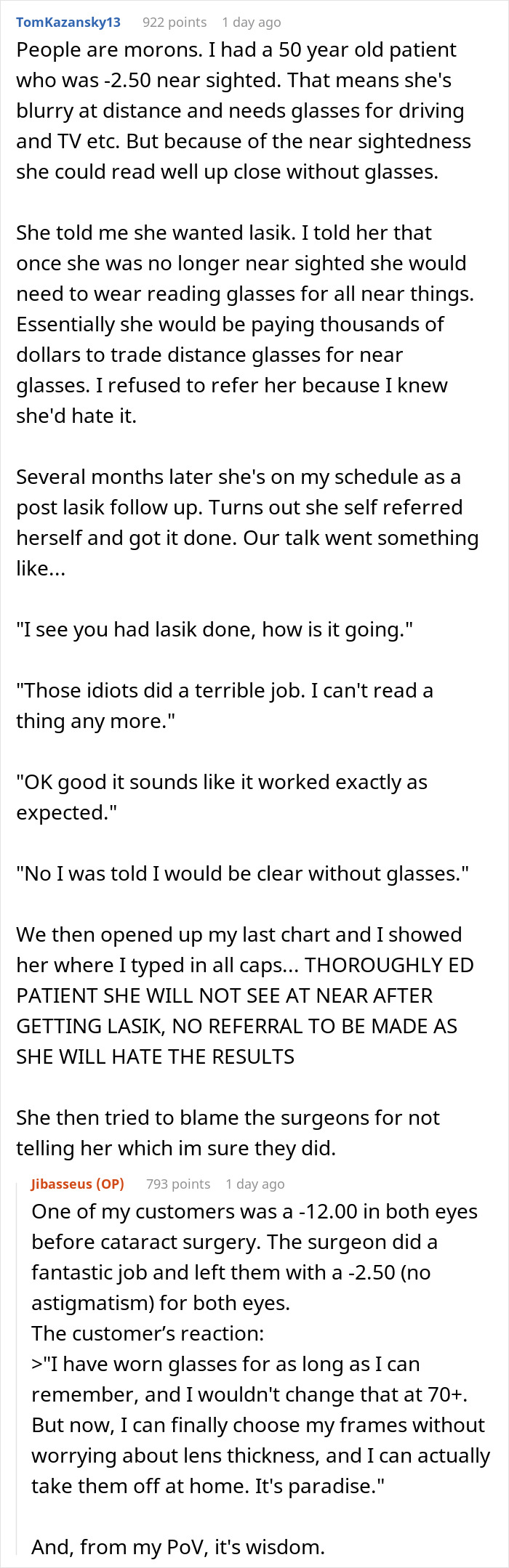
This becomes especially important when dealing with progressive lenses, where precision is critical. According to the Vision Institute, these lenses depend on carefully balanced optical design, and introducing unequal near-vision “add” values between the two eyes can seriously disrupt how vision is processed.
Further reinforcing this, the Cleveland Clinic explains that when each eye is given a different focusing strength for close work, the brain is forced to reconcile two conflicting images. This can lead to eye strain, headaches, dizziness, and reduced depth perception, making even simple tasks like reading or focusing at short distances uncomfortable and mentally exhausting.
Netizens with medical or technical backgrounds pointed out how unusual and impractical the customer’s request was. Others drew parallels to similar situations in their own professions, showing how clients often underestimate expert advice until they experience the consequences themselves. What do you think about this situation? Do you think the customer is always right? We would love to know your thoughts!
Netizens found the situation hilarious and highlighted how important it is to trust trained professionals over personal assumptions