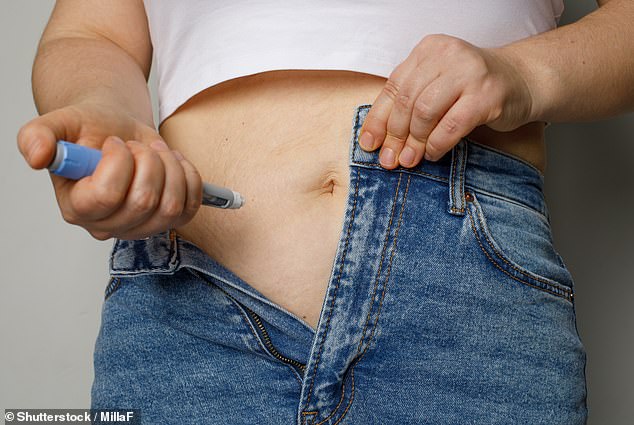
Weight-loss injections – miracle solution for the millions unable to tackle excess weight by conventional means? Or sticking plaster medicine fraught with side effects, the extent of which we are nowhere close to realising?
For all the fanfare surrounding the drugs, increasing evidence points to the latter.
Last week, the largest study of its kind published in the BMJ found people on GLP-1 agonists – the umbrella term for brand names such as Mounjaro and Wegovy – were projected to regain all the weight they had lost within 18 months of stopping the jabs, quicker than those who lost weight without them. Any cardiovascular benefits they bestowed, such as improved cholesterol, were also lost.
As this news emerges, by coincidence so too does a new book by two doctors whose fat jab scepticism is causing serious waves.
Dr Paul Barrington Chell and Dr Monique Hope-Ross, pre-eminent specialists in metabolic health – the speciality that deals with risk factors contributing to heart disease, type 2 diabetes and stroke – aren’t remotely surprised by the Oxford University findings.
In fact, they say, the predicament of those on jabs is worse than outlined in the research.
It’s not just that people put the weight back on, they say – it’s what those regained pounds are composed of.

The largest study of its kind published in the BMJ found people on GLP-1 agonists were projected to regain all the weight they had lost within 18 months of stopping the jabs

Dr Paul Barrington Chell and Dr Monique Hope-Ross warn that it’s not just that people put the weight back on, but what those regained pounds are composed of
Studies suggest between 25 and 60 per cent of weight-loss on the injections is lean tissue mass, and yet the weight piled back on will be fat.
‘You won’t regain the lost muscle,’ claims Paul. ‘Your fat mass is increasing and your lean tissue mass is decreasing. And that’s a very frightening thought.’
It’s not the only frightening thought in their new book, Beyond Weight-Loss Jabs, which explains in excoriating detail exactly how these drugs work – and don’t.
A married couple, Dr Barrington Chell and Dr Hope-Ross have medical careers spanning four decades and, in 2022, co-authored the bestselling weight-loss guide The Diet Whisperer. Now they’ve become the highest-profile experts yet to voice concerns about the weight-loss drugs taken by an estimated 2.5million Brits.
Much of what they write reframes the way we’ve learned to think about the jabs. Who knew, for example, that the nausea, which as many as 70 per cent of users experience, is not a side effect so much as a sign the drug is working by delaying gastric emptying? And that the contents of the stomach effectively ‘composts’ as a result.
After a normal meal, the stomach can empty in two to four hours, says Monique, yet on jabs, ‘nine hours is not uncommon’.
‘People complain of sulphur burps because they’ve got this composting in their stomach,’ says Paul, whose gastroenterologist friend recently told him the stomachs of those on GLP-1s often look like rubbish tips, ‘full of rotting food, sludge and goo’.
Who knew, too, that the ‘only way’ to rectify typical muscle atrophy caused by weight-loss injections is by doing strength training, such as weight lifting, three times a week – for 18 months.
But does anyone actually have the energy for that when they’ve not had a decent meal in weeks? Monique doubts it and Paul is more pessimistic still.
‘I don’t buy the fact you can replace this tissue,’ he says.
Reports of gaunt, haggard ‘Ozempic face’ are far from a fictional construct, he adds, with users revealing ‘very fine creases in their face because a lot of the muscle has gone’.
‘All the various facial muscles are starting to deplete. They’ve got this cancerous look.
‘As medics we look at them and say, “there’s somebody else on the jabs.”’
Then there’s osteopenia, or reduced bone density, which can lead to osteoporosis, and an increased risk of falls and fractures.
‘How the hell do you replace the bone?’ he asks. ‘That’s an appalling situation.’
As for where this will lead us – well, there simply isn’t the data yet. ‘There isn’t the evidence they’re going to end up in wheelchairs with crushed spines,’ says Monique. ‘But one would fear that this would happen.’
While ‘visually impressive’, GLP-1 weight loss doesn’t address the underlying cause of obesity they explain.
‘It’s fool’s gold,’ says Paul, because thin does not equal healthy without cellular repair.The couple’s solution, as laid out in the book, is not a drug, but a high fat, low carbohydrate diet, plus intermittent fasting.

‘You won’t regain the lost muscle,’ says Dr Barrington Chell, who co-authored the bestselling weight-loss guide The Diet Whisperer with his wife, Dr Hope-Ross
‘We’re bothered about the side effects and the fact you have to stay on [these drugs] for ever,’ says Monique.
Last week, Danish pharmaceutical giant Novo Nordisk became the first to bring a weight-loss GLP-1 pill to the US market with its oral Wegovy. Paul is unimpressed: ‘It’s just another step on the same road to hell.’
The couple, who met as junior doctors in 1989 and split their time between Warwickshire and France, are speaking over Zoom from their home in the Alps.
Their slim physiques – Monique, 66, who completed an Ironman triathlon in her 50s, is, at 7st 13lbs, lighter than her teenage weight, while at around 13st Paul, 64, a keen skier, weighs 3st less than in his rugby playing heyday – are testament to their advice.
They’re still partial to the odd pastry and glass of wine, however. ‘We’re totally human,’ smiles Monique. According to Paul and Monique, the problem with fat jabs is especially obvious to those working in metabolic health which focuses on how well the body processes things like fats and sugars.
‘If everyone in the UK treated the root causes of metabolic diseases, there would be no waiting lists,’ says Paul.
A healthy cell, they explain, should operate as a ‘hybrid engine’, meaning it switches between burning fat for energy to burning carbohydrate.
Yet in the overweight, the fatty acids contained in cells get ‘locked’ in, meaning they can’t be burnt for fuel, and so cells become carbohydrate-dependent – hence those biscuit cravings.
‘Snacking is both cause and effect of obesity,’ says Paul.
Unsurprisingly, most people on weight-loss jabs – which mimic the GLP-1 hormone our gut releases, slowing down how fast our stomach empties, making us feel full – don’t have cells good at burning fat. ‘Going on fat jabs with unhealthy cells is like running a marathon without training,’ says Paul. ‘You’re going to feel terrible.’
With few carbs being ingested, users ‘bodies are forced to ‘hack into their lean tissues’ supplies instead. ‘Muscle, tendons, bone, ligaments,’ says Monique.
‘That has got to be serious, in anybody’s book.’

‘Going on fat jabs with unhealthy cells is like running a marathon without training,’ says Paul. ‘You’re going to feel terrible.’
With supermarkets positioning chocolate bars at the till and multi-billion pound food manufacturers promoting sugary cereals for breakfast, it is not our fault we’re overweight, they say. But it is our responsibility to fix it without prescription medication.
Until they quit clinical practice in 2016, both doctors were eye surgeons – Paul was a senior fellow at Moorfields eye hospital in London – and having treated thousands of patients with metabolic disorders linked to diseases such as diabetes, they say weight- loss does reduce the risks of eye diseases such as diabetic retinopathy, which causes damage to blood vessels in the retina.
However, injections are also linked to a rare but serious condition called non-arteritic anterior ischemic optic neuropathy (NAION) in which the blood vessel supplying the optic nerve is blocked – it’s a stroke in the eye, effectively.
The exact cause is not yet known, says Paul, ‘but it has been statistically significantly associated with people on the jabs, who’ve suddenly developed blindness’.
And not in an ‘I can’t see properly’ way, stresses Monique, but full, black blindness.
A spokesperson for Novo Nordisk, Wegovy’s manufacturer, said The European Medicines Agency’s Pharmacovigilance Risk Assessment Committee, having reviewed all available data, concluded NAION to be a very rare adverse reaction to semaglutide, it’s GLP-1 receptor agonist.
And what about those digestive problems caused by the ultra-slow transit of food through the gut?
Monique says while most users’ stomachs will start working normally again when they come off the jabs, there are reports of people developing permanent gastroparesis as a result, ‘where your stomach never moves again’, a very rare, but accepted problem.
If the couple’s new book makes for a sobering read, so too does the plethora of new side effects that seem to emerge every month.
Singer Robbie Williams has blamed the jabs for his ‘blurry’ eyesight, for example, and Daily Mail columnist and former MP Nadine Dorries recently revealed a diagnosis of the irreversible pre-cancerous condition, Barrett’s Oesophagus, caused by acid reflux, almost certainly brought on by her erratic Mounjaro diet.
Actor Stephen Fry said Ozempic made him throw up so often he had to stop.
So a high price to pay for slipping into smaller jeans.
Of Dorries’ Barrett’s Oesophagus, Paul says: ‘GLP-1 drugs don’t “cause” Barrett’s – but they create the physiological and behavioural conditions in which it could develop.’
Dorries also reported hair loss, which is a ‘stress response’ to rapid weight loss and a sign of nutritional deficiencies in GLP-1 users, says Paul.
‘Jabs don’t teach healthy eating habits.’ And that’s a problem, since it means that for the vast majority, keeping the weight off means staying on the drugs for a long time, possibly for life, despite the fact we have no idea of the long-term effects.
As Paul says, our bodies naturally release GLP-1 after a meal to signal satiety, but in quantities that last for two or three minutes. Yet the amount people are injecting can last up to a week. ‘You’re giving people something way above the physiological dose.
‘GLP-1 is a very powerful intracellular messenger. Who on earth knows what this is going to do in the medium term?’
In the short months since they sent their book to the publishers, they say a ‘tsunami’ of further side effects have been reported online among GLP-1 users, from skin rashes to shingles.
Then there’s the effect on our mood: GLP-1 drugs activate receptors in areas of the brain related to the reward neurotransmitter dopamine, reducing what has been coined ‘food noise’. But, says Paul, they also dial down other forms of enjoyable noise ‘such as the noise of your vintage motorcycle, the noise of sex’.
So do jabs smother your ability to enjoy life?
While there is no proof they cause depression, 2024 research in the journal Pharmaceuticals found 230 reports of suicidal events linked to GLP-1 drugs between 2018 and 2023.
Analysis of 162,253 patients in the journal Nature in 2024, meanwhile, found those on GLP-1 drugs exhibited a 195 per cent higher risk of ‘major depression’, a 108 per cent increased risk of anxiety and a 106 per cent increased risk for suicidal behaviour than control patients.
On a basic level, says Monique, ‘you haven’t got the pleasure from things that used to please you before.’ And food, they stress, ‘should be fun’.
So what do they recommend instead of the jab craze? The key is to stop the insulin spikes – caused by eating carbs – that stop us burning fat.
A four-week high fat, low carbohydrate diet trains the cells to become ‘fat adaptive’, they say, and reduces carb cravings.
After this, the couple suggest introducing intermittent fasting. They usually fast from Sunday lunchtime to Tuesday morning every week, with only black coffee and water. Also, four times a year, they fast for an astonishing five to seven days. It can take years to build the stamina for this, they say, but report ‘a sense of calm’ afterwards.
Beginners should try to restrict their food intake to a ten-hour window every day and limit carbohydrate consumption to periods after fasting and exercise, when glycogen stored in the liver and muscles has been drained, allowing the glucose to be stored there rather than as fat.
Aim for a selection of 30 different plants a week and split your plate between protein such as meat and fish and veg or salad – both moderate the production of GLP-1s in the small intestine.
Drink plenty of water, ‘because if you become dehydrated you release vasopressin, one of the hormones that lays down belly fat,’ says Monique.
The other hormone to look after is the stress one, cortisol. So no matter how hectic life gets, ‘try to develop mechanisms for coping’, says Paul.
When approached by the Daily Mail, a spokesperson for Wegovy’s manufacturer Novo Nordisk said GLP-1 drugs are ‘part of a long-term approach to managing a chronic disease like obesity’ and should be used with the support of a healthcare professional. They added that the drugs have ‘demonstrated safety in clinical trials’.
A spokesperson for Eli Lilly, manufacturer of Mounjaro, said patient safety ‘is Lilly’s top priority’ and that they ‘actively monitor, evaluate and report safety information for all our medicines’.
They added: ‘We encourage patients to consult their doctor or other healthcare professional regarding any side effects.’
Paul and Monique don’t want to be seen as paragons of virtue, simply experts who know how to stay slim and – crucially – healthy.
‘We’re trying to be as healthy as we can and sharing the message with other people,’ says Monique. ‘We’re giving you the truth.’
Paul and Monique are medical directors and founders at healthbuddi.com, an online video course provider for weight- loss, metabolic health, wellness and disease reversal. Their book Beyond Weight-Loss Jabs (£16.99, Hodder & Stoughton) is out now