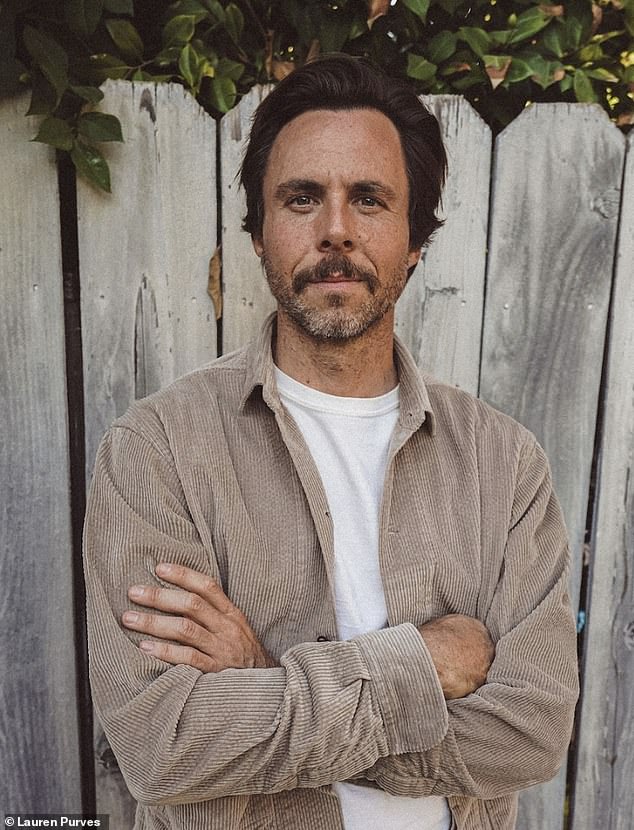
The summer of my 29th year was decidedly the sluttiest of my life.
During the days, I was a writer at GQ, covering the men’s global fashion beat, and at night, I was taking full advantage of a city teeming with gorgeous and available women.
My ‘body count’ was a decent MLB batting average – I’d stopped keeping track at triple digits.
Being desirable to women was part of my identity. I was hooked on the feeling of pursuit, of being wanted, of feeling in control. But I was also always looking for that one perfect woman who would stop me in my tracks. Who could get me to stay.
I met Amy one afternoon in a Chelsea warehouse while on assignment for an article. She was long, lean, stylish and hilarious. Wife material as far as I was concerned. In fact, I’d never even thought about marriage seriously until meeting Amy. She lit up a room. All I knew was I couldn’t get enough of her.
Our relationship was quickly all-consuming: Amy was spending every night at my East Village apartment. And we’d banter all throughout the workday over text and email.
Our weekends were filled with friends, bars and parties, plenty of booze and jokes and great sex. I felt near euphoric. I had the job of my dreams. The girl of my dreams. The life of my dreams. What could go wrong?
A few months into my relationship with Amy, though, something strange happened. This woman who I had placed on a pedestal, who I had made into some sort of savior goddess, suddenly transformed into, well, a human being.

Hotchkiss says that, by the end of his 20s, his ‘body count’ was well into triple digits

Hotchkiss at the height of his ‘slutty summer’: ‘Being desirable to women was part of my identity’
I can remember being angry about it. I felt duped. My patience with Amy was non-existent. I started to notice other women again. Noticing became fantasizing. Fantasizing led to action.
One afternoon Amy was sick and an ex-girlfriend of mine messaged. I left Amy and her NyQuil to go flirt for a couple hours and left my laptop open. When I got back, Amy was furious. She’d read my texts.
She pulled away from me and I plunged head on into a vicious depression. I couldn’t eat, work or sleep. The panic in my chest was sharp, palpable. I called my therapist in a huff and told him: Amy is leaving and I think I’m dying. He laughed.
But I wasn’t kidding. In fact, the pain that was waiting for me on the other side of Amy’s and my breakup was a pain I’d been avoiding for a long time.
It was pain that started young: a particular cocktail of childhood trauma and of growing up male in a culture that tells us that feeling is frivolous, feminine, unnecessary.
I remember walking the streets of lower Manhattan one afternoon after Amy’s departure when I just burst out crying. I ducked into a vestibule to hide my tears, thinking: There must be decades of emotions inside me I haven’t let out. They were coming for me now.
The biggest and most glaring pain Amy’s absence brought up in me was the loss of my dad, who had, ten years before, jumped to his death off a bridge in my home state of Maine.
He’d been depressed after his second divorce, helpless without my stepmother who had provided love, stability and financial independence. Watching him spiral, I had taken notes. Bad things happen to a man when he’s alone. And for years after, I never was.
The constant pursuit of women had distracted me from my pain so perfectly, but with Amy gone, I realized I couldn’t run anymore.
I would have to do something I had never done. Something my father hadn’t been able to do. Something most men never do. I would have to face myself. To figure out how to begin to stare into my pain, my darkness, all the feelings I’d pushed to the proverbial basement all these years in an effort to ‘man up’ and keep chugging along.
I had help: a particular book from the 1980s started my journey in earnest, The Flying Boy by John Lee.
And I continued with various modes of therapy, men’s groups and work with life and intimacy coaches over the next decade.

Hotchkiss as a boy, with his grandfather and his father, who later committed suicide

‘I continued with various modes of therapy, men’s groups, and work with life and intimacy coaches over the next decade,’ says Hotchkiss
All helped to crack my shell and reconnect me to a body, to emotions and to a self I’d never really met before. Eventually I became a men’s coach myself, helping hundreds of men across the globe reconnect to themselves, their bodies and their emotions after years of neglect.
My journey taught me that, as men, all of us have unresolved pain. And more often than not, we ask women to hold it for us.
Without strong male figures to usher us through the toughest periods of our formative years, without education about our bodies, our sexuality, our emotions and how to work with ourselves effectively, we often depend on women for stability and regulation.
The online porn epidemic only increases this dependence. And by the time most men are in their twenties and thirties, they’ve been using women as a way to regulate their emotions for decades.
In my book Hating Women, I talk about (and often show, firsthand) the damage this dependence causes in relationships. I share how, for years, when my partners would pull away – like Amy did – I’d go into panic mode. Fight or flight would kick in, and I’d either rage or run.
So many men I meet find themselves in the same situation: they love their wives or partners, and want to be the best men they can be, but their systems are so dysregulated that any conflict or destabilization in the relationship feels threatening. And when we’re threatened, we react.
Sometimes these reactions turn violent. I can’t help but see the connection between the horrible things that are coming out in the news cycles these days – ugly episodes of male rage and abuse – and the unresolved pain that the men who inflict haven’t faced.
Ditto the manosphere, which feels to me like unresolved male pain dressed up in muscles, crypto and Ferraris.
What I’m sure of? This sort of gender stalemate or ‘crisis of masculinity’ we’re currently in doesn’t change until we, as men, take collective ownership for our pain, for our anger and grief, for our sexuality, and learn how to work with all of these responsibly, honorably.

Louis Theroux’s Inside The Manosphere highlighted the world of extreme male influencers: It ‘feels to me like unresolved male pain dressed up in muscles, crypto, and Ferraris,’ says Hotchkiss

Andrew Tate is one of the most famous and controversial contributors to the ‘manosphere’
Women can’t fix us. They can’t save us. They can’t bail us out. We have to do that. We have to get together in groups of men and learn to give each other what we never got: initiation, accountability, education on being a man that isn’t just about having more money, more success, or more women.
I’ve made my mistakes and I’m always learning. In fact, it feels like nearly every day I learn something new that makes me look back at my past and say, I could have done so much better. I could have been a better partner, a better friend, a better colleague. I could have treated women with more respect, more generosity, more care.
Surely, for many men, there will be amends to make. I know I owe a few. And it’s a humbling process.
But I also see the other side of this. I see the way my current partner feels safe with me. I see the way I’m able to hold and support my male clients in a way I wasn’t able to before, when my pain was getting in the way.
In short, I see myself becoming a solid, safe, reliable man for the first time in my life at 42 years old. And there’s a satisfaction in that that feels much more sustainable than sleeping around ever did.
Hating Women – A Memoir of Male Rage and Recovery by Sean Hotchkiss is published by Simon & Schuster, July 21.