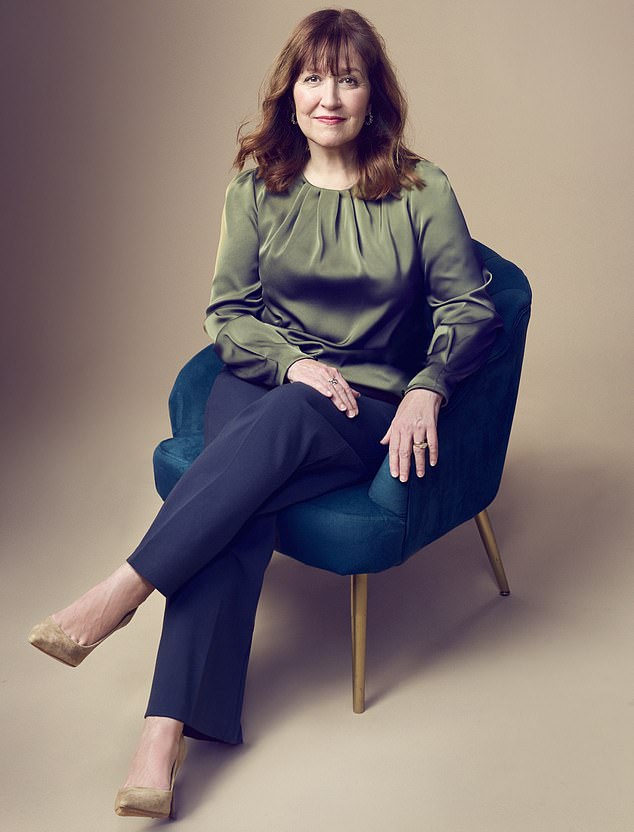
What made me realise I had an alcohol problem?
Looking back, surely it was the afternoon I got home from work and walked straight to the kitchen fridge where the bottles of sauvignon blanc lived – without even saying hello to my elderly mother-in-law Margaret, without even popping my head into her room to ask if she would like a cup of tea.
Yet Margaret had been stuck in our west London home all day, alone in her room, in a wheelchair.
I didn’t take off my coat before pouring myself a glass. Did I speak to her at all that evening? My hazy memory is that I hid in the kitchen and ignored her, quite unable to make myself be nice. What had I become?
The trouble is, poor Margaret was both the victim of my reliance on alcohol and in some senses the cause of my increased drinking.
Like hundreds of thousands of middle-aged women, I was caught in a messy, stressful sandwich of caring for older relatives and children, as well as working full time and keeping a busy house running.
I was resentful and exhausted, and the most effective escape I had was at the bottom of a bottle (sometimes more than one) of white wine a night. The irony is, it had been at my insistence that Margaret had moved in, at the age of 78, when my father-in-law died suddenly in 2011.
I thought my husband and I could cope with three children, then aged eight, 12 and 13, as well as Margaret, despite the fact she’d had two knee replacements and a combination of conditions – including spinal stenosis, a narrowing of the spinal canal resulting in painful pressure on the spinal cord – that meant she was confined to a wheelchair.

Like hundreds of thousands of middle-aged women, Gill McKay was caught in a messy, stressful sandwich of caring for older relatives and children, as well as working full-time and keeping a busy house running

I’d known my mother-in-law Margaret for 18 years and I loved her, writes Gill (pictured together). She was a fantastic woman. And yet my ability to look after her, even to be kind to her, was so sorely tested
I’d known her for 18 years and I loved her. She was a fantastic woman. And yet my ability to look after her, even to be kind to her, was so sorely tested, I could only seek refuge in alcohol.
Worse, I was sometimes snappy and short-tempered with her, too.
‘It’s common for carers to misuse alcohol – they are under an incredible amount of stress with little support,’ says Dr Jackie Gray, former NHS GP and now co-founder of Carents, a platform for people who are carers of elderly relatives.
To support her claim, a survey by Alcohol Change UK in Wales revealed 20 per cent of carers used alcohol to cope with the pressures.
‘But alcohol is a poor short-term crutch because it contributes to mood shifts,’ warns Dr Gray. ‘Too much alcohol naturally increases negative thinking, anger and anxious thoughts – all of which are likely to make a bad situation even worse.’
Certainly, that’s what happened to me. I became so dependent on booze and so intolerant of poor Margaret that, in rational moments, I hated myself. Everyone else in the house was affected by my drinking, too.
Nine years ago, I realised at last how unfair I was being, and gave up alcohol altogether. I managed to repair my relationship with my mother-in-law just in time, and in the process saw how much I could help other mid-life women like me, stuck in what I call the ‘squash of the sandwich’.
We’re the ones who drink because we think it relieves intolerable strain. We drink because our lives are a relentless trudge of meeting other people’s needs and never our own.
Now that I’m a sobriety coach I can see plainly how I sought an outlet in white wine from my pressure cooker life – and how Margaret came to represent the problem.
To be honest, I had always liked a drink. Back in the 1980s I was a party girl at university in Manchester and had my fill of snakebites and cider.
Then once I got my first job for a big American tech company in London, I was often in the pub, celebrating sales or commiserating losses.
I married young, at 28, but it didn’t last, and I drank to console myself when my divorce came through, still only aged 30.

‘It’s common for carers to misuse alcohol – they are under an incredible amount of stress with little support,’ says Dr Jackie Gray, former NHS GP and now co-founder of Carents, a platform for people who are carers of elderly relatives (posed by model)
After marrying my second husband in 1995 and then bringing up our three young children – now aged 23, 27 and 28 – while I worked full-time, the pressure piled on.
We were both working in high stress environments, with my husband a project manager for a big tech company and me vice president of HR for a software firm.
He would often travel to the States for work, and I would commute from west London to Reading twice weekly, as well as take frequent overseas travel to Spain, Italy and France, so childcare was a juggle of nannies and au pairs.
Still, it was all perfectly manageable without resorting to the wine too often.
What made life harder was caring for our elderly parents. My husband was driving down to Devon every third weekend to care for his folks, and I was visiting my ailing parents in Lancashire just as often, until my mum died in 2010 and my dad in 2014.
For two years, my husband and I were like ships passing in the night.
Then my father-in-law died, and we couldn’t bear the thought of Margaret moving into a care home.
We knew her physical condition was only going to decline, but neurologically she was fine.
She was a funny lady with a wonderful personality, and we felt it would be a positive experience for our children to grow up with their granny in the house, as I had myself.
But it didn’t take long for problems – and resentments – to emerge.
First, we had to sell our beloved five-bedroom townhouse and buy a property that we could adapt for the wheelchair.
Once she had sold her own house, Margaret contributed financially, but we also had to increase our mortgage at a time when many of our friends were becoming mortgage-free.

Eight years ago, Gill gave up alcohol altogether and managed to repair her relationship with here mother-in-law just in time (posed by models)
I found it hard to be gracious about leaving our beautiful home and lovely neighbours to live in a wreck of a house that needed gutting to make it habitable. It took 18 months to renovate, and added a whole new layer of building admin and stress to our already manically busy lives.
Then there were Margaret’s needs which, if I’m honest, were much greater than we had anticipated.
To an extent, as a result of being disabled, she had lost her privacy boundaries.
We instructed her not to ask the children to take her to the bathroom, but in truth, when it came to personal care, she was too much for me to handle without my husband’s help.
Though carers came in for four short visits a day, in the evenings, he and I were needed to help her move and to put her to bed.
The loss of personal space also rankled. After having dinner together, she’d spend the evening with us, which meant we lost our time as a family of five, while time as a couple was unthinkable.
She had her own lounge, but once the pattern was established, it was impossible to say we needed space for fear of offence. I began to hide in the kitchen.
Margaret was an innately sociable woman who needed company, but sometimes that was more than I could offer.
When I look back, this is when the drinking intensified – a bottle of sauvignon most nights, if not more.
Oh, I was good at hiding it. I’d hold back if the next day I had a big meeting or was leading a training session, but equally there were nights I’d find a reason to open a second bottle.
I was never fall-down drunk, but I always had paracetamol in my handbag for the frequent hangovers.
Slowly I started to resent things that were not Margaret’s fault.
Every few weeks, I’d take her by taxi to Richmond Theatre to see a play, and I’d dread her wanting to go to the Ladies in the interval because of the safety aspect. (Assisting her was harder in public facilities without the aids we used at home.)
So, I wouldn’t even give her the chance to use them, but instead immediately get up at the interval and say: ‘Right, Margaret, would you like a glass of wine? I’ll just pop to the bar…’
When we got back from the theatre, I’d hunker down in the kitchen with a bottle and leave my husband to sort her out and put her to bed.
When I think of that behaviour now, that’s just not me. I loved her, but I wasn’t acting as though I did.
Looking back, I realise I actually started to become quite mean. I’d get catty or short-tempered or sometimes plain nasty. Frankly, I became a b****.
Often, I’d just avoid her. I’d go shopping and know she’d be sitting in the front room watching for the car pulling into the driveway, but instead of going in to say hi, even for two seconds, I’d consciously walk past her door.
Even as I was doing it, I knew it was terrible behaviour. I’d even catch myself thinking: ‘Bloody hell, what have you become?’ Perhaps the guilt also contributed to my drinking.
There was no single defining moment when I hit rock bottom and decided to quit. It was more a sense of erosion of the things that mattered in my life.
I had the sense that my wonderful husband was walking on eggshells when it came to talking about anything to do with his mother.
I felt awful when I realised my daughter was being bullied at school but had held off telling us because of everything that was ‘going on at home’. The children knew I was stressed by the end of the day, and would ask: ‘Do you want a glass of wine, Mum?’
It’s horrible to remember that.
Eventually, I realised I had to break the cycle. I immersed myself in ‘quit-lit’ such as Quit Like A Woman by Holly Whitaker, Alcohol Explained by William Porter and This Naked Mind by Annie Grace, and podcasts including Janey Lee Grace’s Alcohol-Free Life.
I joined online communities such as Soberistas founded by Lucy Rocca. With the support of my family and an app called I’m Done, I drank my last alcoholic drink on March 12, 2017. I remember feeling a bit mournful as I sipped my final glass of sauvignon, but I also knew I wouldn’t go back.
We made a few domestic changes to make the break with alcohol easier, like going for a walk with the dogs after dinner instead of sitting around, glass in hand. I joined the local running club, so I was out of the house a lot more.

When Gill quit drinking, Margaret was hugely supportive and they later had some very open conversations about her daughter-in-laws behaviour. As Gill says, Margaret was a really special lady (posed by models)
By then I was a self-employed business coach and I also decided to write a book, which gave me a new five o’clock habit. Instead of opening the wine, I’d go to my laptop and write. That more than anything enabled me to break the cycle of post-work drinking.
In fact, the amount of time you get back is one of the greatest gifts of quitting.
I’ve also learned that the calm I thought alcohol gave me was a sham. I rarely felt peace when I was drinking because I was always doing, doing, doing for others. But trying to gain peace via alcohol only brought guilt, resentment and shame.
The one saving grace is that I quit drinking when Margaret was still around to see a different me.
She was hugely supportive, and we later had some very open conversations about my behaviour, with her admitting she’d been worried about how stressed I’d been.
She was a really special lady.
Yes, she had noticed I drank too much, but she wasn’t judgmental. I told her how grateful I was that in the end she had been a massive catalyst in my quitting drinking.
I had to get it off my chest, to apologise and say I didn’t like the snappy person I’d become. It was a form of atonement.
She lived with us until the end, and after she died of a stroke in 2019, I never felt for one moment that moving her in with us had been a mistake.
I would do it again in a heartbeat, I would just set different boundaries and have open conversations up front.
Giving up alcohol is hard. It feels like a loss, because you are shedding the person you were before. If you’ve stopped liking that person, however, the stakes are lower. I was more than prepared to lose the parts of me I didn’t like and move towards becoming a woman I liked again.
Now I’m 63, I genuinely believe there are no true losses when you quit drinking, only gains.
Today, I see women every day who have turned to the bottle to relieve the impossible pressures of caring, and together we work to turn their lives around.
One client, a single mother, took the brunt of looking after her elderly father at the beginning of his Alzheimer’s diagnosis, despite her sister living closer to him. She spent every evening and weekend with her dad, getting him to bed then returning home to drink her bottle of wine.
Another lady struggled for years with travelling to see her ageing parents while balancing a high-profile City job, alongside the menopause and a daughter with learning difficulties.
She sought solace and friendship in the bottle. When she came to me she was burnt out.
Both women made choices for their health, and perhaps sanity, before their situations swamped them completely. They were sick and tired of feeling sick and tired, and realised that alcohol was adding to their challenges, not solving them.
I still sometimes feel guilty about how intolerant I was of Margaret, who was nothing but kind. I take comfort from the fact she lived to see me take my drinking in hand and that the relationship we had in the end was happy and loving.
I know now that she gave me a new purpose in life, and for that I will always be in her debt.
- Gill McKay is a sobriety coach at Inquisitive Coaching, founder of the Sober Joy programme, and also runs the mentor programme for Women Who Don’t Drink. She is author of Stuck: Brain Smart Insight For Coaches.
- Advice and support for carers of elderly parents can be found at Carents.co.uk
As told to Marina Gask