It was January 2013, freezing cold, and I was back at my desk in the City with a box of tissues and a mug of Lemsip on the go. I wasn’t dramatically ill – just constantly run down, sniffling, and pretending it was fine. I remember one of my colleagues saying: ‘Weren’t you just ill last month?’
And that was when I first started thinking that whether my lifestyle and food choices were somehow affecting my health.
When it’s just you battling your coughs and colds, you can always explain it away. But when other people start noticing you’re always ill, it’s suddenly harder to pretend nothing’s wrong. So I tried to work out whether this was normal. I looked up how many colds an adult should get in a year. The answer was maybe two. I was getting five. Something wasn’t right.
The frustrating part was that I genuinely thought I was doing everything right. I was in my early 20s, going to the gym, playing football. I cared about my physique. I thought that if I ate lots of protein and avoided carbs, I’d be healthy. So I’d eat meals like chicken breast with rocket and parmesan and think: job done.
After yet another cold, I went to the GP. Blood tests followed, and eventually I saw a nutritionist – and that’s when I discovered what none of my ‘healthy habits’ had addressed what was lacking: I was low in vitamins and minerals.
Turns out all those years of living on chicken and green leafy vegetables was a very narrow way of eating – lots of lean protein, very little variety – and that meant I was missing the vitamins, minerals and plant compounds needed to support my immune system.
Once I understood that, everything changed. I researched. I experimented. I cooked better, more balanced meals – meals with more nutrients, fibre and fat, not just ‘lean’ food. And I started creating my own vitamin blends for my immune system.
If I got a cold, I’d be better in days, not a week – and over time I stopped getting them at all.

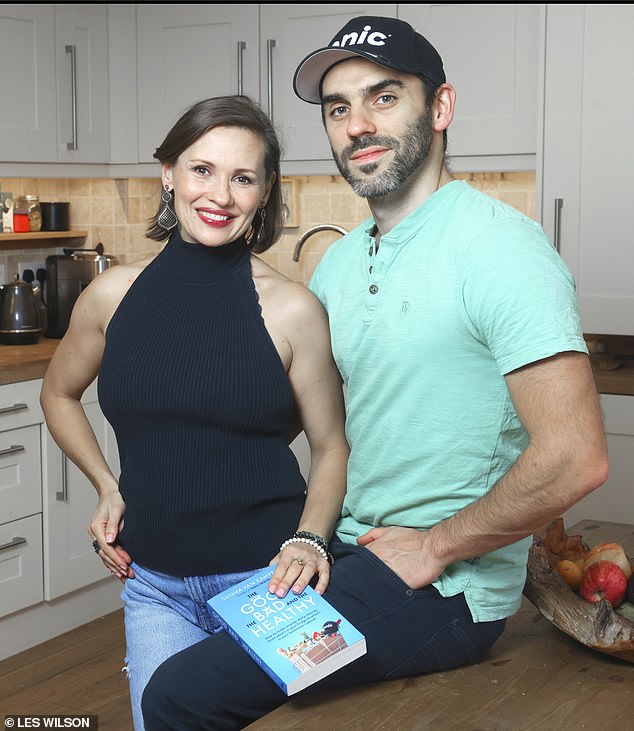
When Sunna van Kampen’s wife, Strictly professional Anya Garnis, became ill with a serious inflammatory bowel disease, he decided it was time to make changes to his family’s diet

The couple took matters into their own hands, by adjusting her diet and seeing how she fared
But it was in July 2015, when my then girlfriend (now wife), Anya – whom many of you will remember from her days on Strictly Come Dancing – was diagnosed with ulcerative colitis, a serious inflammatory bowel disease, that I first realised how transformative these changes can be.
She was a professional dancer, headlining shows and pushing through painful flare-ups. Eventually, it all caught up with her. One night, she collapsed on stage and was rushed to hospital. Just two nights later, she was back under the lights again, but I knew she couldn’t go on living this way.
We did everything you’re supposed to do. NHS. Private specialists. Even a trip to the US to see a specialist. What shocked us wasn’t just the diagnosis – it was how little guidance there was beyond medication. We were told it was incurable and that steroids for life were the answer.
So we took matters into our own hands. We adjusted her diet and paid close attention to how her body responded. Just as important as what we added in was what we took out. We removed foods that were irritating her gut and driving inflammation – including ultra-processed foods, vegetable oils, emulsifiers and anything difficult to digest. Even foods usually thought of as ‘healthy’, such as raw vegetables and salads, made her symptoms worse.
Vegetables had to be cooked. Skins removed. We stopped eating out and cut out ultra-processed food. We cooked everything from scratch, not as a lifestyle choice but because it allowed us to control ingredients and remove any triggers.
Gradually, she improved. Then, around a year and a half after we’d started carefully managing her diet, something remarkable happened. Her condition went into remission – and has stayed there ever since.
We have since had two boys Jax, three, and Bodhi, one, and the lessons we learnt now inform the way we cook for them. I’m not saying food is a cure. Ulcerative colitis is complex. But watching Anya recover made one thing impossible to ignore: food matters far more than we’re taught.
Why so many of us feel awful
The other issue facing many of us Brits? Modern food culture is built on convenience. Ultra-processed foods now make up a huge proportion of the British diet – foods designed to be cheap, long-lasting and hyper-palatable.
They often look healthy. They often aren’t.
These foods can disrupt blood sugar, damage gut health and drive low-grade inflammation — leaving people tired, craving more food and getting ill more often, while blaming themselves for a problem that isn’t really theirs. They can lead to heart disease, obesity and cancer.
It’s like filling up a car with poor-quality fuel. You might get down the road for a while, but over time the engine protests and starts to fail.
As Brazilian scientist Fernanda Rauber famously put it: ‘Most ultra-processed food is not food. It’s an industrially produced edible substance.’
For me, the final piece of the puzzle came from much closer to home – my dad, Mouni.
He was stuck in a routine many people will recognise. After finishing work as a carpenter in Devon, where he lived, he’d pour a glass of wine, open a bag of crisps and tell himself he’d ‘start again on Monday’. He knew what he should be doing, but knowing and doing are very different things.
At 65, it was taking its toll. He was overweight, had a belly and was setting himself up for future health issues.
Watching him struggle made something click for me: most people don’t fail because they lack willpower. They fail because the changes they’re told to make are too big, too vague and too hard to sustain.
We didn’t overhaul his diet overnight. We didn’t ban foods or give him complicated rules. We started with one simple swap – then another. Like snacks that actually satisfied him and stopped him reaching for more. Slowly, his habits shifted without him feeling like he was ‘on a plan’.
That’s when I understood the real power of these swaps. When food works with your body, behaviour follows naturally. You don’t need motivation – you need momentum.
The turning point
It felt too powerful to keep our findings to ourselves. So I started sharing simple supermarket swaps on TikTok – small changes people could make instantly, based on what we’d changed at home.
One video explained why full-fat milk often makes more sense than oat milk. Another compared branded cream cheese with the supermarket’s own. I didn’t expect much to happen. But overnight, the comments flooded in. ‘This makes so much sense’, ‘I can do this’, ‘Tell me more.’
That response – ordinary people wanting clarity, not lectures – is what led me to write my new book, The Good, The Bad And The Healthy. It’s not a diet. Not a reset. Just a guide to getting more nutrition from the foods you already buy.
And because January is when people feel under pressure to ‘start again’, I wanted to show there’s a much easier way.
The plan that actually works
You don’t need a new diet to start 2026 feeling healthier and more energised. You need better defaults.
Take the foods you already buy – bread, milk, yoghurt, butter, meat – and swap them for a better version. That’s it.
No calorie counting. No perfection. Just small upgrades that quietly change how your body functions.
I used to buy any sliced loaf. Now I choose real sourdough, made from flour, water and salt. The fermentation process helps break down starches, making it easier to digest and gentler on blood sugar – which in turn helps avoid energy crashes and supports gut health. You don’t need to buy it from an artisanal baker (though if you can that’s great) – supermarket own-brand loaves are a brilliant upgrade.
Milk was another revelation. I’d switched to oat milk assuming it was healthier, but many versions are highly processed and can spike blood sugar quickly, leading to energy dips and cravings soon after. Full-fat dairy contains protein, natural fats and micronutrients that support hormone health and steadier energy – without the emulsifiers and additives common in many plant drinks.
Then there’s mince. For years I bought 5 per cent fat, believing lean automatically meant healthy. But higher-fat mince provides fat-soluble vitamins and amino acids that support joints, connective tissue and overall resilience – and it tastes better too.
Butter was similar. I’d been taught to fear it, but butter is a traditional, minimally processed food. Margarine, by contrast, is an industrial product designed to imitate it. Switching back meant fewer ingredients, less processing and a food the body recognises.
Frozen fish became another staple. Most ‘fresh’ fillets have already been frozen, but frozen packs are cheaper, last longer and make it easier to eat oily fish regularly – which supports heart, brain and immune health. When it comes to organic food, I’m selective rather than dogmatic. I prioritise organic where it matters most – particularly for foods we eat often and that can carry higher pesticide residues, such as thin-skinned fruit (like berries, spinach and green beans), dairy and meat.
With animal products, organic standards also tend to mean better welfare and fewer antibiotics. I always buy organic chicken and sometimes beef, though it’s never necessary with lamb.
I don’t believe everything has to be organic. But being thoughtful about where you spend your money can significantly reduce chemical exposure over time.
None of this felt extreme. It felt like common sense – once you know what to look for.
And that’s the point. You don’t need another faddy diet. You just need a better shop.
One trolley. A handful of swaps. And a way of eating that finally works with your body – not against it.

Here are the shopping swaps to transform your wellbeing and set you on the correct path
Adapted from The Good, the Bad and the Healthy by Sunna van Kampen (New River Books, £10.99). © Sunna van Kampen 2026. To order a copy of the book for only £5.49 (RRP £10.99) use code HEALTHY-JAN26 at tgjonesonline.co.uk.
Make friends with your freezer
If you want one New Year change that makes eating well easier and cheaper, make it this: start buying more of your staples frozen.
Frozen veg is often picked at peak ripeness and frozen quickly, which can mean it keeps more nutrients than ‘fresh’ produce that’s been sitting around for days. Stir a handful of spinach into a pasta sauce, tip peas into a curry, or add mixed veg to a chilli in seconds – an easy way to sneak in extra fibre and nutrients.
Frozen fish is the biggest money-saver. Those ‘fresh’ fillets in the chiller cabinet have often been frozen before anyway. Frozen packs usually cost less, last longer and mean you can eat fish more regularly. Look out for wild salmon, more nutritionally-rich than farmed and without any of the colourants that can be used in mass farming.
And don’t overlook frozen berries: cheaper than fresh, perfect with yoghurt, and an easy way to add fibre and plant nutrients without thinking.
Remember: The freezer aisle is not the emergency aisle. It’s the shortcut aisle.
How to make the changes stick – my New Year action plan
Knowing what you should be doing is one thing. Actually doing it is something else entirely.
As my dad proved to me, behaviour is just as important as nutrition – and unless you work with it, even the best advice won’t stick. Here’s the approach that worked for him, for me – and for thousands of others.
1. START RIDICULOUSLY SMALL
Choose one upgrade. Just one. Swap juice for water. Add frozen spinach to pasta. Move from white bread to sourdough.
Tiny steps create momentum – and momentum changes behaviour faster than big, unrealistic overhauls.
2. LET COMPOUND GROWTH WORK FOR YOU
A 1 per cent improvement, repeated daily, is life-changing. So we can move to a healthier diet in a series of small steps. Each improvement builds on the last, quietly shifting your habits without you feeling like you’re ‘on a plan’.
For instance, instead of trying to swap crisps for fruit, why not go from crisps to baked crisps, then baked crisps to nuts, and finally nuts to fruit.
3. USE HABIT STACKING
Attach a new habit to one you already have:
Fruit with morning coffee;
Greek yoghurt after dinner instead of dessert;
Vegetables added to every main meal.
When the trigger already exists, the new habit sticks
4. REMOVE WILLPOWER FROM THE EQUATION
Make the healthy choice the easy choice. If nuts are in your bag, you’ll eat them. If sourdough is on the counter, you’ll choose it. If fizzy drinks aren’t in the house, you simply won’t drink them.
5. BE KIND TO YOURSELF
You don’t need perfection. You need direction. Miss a day? Start again tomorrow.
Journeys aren’t linear – and one size doesn’t fit all. Momentum matters more than motivation.