
On the outside I was living the dream. At 25, I was interviewing Hollywood stars, footballers and pop stars such as former Spice Girls Geri Halliwell and Emma Bunton, working as a kids’ TV presenter for CITV’s Saturday morning show Toonattik.
My life looked exciting, full of glamorous assignments and people. In reality, I was close to a complete emotional breakdown. I was stuck in a psychologically abusive relationship and deeply unhappy.
Back then, in the early 2000s, we didn’t really use language like coercive control or gaslighting. Nobody around me really understood what was happening – and neither did I.
Psychological abuse is subtle by design, to the point that you become dependent on the abuser. You become fearful of making decisions because you are always questioning your reality, which makes it very hard to leave and to name what’s happening in that moment.
Over the course of the relationship, my confidence was horribly eroded by the abuse and I started to suffer debilitating anxiety and panic attacks.
I was juggling my job on a flagship show, where I had to be upbeat, with a home life where I was constantly treading on eggshells.
People who control others diminish their self-esteem to keep them compliant. I wasn’t sleeping and was cracking under the pressure.
The first time I had a panic attack was about six months into the relationship, and it was the most terrifying experience of my life. We were staying with friends and I woke in the middle of the night bolt upright, feeling like my chest had a belt across it, constricting my airflow.

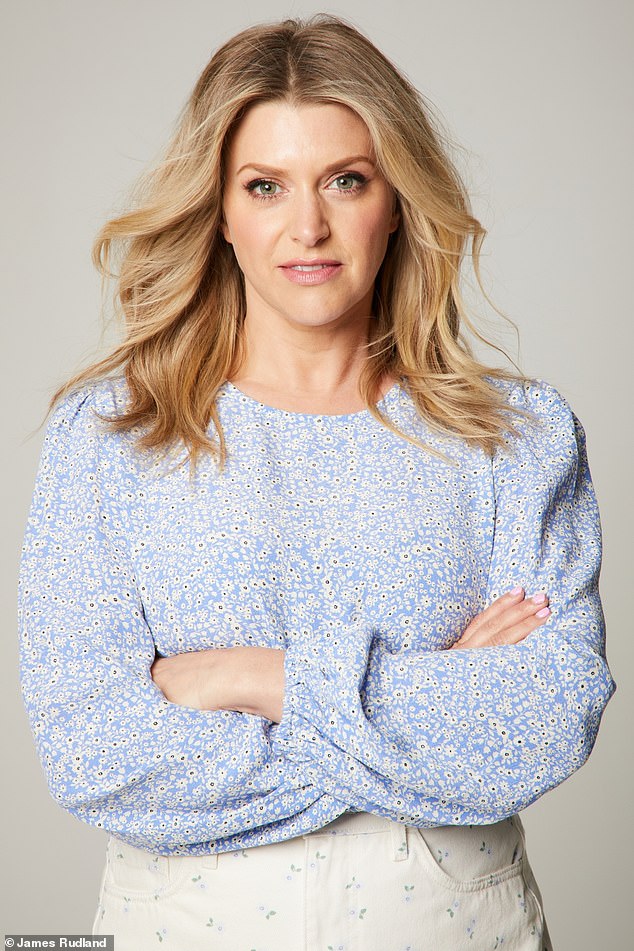
‘My life looked exciting,’ writes Anna Williamson, ‘but in reality, I was close to a complete emotional breakdown’

I was juggling my job on a flagship show, where I had to be upbeat, with a home life where I was constantly treading on eggshells
There was a hot feeling in my head, plus a sudden desperation to get the hell out of there. I ran out of the house at 3am, feeling like I wasn’t in my own body. I felt like I was having a heart attack. I ran to the end of the road and paced around in a daze until the panic subsided.
With panic disorder, people become fearful of the next attack and create avoidant behaviours to stop it happening. I felt like I’d lost my mind and I was terrified of my own skin.
I developed so many harmful coping strategies, including becoming obsessive about my work and timekeeping, because controlling every detail made me feel safer when internally everything felt chaotic.
I had no appetite because my body was permanently in fight or flight and I developed ‘globus pharyngeus’, which is the inability to swallow.
I survived by picking at food and in a few months I lost about a stone. Ironically, everyone kept complimenting me on the weight loss. All the while, I remember thinking, ‘I can’t eat!’
I wasn’t sleeping either. It would take me hours to nod off and then only for about four hours. I didn’t understand what was happening to me and I ignored all the signs without realising I was right on the edge.
Finally, everything became too much. After barely sleeping for days, I arrived at the studios exhausted, panicked and unable to focus. I tried to pretend everything was normal until I burst into tears in my dressing room and told my co-presenter Jamie Rickers I wasn’t feeling right. He was so helpful and so were Lorraine Kelly and Fiona Phillips who were sharing a dressing room corridor with me and showed such kindness for my obvious distress.
No one knew that I’d already left my lovely London apartment and moved back to my parents’ home in Hertfordshire. There I was, a Bafta nominee and so crippled with anxiety I was climbing into my mum and dad’s bed at the age of 25, before getting up and going to work.
Thankfully, my mum had a job in healthcare and after I was signed off work, she managed to find a consultant psychiatrist who specialised in anxiety disorders. At the appointment, it was like a light bulb came on. Being told I had Generalised Anxiety Disorder was a godsend – suddenly I didn’t feel insane any more.
I asked the consultant, ‘Am I broken?’ and he replied, ‘No. You are one of millions experiencing this. You’re having what we used to call a nervous breakdown. Your nerves are in tatters.’ I felt such huge relief.
Therapy – and finally getting rid of my ex, which I did a few weeks after my breakdown – completely changed my life. I had Cognitive Behavioural Therapy and psychotherapy and was put on a short course of anti-anxiety medication to help me sleep.
I also had regression therapy and hypnosis, and during one session recalled a repressed, but real, childhood memory where I’d become trapped beneath a huge floating mat in a swimming pool. There they were: the exact same feelings of panic, fear and not being able to breathe.
It made me realise how our brains store experiences and that old fear responses can reappear when we’re emotionally under pressure.
I went back to work after three weeks and, over time, we slowly reduced the medication. As I came back to life, I thought, ‘Damn, I need to learn this to preach this!’
Still working in TV, I trained as a counsellor, life coach and Master NLP (Neuro-Linguistic Programming, a kind of therapy focused on behaviour patterns and language) practitioner.
It felt like I’d had a wake-up call: I’d always been a people-pleaser and realised I’d probably been a bit of a sheep because I didn’t like conflict.
Therapy helped me settle into myself and, in the years that followed, I dipped in and out of it. I met my husband, fitness and nutrition coach Alex Di Pasquale, and after we married in 2015 I got pregnant with our son, Enzo. Then it happened again.
Eight weeks into the pregnancy, I fell back into a cycle of masking my feelings. I was smiling but inside I felt weird, completely detached.
People said ‘it’s just hormones’, but it wasn’t. Throughout my pregnancy, my anxiety disorder reared up like a bull. After a horrendous 40-hour labour – forceps delivery, a two-litre haemorrhage – depression and anxiety came back with a vengeance.
Exactly as it was ten years before, I had an overwhelming, terrifying fear of the world around me – and this time I was also terrified of myself.
I was hallucinating – often I’d hear the constant sound of babies crying, even when my son was asleep or happy. I also felt like I didn’t deserve to have my baby and that another mum would do a better job than me.

I tried to pretend everything was normal until I burst into tears in my dressing room and told my co-presenter Jamie Rickers I wasn’t feeling right. He was so helpful
Intrusive thoughts are often your brain’s way of risk-assessing your worst fears. They don’t mean you want to do something terrible; quite the opposite. But when you’re in the grip of severe anxiety or trauma, those thoughts can feel incredibly real and convincing.
That’s what makes them so frightening. I felt like I couldn’t trust myself around my own baby.
No one sleeps after having a newborn, but my sleep deprivation was compounded by chronic anxiety, panic attacks and a hollow feeling inside. People describe depression as the black dog and that’s exactly how it felt. I felt dead inside. I even dreaded people bringing gifts because I had to feign gratitude.
I wasn’t experiencing joy in anything connected to my newborn initially and, looking back, that makes me very sad. My husband struggled, too, because he didn’t know how to help me. For a while we were in freefall.
Thankfully, because I’d been through mental illness before, I recognised the warning signs and nine days postpartum, I rang my old psychiatrist and said, ‘It’s happened again’.
Again, what I needed was therapy and medication. After six weeks, I realised I was emotionally thawing when I was changing Enzo’s nappy and he smiled for the first time. I smiled back and I remember saying out loud, ‘Oh my God, you like me’, and thinking, ‘We’re going to be all right’.
It was a turning point, though it probably took a full year before I felt properly like myself again. Today, Enzo is nine and thankfully the bond we have is incredibly special. I adore him.
By the time I became pregnant with my daughter, Eleonora, three years later, I’d become an expert in maternal mental health.
I’d written Breaking Mum And Dad, a book about parenting anxiety and mental health, and had psychiatric support before conception. After doing the pregnancy test, I actually called my perinatal psychiatrist before my husband!
Today, protecting my mental health is an active process.
Breathing exercises are important. The quickest hack is making sure my out-breath is longer than my in-breath, which regulates the nervous system.

I met my husband, fitness and nutrition coach Alex Di Pasquale, and after we married in 2015 I got pregnant with our son, Enzo

Alex and I communicate well. We reflect, apologise and reconnect, although he does occasionally joke, ‘I’m not one of your clients, Anna!’
Sleep is crucial, too. I try to get between seven and eight hours a night and don’t think twice about leaving an event early and climbing into bed at 8pm.
Alcohol is a huge no-no when I’m busy because if I drink too much and go to bed too late, I wake up anxious and am on the back foot. Boring choices sometimes serve you well.
I grew up on a smallholding in Hertfordshire and still live in the countryside because being in nature is my biggest leveller. I crave space because it’s what keeps me mentally well, but I’m an advocate, too, of a problem shared is a problem halved.
Whether to a therapist, a colleague or friend, it’s important to speak about how we feel and that’s especially so in my marriage. Alex and I communicate well. We reflect, apologise and reconnect, although he does occasionally joke, ‘I’m not one of your clients, Anna!’
Boundaries are also key. As women, we can be praised for overachieving when inside we’re heading towards burnout.
My advice is to think about what you need, not what others expect. It’s why three weekends out of four, I prioritise doing bugger all!
I’m now 44 and women like me in midlife are under more pressure than ever emotionally. We’re incredibly good at coping and that’s why it’s crucial to pay attention to the subtle warning signs. Your body tells you when something’s wrong long before your brain catches up.
When you’re reaching burnout and overwhelm, you may stop sleeping properly, become hyper- vigilant, feel disconnected, notice a change in appetite, feel more emotional, start catastrophising or stop feeling joy properly.
One thing I’d say to any woman who is struggling silently is ask for help because things really can get better.
Twenty years ago, I couldn’t imagine a future – but now, 11 years into marriage with two incredible kids and my work as a relationship expert on Celebs Go Dating, I feel the best is yet to come.
I’m passionate about advocating for mental health. I went from feeling like my life was over because it was so terrifying being in my head, to being – as cheesy at is sounds – someone who now feels so alive.
If my experience has taught me anything, it’s that even in your darkest moments, life can change. Sometimes what’s waiting for you is better than you could ever have imagined.
- Follow Anna Williamson on Instagram @annawilliamsonofficial
- As told to Gemma Calvert