
When Kyra Anzely looks back on the period of her life when she was using cocaine most weekends, she knows how it would have looked from the outside.
She was working full-time, studying for a degree, going to the gym, raising her son and building a future after years of chaos. She had left behind methamphetamine use, survived domestic violence and started working in child protection. To most people around her, it probably looked like she had turned her life around.
In many ways, she had. But quietly, cocaine and alcohol had become part of her routine.
‘There wasn’t really a time where I would go out on the weekend where I wouldn’t be having a gram of coke and a bottle of vodka,’ Kyra, now 36, tells the Daily Mail.
‘I thought that was completely fine because it was socially acceptable. Everybody was doing it. No one would go out without having a bag. It was just the most common thing.’
For Kyra, cocaine did not feel like the same world she had once escaped.
Methamphetamine had been tied to some of the darkest and most shameful years of her life. Cocaine, by comparison, appeared cleaner, prettier and easier to justify.
‘It was a prettier lifestyle than a meth lifestyle,’ she says. ‘It wasn’t smoking out of a crack pipe. It was having beautiful cocktails and going away for the weekend to really nice places.’

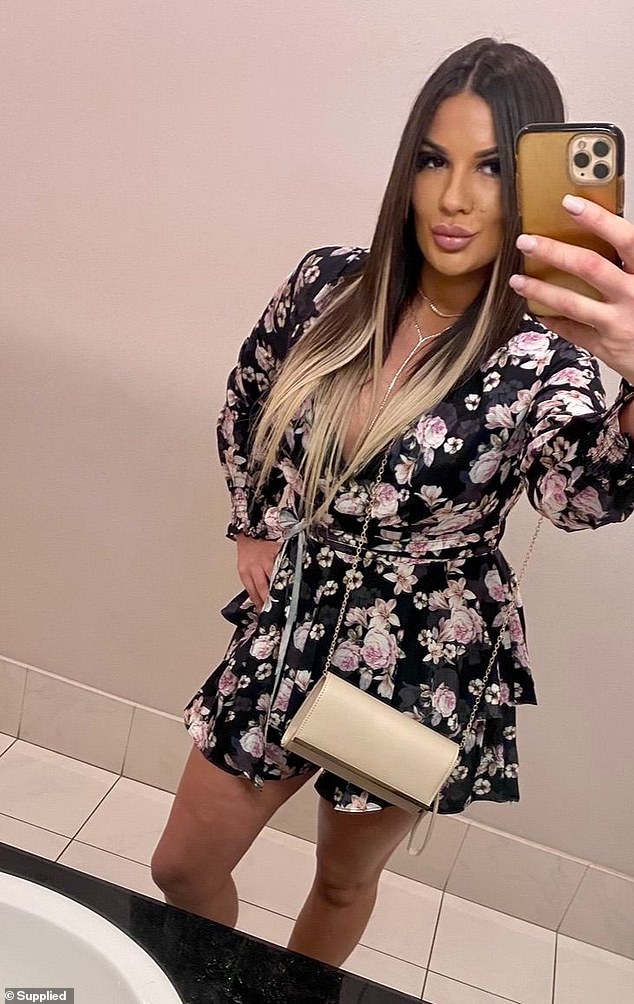
In her younger years, Kyra (pictured) struggled with meth. After getting sober from that, she was drawn to cocaine as she felt it was a ‘prettier lifestyle’

Kyra says cocaine was reintroduced in social settings
But the drug that seemed more glamorous was also the one that eventually convinced her she was going to die.
The addiction that looked different
Kyra was 14 when she first started using cannabis, and not long after that she began using methamphetamine.
Her childhood had already been marked by instability. Her parents separated when she was young, and she says she grew up around substance use, unmanaged mental health struggles, neglect and family conflict.
‘I was really just desperate to try and seek connection and belonging, and I would go to great lengths for that,’ she says.
At 17, Kyra fell pregnant and stopped using substances during her pregnancy. She had her son just before her 18th birthday and remained abstinent for a period while he was young.
But after separating from his father, she relapsed and later entered a violent relationship with a man who was eventually imprisoned for drug supply.
She stayed with him while he was in prison and says that period was deeply damaging. Eventually, as her son was preparing to start school, she reached a point where she knew she could not keep living that way.

Kyra had studied, got a great job, had a partner and friends – but she was using cocaine every single weekend, and sometimes during the week

In Kyra’s mind, cocaine was recreational. It was attached to nights out, cocktails, connection and fun

Kyra says cocaine gave her confidence and fed into her eating disorder, helping her to stay ‘skinny’
Kyra stopped using methamphetamine and began rebuilding. She studied, started working in child protection and began slowly creating a life that looked safe and stable. She says she felt proud of herself for leaving that world behind.
‘I felt really confident. I felt really positive. I had started a new life,’ she says.
But while methamphetamine had carried obvious shame, alcohol and cocaine slipped into her life in a different way.
By her late 20s, she was studying, working full-time and appeared highly functional. She was in a relationship, going to the gym and presenting to the world as someone who had overcome her past.
‘Life looked pretty good on the outside’
At the same time, weekends increasingly revolved around drinking and cocaine.
‘Life looked pretty good on the outside, but on the inside, it absolutely wasn’t,’ she says.
Kyra says cocaine was reintroduced through social settings. It quickly became normal among friends and social circles – not something she viewed as addiction. In her mind, it was recreational. It was attached to nights out, cocktails, connection and fun.
Mostly, she used on weekends. But if there was an event during the week, she would use then too. Eventually, it also crept into nights at home.
‘If my partner at the time and I would stay at home and have a couple of drinks, we would definitely get on it as well,’ she says.
At the height of it, she estimates cocaine was costing about $1,000 a week, although her partner at the time was also purchasing it. Alcohol and cocaine became so linked that she says she would not drink without using cocaine too.
‘I wouldn’t drink without getting on coke,’ she says.
Part of the appeal, she explains, was that cocaine allowed her to keep drinking without appearing as intoxicated. It helped her stay awake, talk, socialise and maintain the version of herself she wanted others to see.
But beneath that was something much deeper.
Kyra says cocaine made her feel confident, feminine and connected to her sexuality in a way she struggled to feel sober. She was also battling an eating disorder at the time, and cocaine fed into that as well.
‘It helped me not to eat, and to feel skinny and pretty according to societal standards,’ she says.
She now understands that she was not simply chasing a high. She was chasing the feelings she could not access on her own.
‘I didn’t realise it at the time, but that was what I was doing,’ she says. ‘With the alcohol, I was decreasing my anxiety and increasing my confidence, which is what cocaine does as well.’
Although she kept working and studying, Kyra says the drug use was taking a toll emotionally, financially and psychologically. Nobody at work knew what was happening.
Most people would have assumed she had her life together.
The rock-bottom weekend
Then, during a weekend away in the Blue Mountains with her partner, the illusion shattered.
Kyra had been drinking and using cocaine while staying at an Airbnb. But one thing was different to when she used the drug in the past: the humidity.
She says moisture in the air caused the cocaine to clump together, and she did not realise how much she had taken until it hit her all at once.
It’s a little-known hazard of cocaine use that so-called ‘weekend users’ rarely know – and can result in accidental overdose.
‘My heart was pounding out of my chest and I felt like I couldn’t breathe,’ she says.
‘I had a massive panic attack in the middle of the Blue Mountains, in an Airbnb. I thought I was going to die.’

One weekend in the Blue Mountains (pictured) Kyra thought she was having a heart attack after underestimating the amount of cocaine she was taking

Kyra is now sober and works as a psychologist
She came close to calling an ambulance but managed to calm herself down. Even so, the fear stayed with her.
‘I don’t think people really talk about how dangerous coke can be,’ she says. ‘For me, that scared the absolute s*** out of me.’
That night became a turning point. Kyra broke up with her partner a short time later, although she says she used cocaine for a short period after the split to numb the pain.
But something had shifted. She could no longer pretend the drug was harmless just because it looked more socially acceptable than what she had used in the past.
Looking beyond the drugs
Her recovery was not a single clean break so much as a gradual process of deep emotional work.
Kyra began addressing the trauma beneath her addiction, including the effects of domestic violence, low self-worth and body image struggles. She had therapy, including EMDR and somatic therapy, and explored nervous system-based healing.
She also began to understand that substances had never really been the core problem. They were the way she had tried to survive feelings she did not know how to carry.
Today, Kyra does not use any substances. After leaving school in Year 10, she went on to complete a Diploma of Community Services, a Bachelor of Human Services and a master’s degree in counselling and psychotherapy.
Kyra has turned the experiences that once threatened to derail her life into her life’s work. As a Newcastle-based psychotherapist and founder of Authentic Counselling Collective, she helps people navigate addiction, trauma, grief, anxiety and low self-worth, supporting clients to address the root causes of their struggles rather than simply the symptoms.
Her own story is part of what shaped that work, but she is careful not to reduce recovery to simply stopping the substance.
For her, recovery meant learning how to live in a body and a life she no longer needed to escape from.
The myth of high-functioning use
She believes cocaine has become dangerously normalised, particularly because it is often wrapped in the language of fun, confidence and social connection.
For many women, she says, addiction can hide behind functioning, achievement and looking like everything is under control.
That is why she wants other women to question the idea that they are fine simply because they are still working, parenting, studying or showing up.
‘If you think you don’t have a problem because you’re still functioning, I would say look at what it is giving you,’ she says. ‘What are you needing it for? Is it confidence? Connection? To feel enough?’
Kyra knows her story began long before cocaine. But she also knows how easily the most dangerous parts of addiction can hide behind pretty drinks, weekend getaways and a life that looks, from the outside, like success.
‘I didn’t recognise myself as being a substance user or an addict,’ she says. ‘It was recreational in my eyes. But it did become a problem.’