A tense exchange between a tenant and landlord after a $60 bond deduction for ‘cobwebs’ has sparked outrage online – with many renters saying the situation feels all too familiar.
The clip, shared by British property strategist Jack Rooke, shows a back-and-forth over cleaning charges at the end of a tenancy, quickly escalating from a minor complaint to a wider dispute about fairness.
The tenant questions the charge directly.
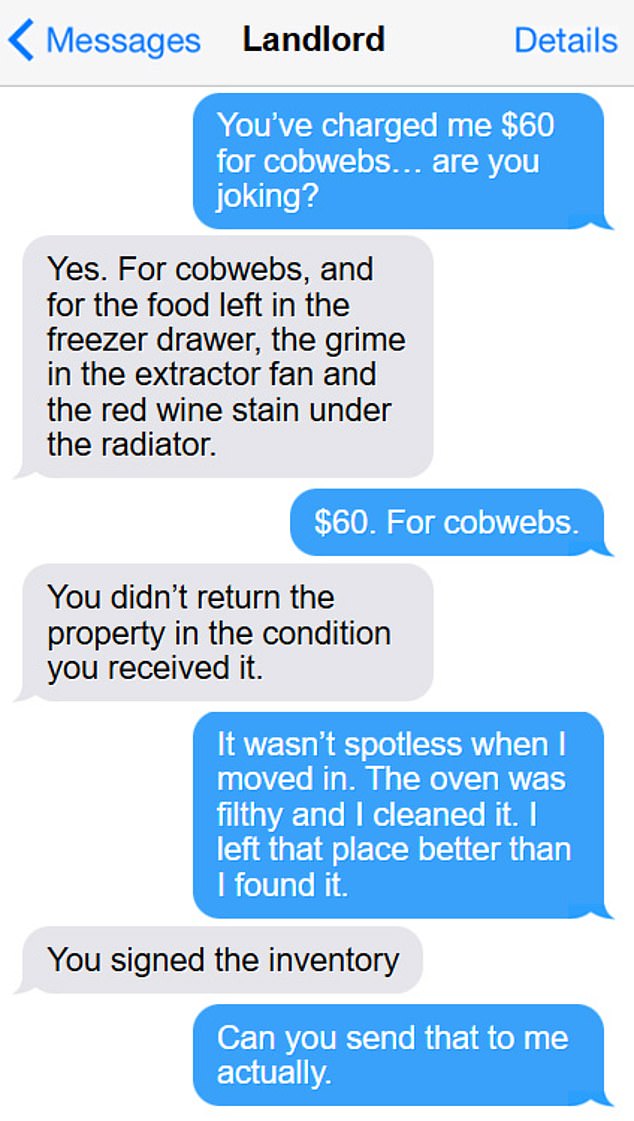
‘You’ve charged me $60AUD (£30) for cobwebs … are you joking?’ they ask.
The landlord responds: ‘Yes. For cobwebs, and for the food left in the freezer drawer, the grime in the extractor fan and the red wine stain under the radiator.’
But the tenant remains focused on the headline figure.
‘$60. For cobwebs.’
According to the landlord, the issue wasn’t just one detail, but the overall condition of the property.

A tense exchange between a tenant and landlord after a $60 bond deduction for ‘cobwebs’ has sparked outrage online

The tenant pushed back, arguing they had improved the state of the home
‘You didn’t return the property in the condition you received it,’ they said.
The tenant pushed back, arguing they had improved the state of the home.
‘It wasn’t spotless when I moved in. The oven was filthy and I cleaned it. I left that place better than I found it,’ they said.
When the landlord pointed to the signed inventory, the tenant requested to see it – and claimed it supported their case.
‘The inventory lists the extractor fan as greasy and the oven as requires attention. Those are your words, not mine.’
Despite this, the landlord maintained that a professional clean was required.
‘The deduction still stands. The property required professional cleaning.’
The conversation took a sharper turn when it emerged the cleaner may have been booked before the inspection even took place.

The tenant signalled they would challenge the deduction through the relevant deposit authority
‘The cleaner was already booked for the turnover,’ the landlord said.
‘So you’re telling me the cleaner was already booked before you even inspected the property?’ the tenant replied.
When told this was ‘standard practice between tenancies’, the tenant argued they were being charged regardless of how they left the property.
‘So you booked a cleaner regardless of what state I left it in and you’re taking that out of my deposit.’
The tenant signalled they would challenge the deduction through the relevant deposit authority.
‘I’ll be raising this with the deposit protection scheme today, they’ll find that very interesting,’ they said.
The landlord responded: ‘There’s no need to escalate this.’
But the tenant ended the exchange where it began.
‘$60… for cobwebs.’
While the clip is based in the UK, the situation has resonated strongly with Australian renters, many of whom say disputes over bond deductions are a common source of stress at the end of a lease.
From cleaning fees to minor wear and tear, disagreements often come down to interpretation – particularly around what counts as ‘reasonable’ condition versus professional-level cleaning.
Tenant advocates note that landlords are generally entitled to request a property be returned in a similar condition to when it was leased, allowing for fair wear and tear.
However, automatic or pre-arranged cleaning charges can become contentious if tenants believe they are being charged regardless of the property’s state.
The viral moment taps into a broader frustration in today’s rental market, where tenants are already navigating rising costs, tight supply, and strict expectations.
In that context, even relatively small deductions can feel significant.
For many renters, the takeaway isn’t just about cobwebs, but about whether the system feels fair on both sides.