
Most thrillers depict stressful and tense situations, but psychological thrillers arguably go a step further by getting you well and truly into the head of someone placed in a thriller-like story. A psychological thriller will often lean more toward horror, or at least have you feeling the sorts of things you might feel when watching a horror movie (be it psychological horror or something else).
That’s to say that there is some crossover, when you’re talking about particularly despair-filled psychological thriller movies, with some of the ones below also fitting into the horror genre. As long as they can be called psychological thrillers, they qualify. And these ones really are bleak, and often very engaging at the same time, all being among the heaviest psychological thriller movies of all time.
10
‘Blow Out’ (1981)

John Travolta has been in some kind of campy movies, and maybe even gave a campy performance in Carrie, which was directed by Brian De Palma and also not inherently campy overall. Travolta was also directed by De Palma in Blow Out, and this is an even grimmer film than Carrie, as it’s about a man capturing the audio of an assassination, and then this leads him into dangerous territory when he gets involved with a young woman who was also at the scene of the crime.
It’s definitely a neo-noir film, being the kind of thing that would’ve been a bit too gritty and violent for the genre back in the 1940s and ‘50s. Blow Out really does update various noir conventions and tropes exceedingly well, and sure, De Palma is doing a more than slight Alfred Hitchcock homage throughout so much of the film, but he’s one of the best Hitchcock fanatics to himself get behind a camera, so it’s arguably more of a feature than a bug.
9
‘The Killing of a Sacred Deer’ (2017)

Yorgos Lanthimos movies have to be entered into with some degree of caution, since with him, Poor Things is probably as approachable and crowd-pleasing as you get, and that’s by no means a movie for everyone. So, it’s not surprising that The Killing of a Sacred Deer is more than a little messed up, though there’s some very dark comedy here, with its story about a family that gets changed forever when a teenage boy comes into their lives.
He’s played by Barry Keoghan, who went on to play a similar role in the almost comparable Saltburn. Saltburn wasn’t as feel-bad as The Killing of a Sacred Deer, though, and probably had a little more by way of outward comedy. This 2017 movie, instead, is pretty firmly in psychological thriller territory, with a little horror and (again, occasional) humor to keep things a bit interesting, not to mention overall less predictable.
8
‘Europa’ (1991)

Heaviness is what you get when you watch a Lars von Trier movie, honestly quite reliably… to an even greater extent than you’ll find general weirdness and discomfort in a Yorgos Lanthimos film. Dancer in the Dark is one of the bleakest musicals of all time, while The House That Jack Built is up there among the heaviest horror films ever made, just for starters.
And then there’s the somewhat more obscure Europa, which really shouldn’t be so overlooked and obscure, as it’s easily one of Lars von Trier’s very best films. It’s kind of a war thriller (technically set just after World War II) and a psychological drama all at once, being about a young man who finds himself a pawn who keeps getting used by different people for different reasons in post-WWII Germany. It’s not directly an adaptation of any Franz Kafka story, but it feels incredibly Kafkaesque, being one of the more underappreciated arthouse films of its era, too.
7
‘Obsession’ (2025)
Easily the most recent film here, having blown up when it got a wide release in 2026 (though it first screened in 2025, at the Toronto International Film Festival), Obsession does nonetheless feel like a pretty big deal. “Blown up” is an understatement, especially by the standards of movies that cost under $1 million to make, with Obsession potentially doing for Gen Z what The Blair Witch Project did for Gen X (and maybe some older millennials, too).
It’s devastating, as a psychological thriller/horror movie, really making you sit with some uncomfortable things, and flipping between anxious humor and outright horror without any notice, so many times, all throughout one relentless film. There’s a poor choice made early on, and then a sense of the main character just continuing to dig himself – and those around him – into a progressively deeper hole. It’s hard to watch and also hard to look away from, somehow at the same time.
6
‘Black Swan’ (2010)

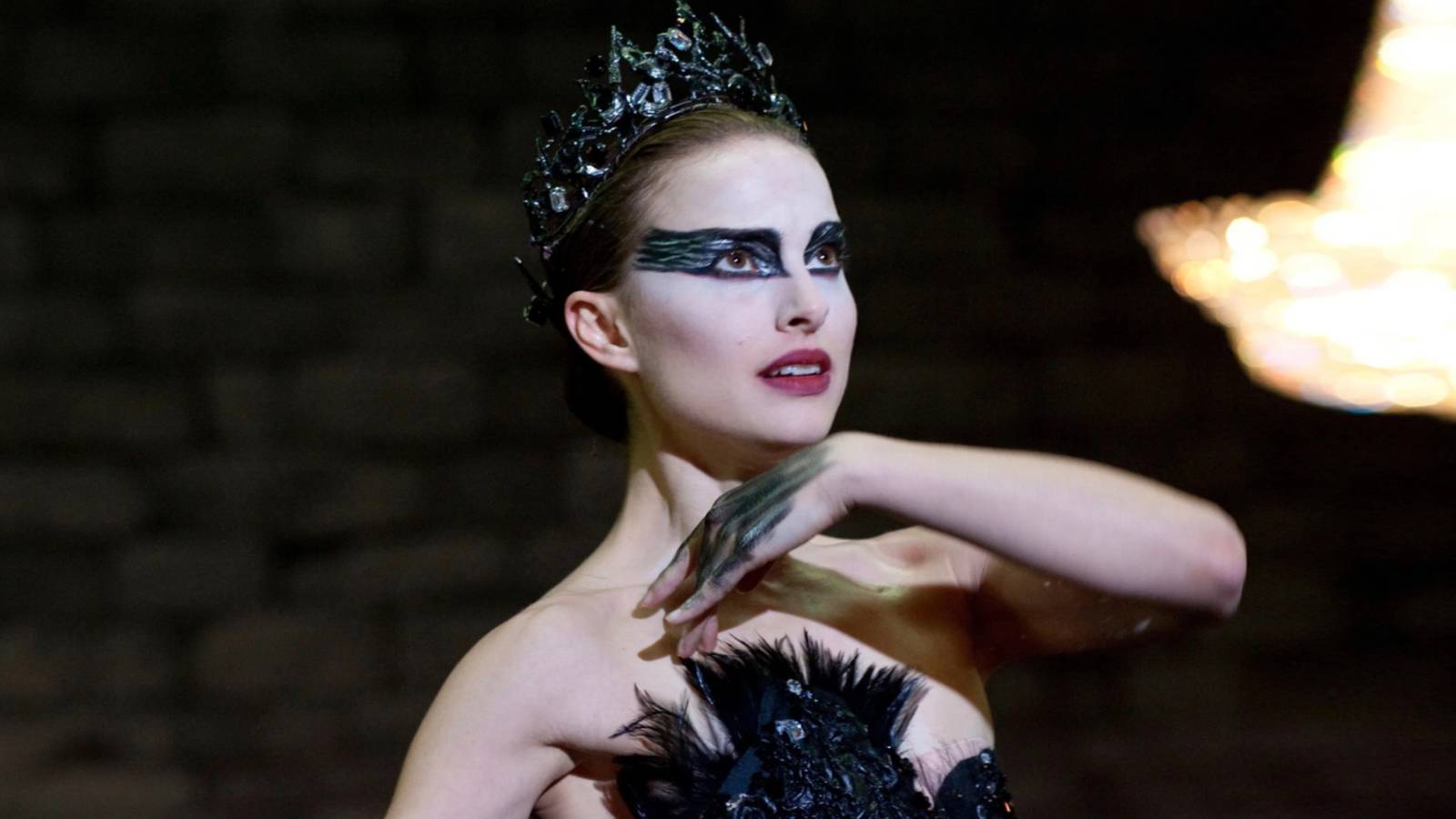
Black Swan is probably the scariest movie about ballet ever made. Failing that, it’s probably the most iconic horror/thriller movie that concerns ballet in one way or another, though the pursuit of perfection is the important and unsettling part of the movie, truth be told. It just so happens to be a ballerina who is driven to madness because she wants nothing more than to get a certain part in a production, and feels similarly driven to play that part perfectly.
It’s hard to describe what makes Black Swan such a nightmare beyond just saying what it’s about, and mentioning how well-crafted and acted it all is (Natalie Portman’s Oscar win for the film was more than well-deserved). The entire film is compelling and nauseating in equal measure, and it does a great job at balancing psychological drama, body horror, suspense, and plenty of other things you might expect to see in a horror/thriller film. They’re all just here in full force, with the movie going above and beyond in being efficiently traumatic.
5
‘Vertigo’ (1958)

Owing to its age, Vertigo isn’t quite as confronting on a visual or visceral level as many of the other movies here, with it being perhaps a little more subtle. It’s still mortifying in its own way, eventually, but definitely a slow-burn that really isn’t afraid of being slow. A man is asked by a friend of his to basically look into some unusual things his wife has been purportedly doing, with the man then starting to fall for said wife.
Vertigo doesn’t so much take a dark turn, but takes several dark turns that all add up and prove, at a point, surprisingly bleak for a movie from the 1950s.
He gets obsessed, at a point, and then some other things happen in Vertigo, with it not so much taking a dark turn, but taking several dark turns that all add up and prove, at a point, surprisingly bleak for a movie from the 1950s. Vertigo is understandably considered ahead of its time, and one of those classics that people had to get used to first, before it could start to be seen as a classic in the eyes of all.
4
‘I Saw the Devil’ (2010)

There are plenty of great South Korean thrillers that stand out for being particularly intense and heavy-going, with I Saw the Devil being perhaps the most full-on in this regard. It’s about a serial killer at large who’s done some heinous things (to put it mildly), and then there’s also an agent in South Korea’s National Intelligence Service who has personal reasons to try and hunt down this killer.
He goes to some extreme lengths to get revenge on his target, and so the line is blurred between two people who are technically on opposite sides of the law. Basically, I Saw the Devil asks some interesting morality-related questions while also being one of the most visceral movies made in the past couple of decades. There’s some action here, but it’s mostly a heavy psychological thriller on top of also being a crime movie, and then you get a little horror thrown in, too. It stays coherent and purposeful throughout a lengthy runtime of almost 2.5 hours, and so long as you’ve got a strong stomach, it’s a must-watch.
3
‘Nocturnal Animals’ (2016)

Nocturnal Animals is a tricky movie to talk about, and also a difficult one to watch, in many ways. There’s a story within a story here, because Nocturnal Animals is kind of about a woman reading a novel that one of her exes wrote, and then she feels continually troubled by the events of that novel, believing them to mirror the life she shared with that author in some upsetting ways.
That’s scratching the surface, since it’s hard to go into more detail, and even if one is able to, it’s also not really fair to ruin everything the movie has to offer. There is indeed a lot to Nocturnal Animals, and a reason why it’s not exactly a popular film, but is the kind of thing where just about everyone who has seen it will be able to confirm that it shook them up pretty badly. That is the intent; what it’s going for, and all, yet still, there is something almost a little too raw and real about parts of this nightmarish film.
2
‘The Vanishing’ (1988)

The Vanishing is high on suspense throughout, and a film that does a lot with what’s ultimately a fairly straightforward premise. It centers on a young couple who are vacationing in France, and then, without warning, the woman disappears, and the man is sent into a panic. He tries in increasingly desperate ways to find out why she vanished, or where she might’ve vanished to, and then things get a bit bleaker still, from there.
A man claiming to have abducted her begins sending letters to the distraught boyfriend, more or less toying with him, and that adds a whole other angle of psychological horror to the whole thing. The Vanishing succeeds in getting you into the mind of someone going through a hellish situation, making it compelling as a drama/thriller film, sure, but also a pretty challenging watch at times. You’re almost guaranteed to feel stress here, at least at several key points, and possibly even throughout the entire distressing thing.
1
‘Lake Mungo’ (2008)

While it’s usually described as a horror movie, Lake Mungo also works as a psychological thriller/drama at the same time, being equal parts scary and deeply upsetting on an emotional level. Most of its narrative is concerned with a family trying to unpack the truth behind a death in the family, grieving that death and then trying to endure while certain uncomfortable truths – and potential supernatural occurrences – make all that even harder than it would usually be.
Also, Lake Mungo is done in a shockingly effective mockumentary style, feeling grounded enough that it can almost be easy to forget you’re watching something fictional, at least during the film’s eeriest and most harrowing moments. Owing to how it lingers, and somehow proves so much more unsettling and devastating once it’s over (compared to how it feels while it’s going on… and it is still heavy-going in the moment, too), it feels fair to suggest Lake Mungo might well be the most depressing psychological thriller/horror movie ever made.