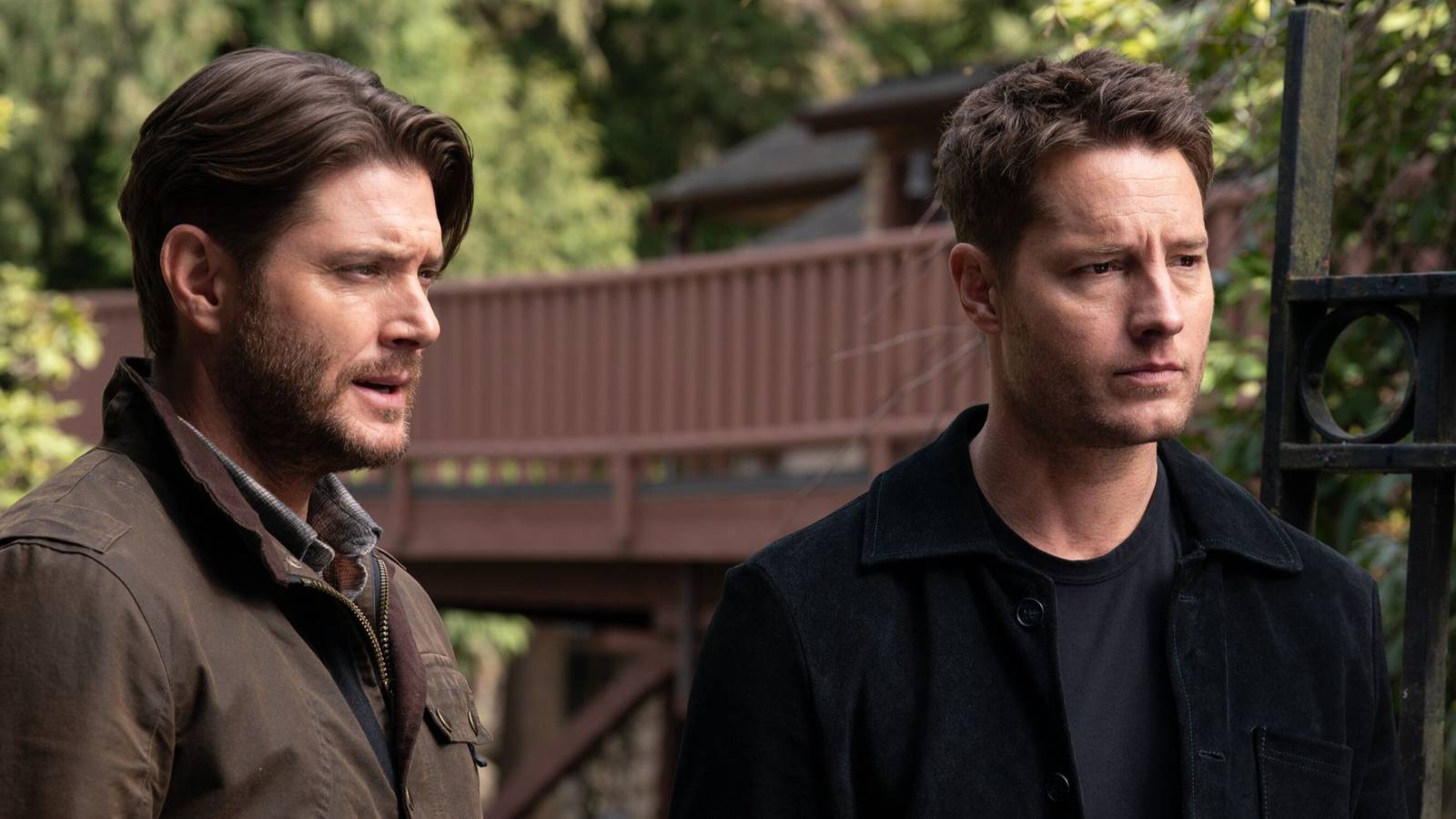
From the moment Tracker premiered, Colter Shaw’s (Justin Hartley) biggest unsolved case was his father. For years, Colter lived with questions that fractured his family, poisoned his relationship with his brother Russell (Jensen Ackles), and left him wondering whether the man who raised him had simply lost his grip on reality.
What began as a seemingly straightforward mystery surrounding Ashton Shaw’s (Lee Tergesen) death slowly evolved into something far more complicated, with each new revelation forcing Colter to reconsider everything he thought he knew. Season 3 finally delivered many of the answers fans had been waiting for, but that’s precisely why the story still hits like a punch to the gut. The truth proved that some wounds never fully disappear and merely become easier to understand.
The Shaw Family Mystery Was Never Really About Who Killed Ashton

When Tracker began, Colter carried a burden that had defined much of his life. He believed his older brother Russell had killed their father during a confrontation in the woods. His mother, Mary (Wendy Crewson), did little to challenge that belief, and the siblings’ fractured relationship only deepened over time. However, as the series progressed, that simple explanation began to crumble as Russell insisted he was innocent, new evidence emerged, hidden journals surfaced, and long-buried secrets involving Ashton’s research and mysterious figures from his past slowly transformed what appeared to be a tragic family story into something much stranger.
What made the mystery so compelling was the damage those unanswered questions inflicted on the Shaw family. Mary kept secrets, Dory (Melissa Roxburgh) withheld information, Russell carried years of guilt and resentment, and Colter spent decades convinced he understood what had happened when, in reality, almost everyone around him had been protecting pieces of the truth. By the time Season 3 arrived, Tracker had made one thing clear: the biggest victim of all those secrets was the family Ashton left behind.
Season 3 Changed Everything Colter Believed About His Father

Season 3 finally pulled back the curtain on Ashton’s work and the paranoia that defined his final years. What Colter had once dismissed as the unraveling of a troubled man turned out to be rooted in something tangible. Ashton wasn’t imagining enemies; rather, he had become entangled in dangerous government-backed research and spent his final years trying to stop experiments he believed had crossed an unforgivable line.
For years, Ashton existed in Colter’s memories as a contradiction, for he was the man who taught him to survive, but also the man whose behavior terrified his family. The deeper Colter dug, the more difficult it became to separate the loving father from the obsessive, paranoid figure his mother remembered. Season 3 refused to simplify that contradiction. Ashton wasn’t transformed into a saint, nor was he reduced to a madman; instead, Tracker embraced something far more complicated. Ashton was flawed, made mistakes, and hurt people he loved, but he was also trying to stop something he believed was wrong.
The Truth Brought Colter Peace, But Not Closure

Perhaps the most powerful moment in the entire storyline comes near the end of Season 3, when Colter admits that he may not have found every answer, but he finally knows his father was trying to do the right thing, though it’s clear he didn’t exactly get the closure he sought. It goes to show that sometimes peace comes not from learning enough to understand motivations, at the very least.
There are still unanswered questions, however. Season 3 leaves the door wide open for more revelations, and Russell’s final scenes suggest the Shaw family secrets are far from finished. Yet something fundamental has changed, as Colter no longer seems trapped by the past as he once was. The mystery still hits like a punch to the gut two years later because, beneath the government conspiracies and secret programs, Tracker told a deeply human story about grief. Colter was searching for his father, at the end of it all, and after years of doubt, anger, and heartbreak, the answer he found was understanding, which was probably more than he expected.