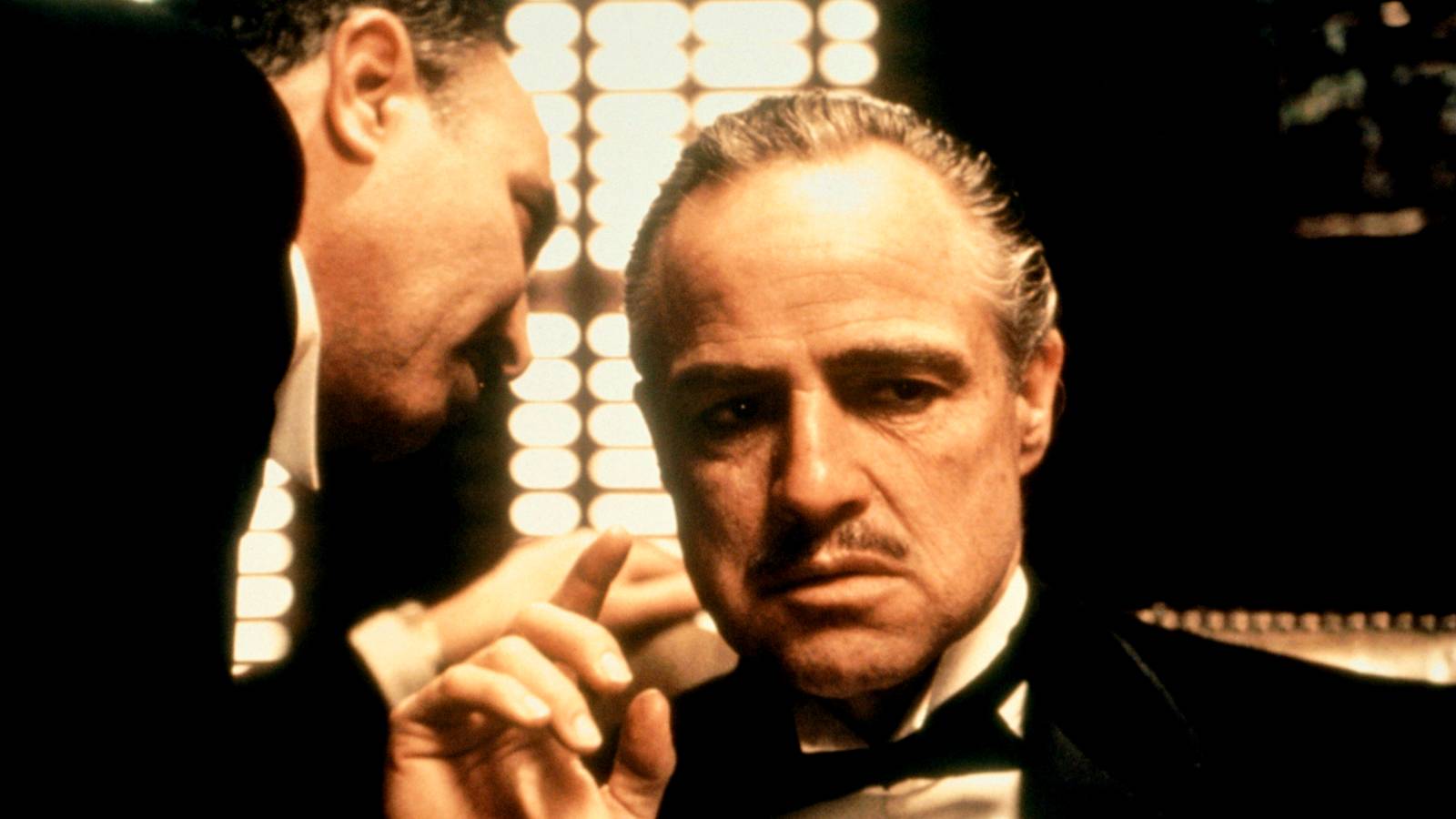

Warning: This article contains spoilers for The Godfather (1972)Francis Ford Coppola’s 1972 gangster epic, The Godfather, is considered one of the best movies ever made. Based on Mario Puzo’s 1969 novel of the same name, this cinematic masterpiece astounded audiences upon its initial release and has since cemented its legacy.
Among Coppola’s numerous achievements with The Godfather, he successfully elevated a gangster flick into a fleshed-out dramatic epic with a novel air of authenticity. It was this achievement that earned the film over $200 million at the box office and an Academy Award for Best Picture.
The film’s impact far outlived its initial release. By catalyzing the New Hollywood era, The Godfather effectively revitalized the film industry and changed cinema forever. Inspired by Coppola’s masterpiece, New Hollywood saw the emergence of artistically experimental, director-driven cinema. The Godfather holds the third spot on the American Film Institute’s list of the 100 greatest American movies of all time, by virtue of its long-lasting impact.
While Coppola created a timeless classic, it is impossible to enjoy the film today in the same way initial audiences did in 1972. Coppola’s masterpiece has taken on a life of its own in the cultural zeitgeist and is endlessly quoted, referenced, and parodied. Further, the past 54 years have unveiled snags in the film’s narrative fabric. Together, cultural connotations and plot issues taint the modern viewing experience of Coppola’s The Godfather.
The Godfather Has a Reputation for Being a ‘Guy’s Movie’

Over the five generations since its release, The Godfather has developed an interesting reputation for being particularly well-loved among male viewers. According to cultural stereotypes, the lexicon of Coppola’s gangster epic is an understood code among men. In Nora Ephron’s 1998 romantic comedy, You’ve Got Mail, the male characters unanimously understand the phrase “go to the mattresses.” This shared male vocabulary vexes the film’s female protagonist.
Per the pervasive stereotype, passionate male viewers are also prone to explaining The Godfather to women. This became a major joke in Greta Gerwig’s 2023 Barbie movie, as the Kens condescendingly explained Coppola’s film to the Barbies. Whether or not The Godfather‘s ‘guy movie’ reputation rings true to everyone, an awareness of this stereotype can negatively color modern viewing experiences.
The Godfather Quotes Are Way Overused

Popular culture has proven that The Godfather is, truly, endlessly quotable. Its well-crafted dialogue and specific gangster lingo have become permanently embedded in the American lexicon through generations of repetition. As one of the most widely quoted movies of all time, it is difficult to watch The Godfather today without being distracted by a barrage of culturally-referenced lines every few scenes.
While “I’m going to make him an offer he can’t refuse” is the most famous Godfather quote, a slew of other lines have outgrown their source material. “Sleeps with the fishes” and the misremembered ‘It’s not personal, it’s business‘ are among several quotes that are now understood American phrases. Watching The Godfather is no longer a prerequisite for understanding the movie’s language.
However, Marlon Brando’s sinisterly spun sentences lose their impact when audiences first hear them uttered by sitcom characters.
The Godfather Underutilizes Its Female Characters

The Godfather’s treatment of female characters is the film’s most commonly cited fatal flaw. Defined against their connection to the male characters, the wives and mothers of The Godfather lack narrative autonomy.
In the story’s patriarchal hierarchy, women are literally shut out of the men’s business. As such, they have little to no narrative consequence. The male protagonists actively drive the plot forward. The women wait outside the primary plot, passively or indirectly influencing the male-centric action.
This disregard for female characters is particularly difficult to watch through a historical lens, knowing that the women’s liberation movement was in full swing during the time of The Godfather’s release. Writer Molly Haskell noted this irony in her 1997 New York Times article, “World of ‘The Godfather’: No Place for Women.”
“What made it resonate with particular irony is that the film closed the door on wives, girlfriends and mothers at the very moment when the women’s movement, on fire with a whole range of equity issues, was coming out of the closet and into the media spotlight,” Haskell wrote.
The Godfather Requires Dedication and Focus

With a nearly three-hour runtime and a slow-burn plot, The Godfather requires a level of dedication that not all modern viewers can expend. Viewers’ interested in the full trilogy must strap in for a whopping nine hours.
Though well-known for its hyper-violence, The Godfather is composed of more dialogue than action. The slow-paced narrative is woven through hushed conversation, and the film’s most powerful threats are subtextual. A moment of lapsed attention can lose vital information and consequential moments that pay off in the epic finale. First-time viewers must pay particularly close attention to the winding plot.
While well worth the time-investment, The Godfather viewing experience is far from quick and casual. This makes it hard to find the time for a proper Godfather viewing in our fast-paced and distracting digital age.
There are Flaws in The Godfather’s Plot

Despite Coppola’s masterful storytelling, there are cracks in the 54-year-old film’s construction. The most prominent issues arise during moments of hyper-violence that, while integral to the story, can become gratuitous or illogical.
In Sonny Corleone’s murder scene, he exits his vehicle amid a barrage of bullets. This is not only nonsensical, but seemingly impossible considering the severe wounds he sustained while in the car. However, this decision led to an epic death scene. In the final act, the Corleone’s decision to eliminate everyone who poses a real or potential threat seems uncharacteristically brash in this otherwise methodical film.
Outside the violence, Michael Corleone’s episodic trip to Italy seems narratively inconsequential and ultimately unnecessary in this already lengthy epic. Modern movie-wise viewers can easily spot these erroneous or dispensable plot elements within The Godfather.
The Actors in The Godfather are Huge Stars Now

Today, The Godfather cast is composed of Hollywood legends, including Marlon Brando, Al Pacino, and Diane Keaton. In 1972, the cast was composed of relative unknowns.
Keaton had only appeared on TV at the time and Pacino had appeared in just two minor features. Brando—whom Coppola fought to cast—had a well-known reputation that turned sour as his films consistently bombed (via Vanity Fair). The Godfather launched, or relaunched, its actors’ illustrious careers.
Today, these performers are permanent stars in the Hollywood constellation. As such, audiences have a preconceived notion of the actors, which can inhibit their ability to fully enter the world of the story. Modern Godfather viewers don’t immediately see Michael Corleone taking on the family business; they see Al Pacino acting. Brando’s terrifying vocal timbre has also lost its initial edge following innumerable parodies.
While The Godfather does not have the same awesome impact it did in 1972, it remains a seminal masterpiece.