
Over the years, there have been so many movies that delivered perfectly entertaining experiences, only to fall apart in their last moments. Conversely, there are also a select few films that not only avoid this hurdle, but go one better, ending their stories with such precision, beauty, and intelligence that they become seared in the audience’s minds for all time. When it comes to those masterpieces, the final shot is a memorable keystone capping a monumental achievement that is sure to stand the test of time.
It’s no surprise that the movies with the best final shots are also some of the best movies in general. These are films that have been celebrated by critics and audiences alike for generations, and even the most recent of them are movies that have had an undeniable impact on cinema and popular culture. So without further ado, here’s our ranked selection of movies with the most perfect final shots of all time.
8
‘Goodfellas’ (1990)

Directed by Martin Scorsese, who also co-wrote the screenplay with Nicholas Pileggi, Goodfellas is a biographical gangster film adapted from Pileggi’s 1985 nonfiction book Wiseguy. The movie chronicles the rise and fall of Henry Hill (Ray Liotta), who grows up idolizing the mob in his Brooklyn neighborhood and eventually climbs the ranks of the mafia alongside his friends, Jimmy (Robert De Niro) and Tommy (Joe Pesci), but one hot-headed mistake leads all three of them to ruin. Lorraine Bracco, Paul Sorvino, Frank Sivero, Tony Darrow, Mike Starr, Frank Vincent, and more star in supporting roles.
A classic gangster movie, Goodfellas is easily one of Scorsese’s most popular films, and it has been praised by critics and fans alike for its talented performances, sharp editing, immersive cinematography, and engaging narrative. A sweeping crime saga that explores one man’s life in the mob, the story wraps up with Henry living out the remainder of his days in witness protection, having betrayed the mob to save his own skin, leaving him “condemned” to a mundane life. The final shot captures this perfectly, contrasting Tommy’s explosive life with Henry’s suburban exile.
7
‘Fight Club’ (1999)

Directed by David Fincher and adapted from Chuck Palahniuk’s 1996 novel, Fight Club is a psychological thriller starring Edward Norton as an everyday white-collar professional suffering an existential crisis. A chance encounter with a traveling soap salesman, Tyler Durden (Brad Pitt), sends his life in a whole new direction, as he and Tyler bring together other alienated men to create the titular underground club. The film also features Helena Bonham Carter, Meat Loaf, Jared Leto, Zach Greiner, and Holt McCallany in supporting roles.
A quintessential cult classic, Fight Club may have been a controversial film back when it first premiered, but it’s now widely regarded as one of the greatest postmodern thrillers of all time. The movie explores themes of identity and social ennui through a surreal, mind-bending narrative, which has been the subject of analysis and study by critics and scholars for decades now. All of its strange visual and thematic explorations culminate in a spectacular final scene, where we see Norton’s Narrator tell Helena Bonham Carter’s Marla Singer, “You met me at a very strange time in my life,” after which they hold hands and watch as a skyscraper explodes, ushering in a new day for them all.
6
‘Planet of the Apes’ (1968)

Directed by Franklin J. Schaffner, Planet of the Apes is a classic science fiction film loosely inspired by Pierre Boulle’s 1963 novel. Charlton Heston stars as an astronaut who crash-lands on a strange planet in the distant future, where humans are mute primitives, and apes are the dominant species. Besides Heston, the movie also stars Roddy McDowall, Kim Hunter, Maurice Evans, James Whitmore, James Daly, and Linda Harrison.
The original Planet of the Apes was a critical and commercial hit when it premiered in 1968, and its final shot is easily one of the most famous in cinematic history. In the last scene of the film, Heston’s George Taylor and his companion Nova (Harrison) discover the remnants of the Statue of Liberty, revealing that the planet is actually a future Earth, which causes Taylor to collapse to the ground and curse humanity. It’s an iconic final shot that still hits true decades after it first arrived on screens.
5
‘Butch Cassidy and the Sundance Kid’ (1969)

Directed by George Roy Hill and written by William Goldman, Butch Cassidy and the Sundance Kid is a Western movie loosely inspired by the real-life story of the titular outlaws. Paul Newman stars as Robert LeRoy Parker, aka Butch Cassidy, and Robert Redford as Harry Longabaugh, the “Sundance Kid.” The film follows them as they flee a US posse after a botched robbery and head to Bolivia for a second act, but find themselves inevitably drawn once again to the outlaw life. Katharine Ross co-stars as Sundance’s lover, Etta Place, and the movie also stars Strother Martin, Jeff Corey, George Furth, Cloris Leachman, Ted Cassidy, and more in supporting roles.
Butch Cassidy and the Sundance Kid didn’t have the best critical reception in its day, but it was a box office hit and received multiple Academy Awards, building a reputation as a landmark Western over the years. While the movie is an engaging watch throughout, its ending is arguably even more famous than the film itself, widely recognized as one of cinema’s most effective cliffhangers. In the movie’s final moments, we see the leading duo charge out at their enemies, guns blazing, with the sound of gunfire playing over a freeze-frame shot of the two bandits, leaving their ultimate fates to the audience’s imagination.
4
‘Casablanca’ (1942)

Directed by Michael Curtiz, Casablanca is an iconic wartime romance drama set in the titular city during the Second World War. The film follows jaded nightclub owner Rick Blaine (Humphrey Bogart), whose life takes an unexpected turn when his former lover, Ilsa (Ingrid Bergman), asks him to help her husband Victor Laszlo (Paul Henreid), a Czech Resistance leader, escape the Nazis. The movie also features Claude Rains, Conrad Veidt, Sydney Greenstreet, Peter Lorre, Dooley Wilson, and more in supporting roles.
Casablanca is easily one of the most celebrated classics of all time, a war movie filmed and set during World War II. It features multiple performers who were refugees, which still transcends the limits of its setting and genre. The film’s ending is a big part of its enduring legacy, especially the final shot, in which a heartbroken Rick and Claude Rains’s Captain Louis Renault walk off into the fog, with Bogart delivering the iconic quote, “Louis, I think this is the beginning of a beautiful friendship.” It’s a beautiful ending to a beautiful, evergreen classic.
3
‘Psycho’ (1960)

Produced and directed by Alfred Hitchcock, Psycho is a suspense thriller inspired by Robert Bloch’s eponymous 1959 novel. Janet Leigh stars as a secretary from Phoenix, Arizona, who steals from her employer and goes on the run, taking shelter at an out-of-the-way motel, where she meets the shy young proprietor Norman Bates (Anthony Perkins). The movie also stars Vera Miles, John Gavin, and Martin Balsam in key supporting roles.
One of the most surprising things about Psycho is its tonal and narrative shift, beginning as a straightforward noir story and suddenly transforming into a very different kind of movie, which audiences today would recognize as a prototypical slasher. The unexpected twists and turns never really stop coming in the film, all the way to its final scene — a monologue in which Norman’s “Mother” personality asserts her innocence, with Anthony Perkins delivering an intensely creepy smile just before the credits roll.
2
‘The Godfather’ (1972)

Easily the most iconic gangster movie of all time, The Godfather is an adaptation of Mario Puzo’s novel, directed and co-written by Francis Ford Coppola, that revolves around the Corleone mafia family, run by patriarch Vito Corleone (Marlon Brando). After an attack on Vito by rival gangsters, his son Michael (Al Pacino), a war hero who never wanted to be in the life, finds himself called to follow in his father’s footsteps. The film also stars James Caan, Diane Keaton, Richard Bright, Talia Shire, and Robert Duvall in other lead roles.
The Godfather is a timeless classic and a truly epic film, an undeniable masterpiece of the New Hollywood era. Though Don Vito is the title character, the movie is really about Michael and his transformation into a ruthless crime boss, which plays out slowly but surely over the film’s nearly three-hour runtime, ending in one of the most iconic final shots of all time. Presented from the perspective of Michael’s wife, Kay (Diane Keaton), we see the Corleone family capos pledge fealty to Michael as the new Don, and a door closes, symbolizing the moment she finally realizes that her husband is, now and until death, the Godfather.
1
‘Inception’ (2010)

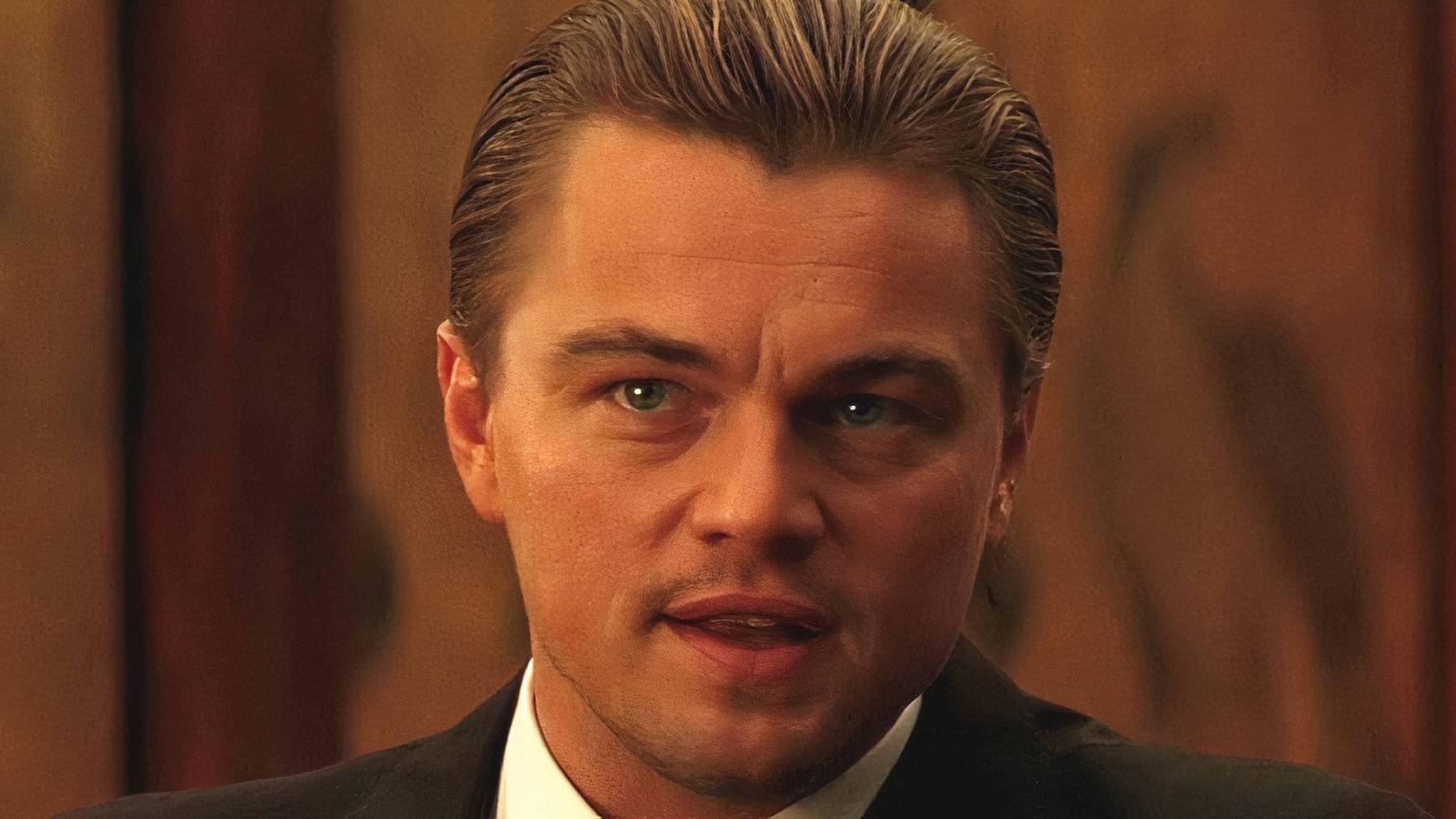
Written and directed by Christopher Nolan, Inception is an Academy Award-winning sci-fi film that follows professional thief Dominick “Dom” Cobb (Leonardo DiCaprio), who steals information from his targets by infiltrating their subconscious. After a failed job targeting Japanese businessman Saito (Ken Watanabe), Cobb is offered a tempting deal: a clean slate and a chance to reunite with his family in exchange for completing one last job. The movie’s ensemble cast also includes Joseph Gordon-Levitt, Elliot Page, Marion Cotillard, Tom Hardy, Cillian Murphy, and Michael Caine.
Inception is easily one of the most mind-bending films ever made, building layers and layers of reality and illusion on the bones of a heist thriller narrative. It’s the sort of story that leaves a real impression on the audience, lingering in the mind long after the credits roll, and that’s to a great extent attributable to its deceptively vague ending. You can’t really explain why the ending is so good without spoiling the whole movie, but suffice to say, its final shot leaves viewers questioning whether the ending truly is real, or just another layer of dream. That one shot has been a matter of debate and discussion among cinephiles and film scholars for over 16 years.

- Release Date
-
July 16, 2010
- Runtime
-
148 minutes