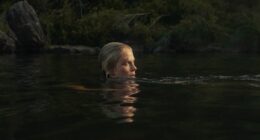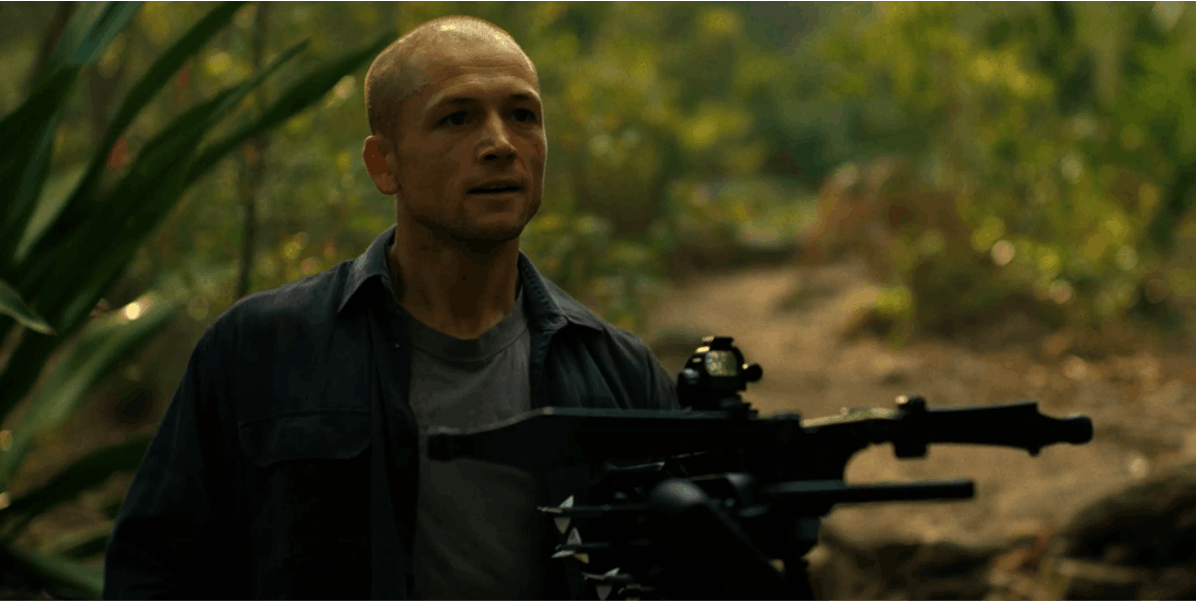

Helmed by Baltasar Kormákur, Netflix’s ‘Apex’ is a survival movie that follows Sasha, an adventurer with a mission, as she ventures on a kayaking trip in Australia. Still recovering from a traumatic incident, she has no intention of returning to the world of climbing any time soon. However, as she cuts through the river and enters the deepest parts of the forest, Sasha comes to a terrifying realization that there is more than the wrath of nature that she has to worry about.
Without warning, a human hunter named Ben makes her a target, giving her a narrow window to chart an escape before he begins his hunting ritual. Alone and stuck in an unfamiliar space, Sasha has to rely on her instincts and athletic abilities to live to tell the tale. At the heart of this action thriller is a rejuvenation of the predator-prey dynamic that dictates much of the natural world, except this time it’s between two humans from vastly different realities.
Apex is a Work of Fiction That Blends Realistic Climbing With a Survivalist Drama
While ‘Apex’ is a fictional story written by Jeremy Robbins, its approach to capturing wildlife and climbing is steeped in realism. Director Baltasar Kormákur is known for preferring on-location filming rather than relying on set work or CGI. In a conversation with Tudum, he explained that “For a film like ‘Apex’ — where the elements and the terrain are characters that loom just as large as the movie stars battling in it — no other country in the world could have taken the place of Australia.” Thus, the movie creates a fictional story around its setting and lets nature play into the dramatic high notes.

Just as important as the setting of ‘Apex’ is how the film brings the art of climbing to life. “I really wanted to make this more of a real experience,” Kormákur explained in an interview with Climbing, adding that the actors received climbing training so they could film the stunt sequences themselves. While CGI is used in several sequences, it’s hardly ever used for anything beyond touching up the raw climbing and kayaking footage of the actors and is integrated into the story. There even came a point where Charlize Theron climbed up a canyon wall without any equipment, and Kormákur couldn’t help but admire and keep the camera going. The fact that risk and thrill are essentially baked into the making of the movie elevates the immersion factor significantly.
Kormákur’s creative philosophy when it comes to ‘Apex’ was to simulate an adventure on-screen with as much detail as possible. He explained, “People enjoy travel and going to places they might not be able to go themselves through film. I like to give people that journey.” The director even recalled being thanked by Australian crew members for being introduced to some truly obscure locations. To that end, the crafted narrative merely serves as a base for an experiential effect that situates viewers right in the middle of the Australian wilderness.
Ben is an Invented Character With Loose Parallels to Real-Life Serial Killers
Ben, the primary antagonist of ‘Apex,’ is a fictional character constructed by Jeremy Robbins. Though he is introduced as an unassuming trucker, Ben soon turns out to be a sadistic hunter who has killed more than 20 people. While the movie’s creators have not referred to any particular serial killer as their basis, some vague similarities can be traced between Ben and some of the most infamous killers in real-life. In particular, Robert Hansen, also known as the Butcher Baker, may have loosely inspired Ben’s creation. As per reports, Hansen abducted, sexually assaulted, and murdered at least 17 women between 1972 and 1983. Where the similarities with Ben begin, however, is in Hansen’s modus operandi, which reportedly involved releasing the abducted women into the wilderness and then hunting them with rifles and knives.
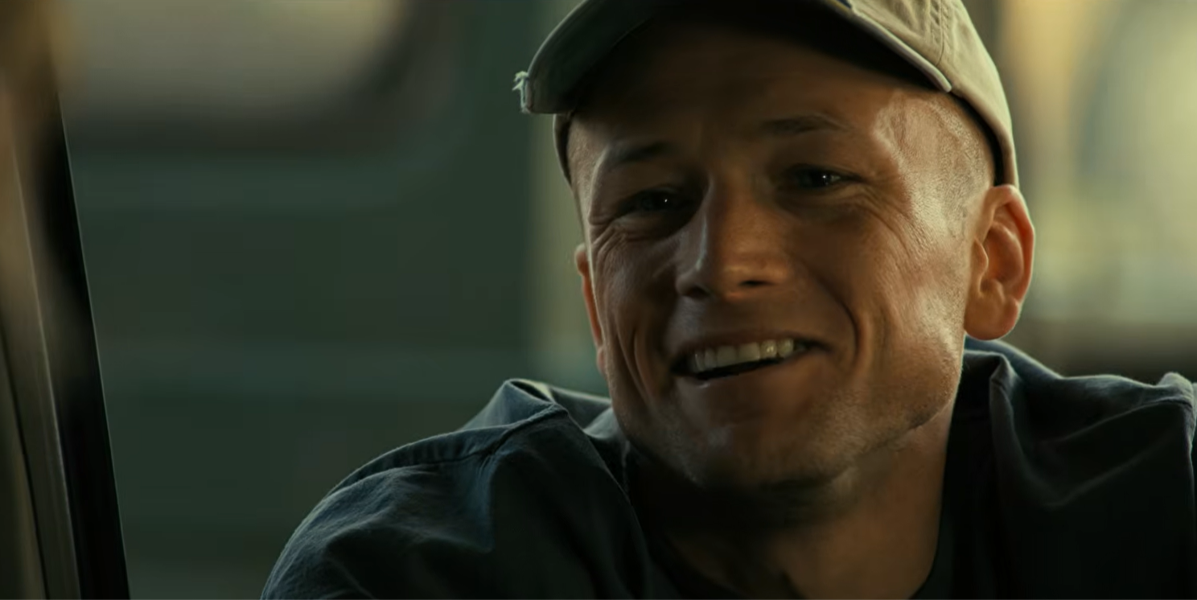
In the movie, Ben sets his captives loose after initiating a countdown through a song. After that, he arms himself with a crossbow before setting out on a hunt. While this style has slight overlaps with Hansen’s killing methods, the creators have not confirmed nor denied any such connection as of writing. Hansen was arrested on October 27, 1983, a few months after one of his intended victims, Cindy Paulson, managed to escape and report to the police. On February 18, 1984, he was sentenced to life in prison, where he remained until his death on August 21, 2014.
Taron Egerton Believes Ben’s Past is the Key to Understanding His Violent Nature
In Australia, Ivan Milat, also known as the Backpack Killer, reportedly abducted, assaulted, and murdered at least two men and five women between 1989 and 1992. Unlike Ben in the movie, Milat’s killing pattern was to abduct backpackers and then take them to Belanglo State Forest, where he would murder them. He was arrested on May 22, 1994, shortly after one of his intended victims, Paul Onions, escaped and reported his car’s license plate to the police. After more than two years of trial, on July 27, 1996, Milat was found guilty on seven counts of murder and received six individual life imprisonments. He was also found guilty of attempted murder, false imprisonment, and robbery of Onions and received an additional 18 years of imprisonment. Milat died by natural causes on October 27, 2019, at the age of 74.
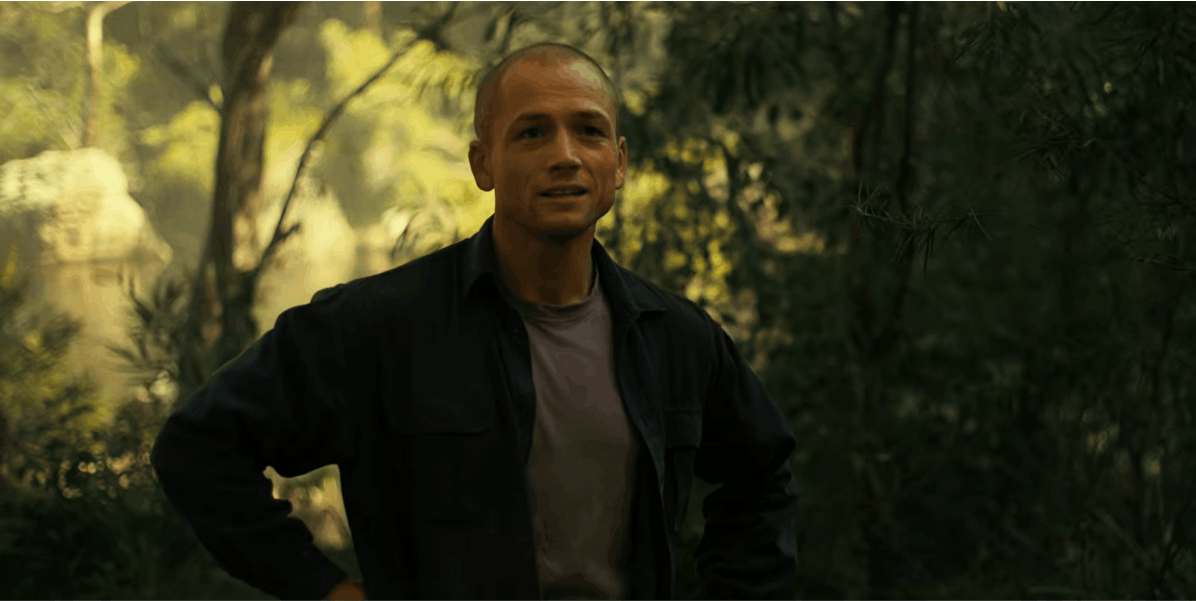
While Ben’s role in the story may have drawn a loose reference from the modus operandi of such real-life serial killers, it is more probable that his unique characteristics come from the creative vision of the writing team. In a conversation with News, Taron Egerton, who plays the role of Ben, commented on what he considers the root of Ben’s actions. After taking into account that Ben is an immigrant, Egerton opined, “I think he has a romanticized, fetishized idea of what it means to be an Aussie. There is something inherently performative and strange about the character.” As such, Ben’s ability to instill pure fear on screen largely rests on his fictional backstory.
Read More: Apex Ending Explained: Is Ben Dead? Does Sasha Become a Climber Again?