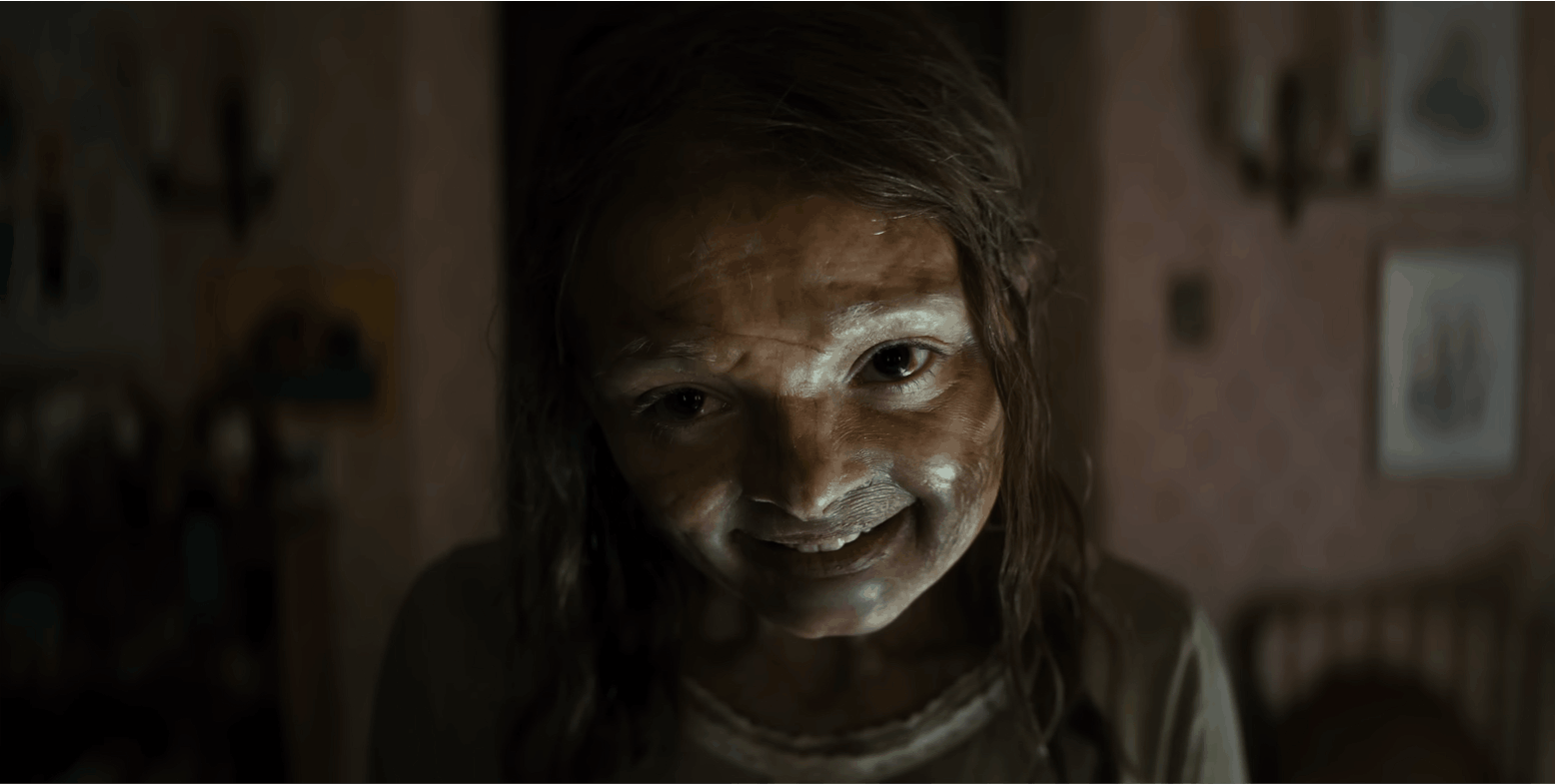
‘Lee Cronin’s The Mummy’ is a horror movie that reinvents the world of ‘The Mummy‘ and its franchise stories with a twist. While the story is still set in Egypt, we chronicle not the tale of mysterious monarchs, golden sarcophagi, and hidden treasures but that of a girl’s inexplicable disappearance. Just as Katie’s family gives up all hope, she is miraculously discovered, alive but in a very fragile condition. However, it isn’t until she returns home that her parents and siblings realize that there is something bigger and more sinister in play. As it turns out, Katie’s body has been taken over by a parasitic demon known as Nasmaranian, and as the family unravels the full extent of the lore behind this entity, its appetite only grows, risking the lives of many in the process.
Nasmaranian is a Fictional Composite Loosely Inspired by North African Mythologies
Nasmaranian is a fictional demon created by writer-director Lee Cronin specifically for the movie. As the titular mummy of the narrative, Nasmaranian comes with its own lore, and is described as an evil spirit that destroys families by cursing them. While stories in the same vein as ‘The Mummy’ series have often incorporated elements from Egyptian or Mesopotamian mythology into their supernatural antagonists, Nasmaranian cannot be tracked back to any particular real-life entity from historical or mythological records. That said, Cronin’s research for the movie had a much larger scope, and it is apparent that his conceptualization of a demonic mummy is a collage of many visual and historical references brought to life.
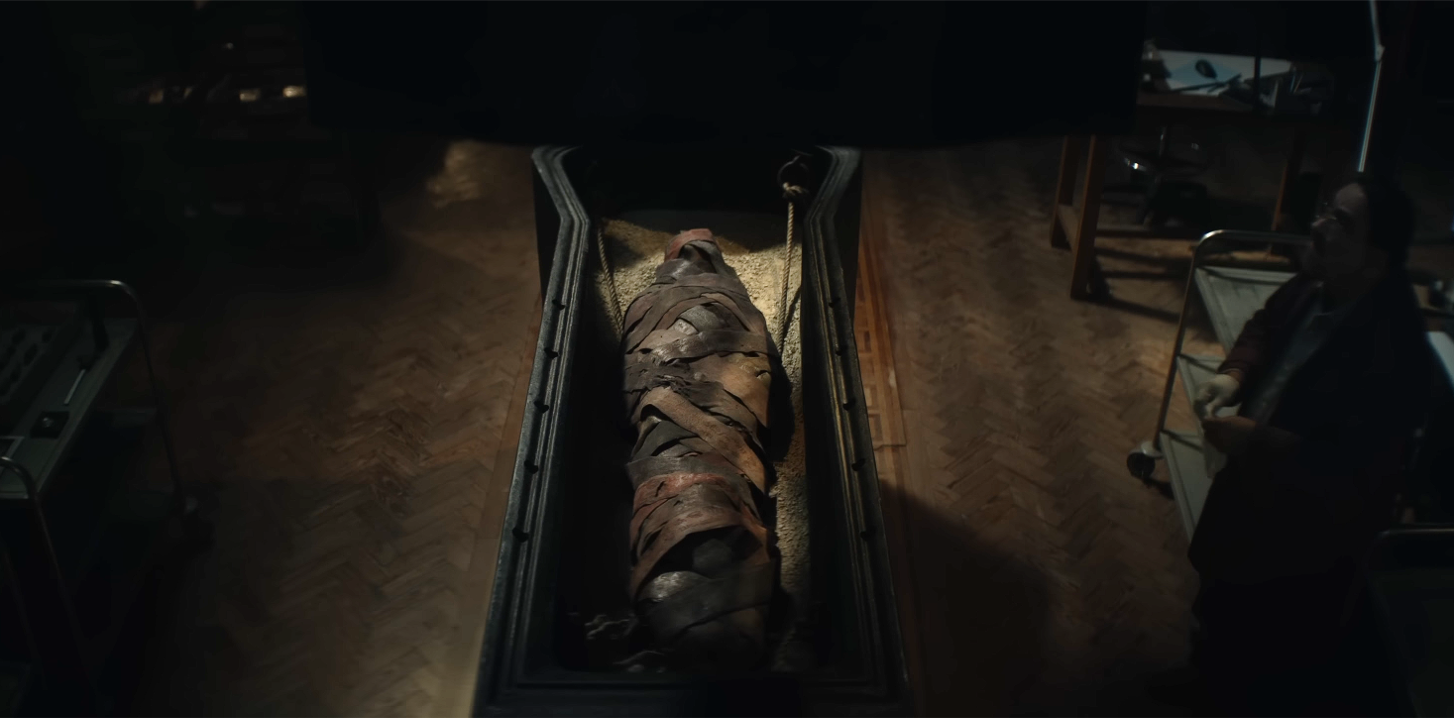
In a conversation with IndieWire, Cronin revealed that his research was particularly focused on North African sources that are several millennia old, as well as references from his home country, Ireland. Cronin and his team were particularly fascinated by the bog bodies on display in the National Museum of Ireland in Dublin. The collection showcases remarkably preserved Iron Age human remains that underwent a natural mummification procedure in wetlands known as peat bogs. However, upon a closer inspection, Cronin described the bodies as “tanned and leathery” and decided not to focus on them as an inspiration for his mummy design.
Nasmaranian Brings the Horror of Mummies From the Pyramids to a House
When inventing the finer details surrounding Nasmaranian, Lee Cronin and his team purposefully decided to steer away from conventions and instead give the mummy genre a familial spin. In an interview with Daily Dead, he explained that the goal was to flip the very idea of mummification on its head. “What if it wasn’t about your kings or queens or pharaohs as such? What if it was about somebody that you loved?” To that end, the goal was to bring the horror away from a dramatic setting and into the confines of a home, with a tightly knit family experiencing the horror on a more personal level than what has been tried with the genre thus far. Interestingly, we never actually see the real form of Nasmaranian throughout the movie, but its possession of characters we are familiar with is enough to paint a vivid picture.
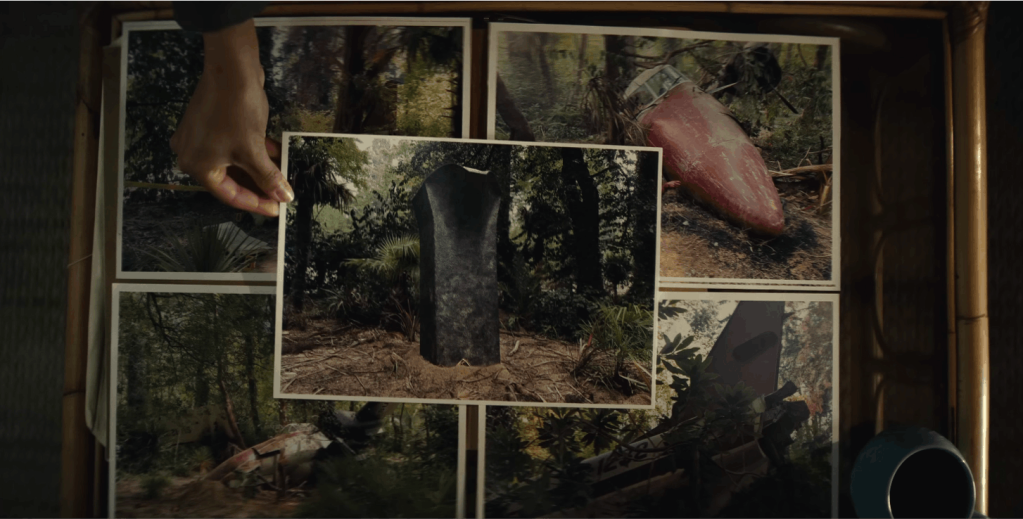
While Cronin may not have singled out any specific inspiration for his fictional mummy, one detail from the film stands out. Nasmaranian’s presence is accompanied by a growing presence of coyotes and wild dogs around the family’s house, which might make the demon a reference to the Mesopotamian demon Lamashtu. In historical depictions, such as amulets, sculptures, and plaques, Lamashtu, the demon most frequently associated with miscarriages, is often flanked by dogs. However, beyond these visual similarities, no clear connection can be established, and the connection may be coincidental. Another potential antecedent might be the films of Lee Cronin himself, as his ‘Evil Dead’ series has its own iconic demons and supernatural entities, all of which come from the mind of one creator.
Read More: Is Undertone a True Story? Is it a Real Podcast? Is Abyzou Based on a Real Demonic Spirit?