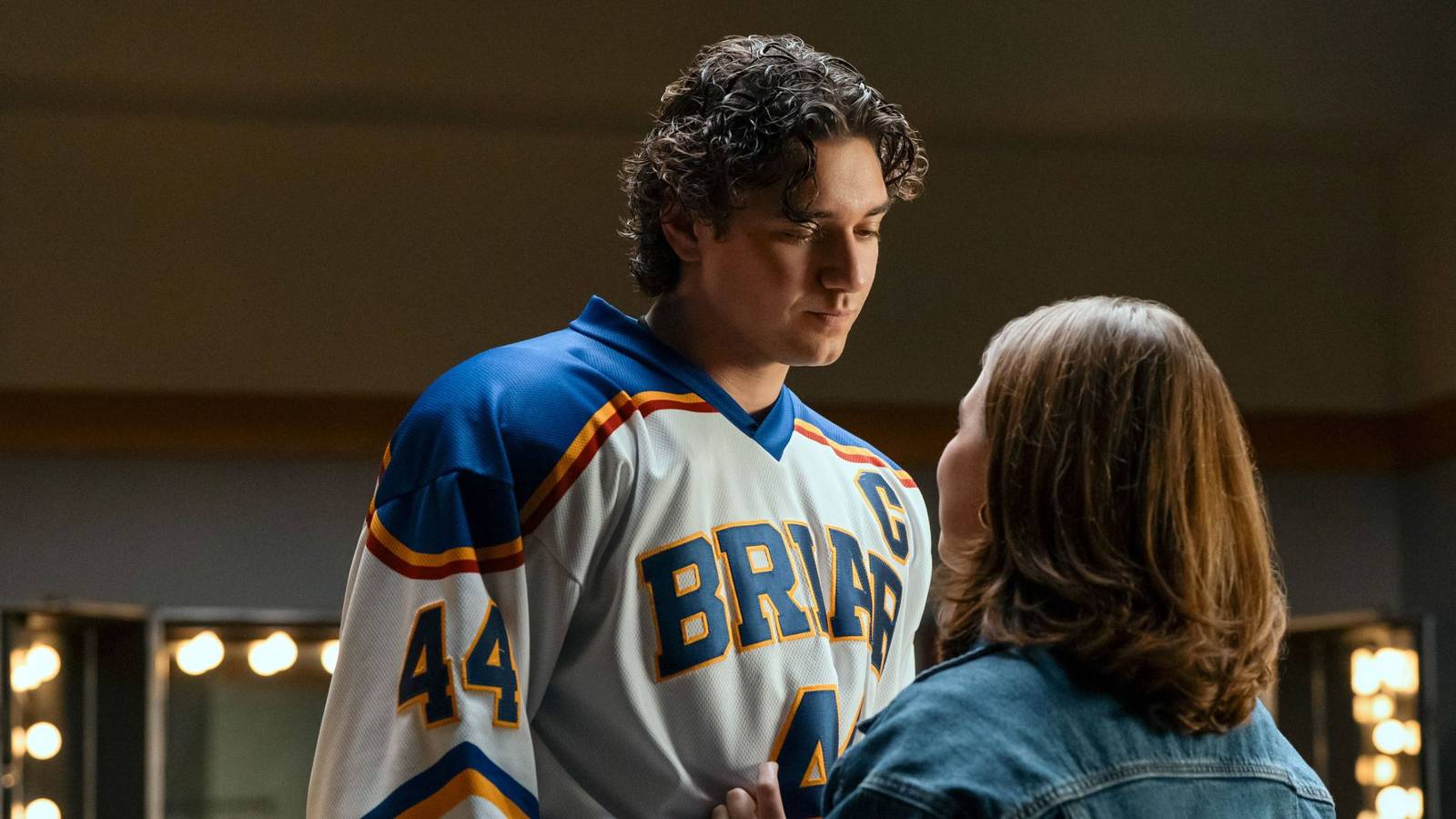

There is a moment in Off Campus when Garrett Graham (Belmont Cameli) keeps calling and texting Hannah Wells (Ella Bright) in the middle of a bad moment while she herself is having a less-than-perfect day. In any other romance series, viewers would probably know exactly where that scene was headed, and most viewers of the new Prime Video hit would’ve thought they did, assuming that he would get explosively angry and accuse her of ignoring him. It was easy to assume that he would lash out and spend the next few episodes earning forgiveness.
Instead, Off Campus does something surprisingly rare: nothing. In the above example, Garrett’s in a bit of a funk; Hannah’s struggling, but everything works out without any major confrontations, guilt trips, or over-the-top displays of possessiveness that are marketed as devotion. If you’ve been watching TV romances for the last decade, this kind of toleration seems foreign. For years, audiences have been fed stories in which emotional unavailability is misrepresented as depth, jealousy as passion, and controlling behavior as love — a pattern that has taught viewers to expect the worst from men.
The most fascinating thing about the Off Campus series, with that in mind, is that it understands those expectations. More importantly, it refuses to reward them. The series repeatedly presents situations that look like the beginning of a toxic romance trope, only to take a different route. As a result, many viewers found themselves waiting for a twist that never arrived, and it was refreshing.
Garrett and Justin Refuse To Follow the Script

Part of what makes Off Campus work so well is that it doesn’t remove flaws from its male characters. Garrett struggles with anger and spends much of the season terrified that he might become like his abusive father, Dean hides genuine vulnerability behind confidence and casual relationships, and Logan wrestles with insecurity. It’s evident that these aren’t perfect men, but in that imperfection, cruelty doesn’t seem to reign.
When Garrett learns about Hannah’s trauma, the show doesn’t transform him into a savior. He doesn’t pressure her to heal faster and doesn’t make her pain about his own desire to help. Instead, he listens, respects boundaries, and allows Hannah to determine what she is comfortable with and when. These choices shouldn’t feel revolutionary, yet television has spent so long turning respect into a secondary trait that basic decency suddenly feels refreshing.
The same pattern appears throughout the season. Dean (Stephen Kalyn), for instance, doesn’t let his confidence turn into a sense of entitlement. He fits the mold of the type of character that viewers have been conditioned to dislike — the attractive jock who’s known for hookups and a major ego. In most stories focused on romantic drama, you can find the aforementioned characters eventually revealing a malevolent side as charm becomes arrogance, persistence becomes pressure, and pursuit becomes possession. Off Campus refuses to make that turn. Dean remains confident throughout the season, but he also respects boundaries, accepts rejection, and demonstrates emotional intelligence that feels surprisingly rare for a character built from such familiar blocks.
On top of this, despite teasing one another mercilessly, the Briar hockey players have a close friendship rooted in love instead of humiliation. In terms of their emotional intelligence regarding conversations about relationships, feelings, mistakes, and consent, the men on Briar have demonstrated far greater maturity than the majority of male characters depicted by television shows to date.
Even Justin’s (Josh Heuston) storyline elicits a similar reaction. As Hannah’s music career begins to gain momentum, many viewers immediately assume the show is setting up an inevitable betrayal. After all, modern television has conditioned audiences to expect ambition to corrupt people. The expectation was that Justin would take credit for Hannah’s work after working together, undermine her success, or reveal some hidden agenda. Instead, Off Campus once again declines the invitation. The fact that so many viewers expected these turns says less about the characters themselves than it does about the stories we’ve grown accustomed to watching.
‘Off Campus’ Proves Healthy Masculinity Doesn’t Have To Be Boring

One of the laziest assumptions in modern television is that male characters must be toxic to be interesting. Writers often treat emotional maturity as the enemy of drama. The logic seems simple: if a man communicates clearly, respects boundaries, and handles rejection like an adult, where does the conflict come from? Off Campus answers that question by looking in a far more interesting direction. The conflict comes from trauma, from insecurity, fear, ambition, family obligations, heartbreak, and growing up, all of which contribute to the cause of this issue.
Garrett’s story is interesting because he intentionally works to avoid becoming like his father, while Dean’s story is also intriguing; he is confident on the surface, yet there are deeper fears regarding Dean’s self-worth lying underneath. Hannah’s approach to her relationships has merit; her emotional journey from one person to another is much more compelling than an artificially constructed relationship based on jealousy or misunderstanding. There are no requirements to act in a controlling or manipulative way or to act in an emotionally abusive way toward another.
Another thing this series has done well, which a lot of romance shows do not, is show that kindness is attractive. Watching Garrett make sure Hannah feels safe is attractive, watching Dean accept rejection without resentment is attractive, watching male friends support one another without mocking vulnerability is attractive. The series never treats these moments like public service announcements or morality lessons. They are simply presented as normal behavior.
For years, audiences have been told that romance requires emotional chaos. Off Campus argues that tension and tenderness can coexist and proves that respect does not eliminate chemistry. If anything, it strengthens it. By the time the season ends, the show’s biggest achievement is that it quietly challenged the assumption that compelling male characters need to hurt people to hold our attention. And judging by the audience response, viewers may have been waiting for that kind of story all along.