
Firefly is the kind of show that proves the universe has a cruel sense of humor — or at least, that network television did in the early aughts. In 2002, the Joss Whedon sci-fi creation was cancelled by Fox faster than fans could say “space Western,” after execs shoved it into the Friday night death slot and aired episodes out of order for reasons still unknown. With those kinds of odds stacked against it, its cable exile came as no surprise, but its evolution from half-ass genre experiment to an era-defining cult relic that still commands legions of fans, renewal campaigns, and a feature-length follow-up film (Serenity)? That’s a plot twist no one expected – though we probably should have.
Firefly re-imagined what sci-fi could be at the time. It fused dusty borderland grit with shiny space tech, smothered its charismatic anti-heroes in Southern-fried twang and unresolved trauma, sprinkled Mandarin curses into intergalactic shootouts, and dared to envision the great black yonder as an actual frontier worth forging and fighting for. And its cast was a charismatic crew of in-their-prime actors like Nathan Fillion, Alan Tudyk, Gina Torres, Morena Baccarin, and Adam Baldwin, who still felt green enough to disappear into their roles as marauding misfits aiming to misbehave. Yes, it had all the hallmark Whedon-isms: overwritten dialogue, Bechdel test failings, and wildly problematic cultural appropriation. No show from 20 years ago can pass through our current culturally aware barometer unscathed, but the fact that Firefly endures despite its defects is a big deal. It might not have lasted long, but it changed everything all the same.
‘Firefly’ Became a Sci-Fi Phenomenon in Just 14 Episodes
Take a spaghetti Western, launch it into orbit, and crew the ship with people who all desperately need therapy, and you’ll get a taste of what Whedon was cooking on Firefly. Before binge culture, before cinematic universes, before we had 10 streaming platforms fighting over which mediocre dystopia to greenlight next, he mixed up the most absurd genre-smoothie: a Mad-Libs style premise that took elements of the American Civil War and tossed them into a Star Wars setting.
But, despite all the world-hopping action and futuristic societal machinations, at its heart, Firefly was a character study, one that followed a group of deeply chaotic individuals crammed into a rickety spaceship called Serenity who were scraping by on the fringes of a galaxy ruled by a fascist government called the Alliance. Across 14 episodes, the series swung between standalone mercenary jobs gone wrong and slow-burning arcs that blended cosmic heists, bar brawls, and existential side quests with just enough overarching mystery to keep things simmering. Fillion’s Captain Malcolm Reynolds commanded most of the action, serving as the show’s likable anti-hero and disillusioned war vet, fueled by snark, a deep distrust of those in power, and an unquenchable desire for freedom. His moral compass often went haywire, and petty theft was his favorite pastime, but he originated the sad space dad archetype long before Pedro Pascal would don The Mandalorian helmet.
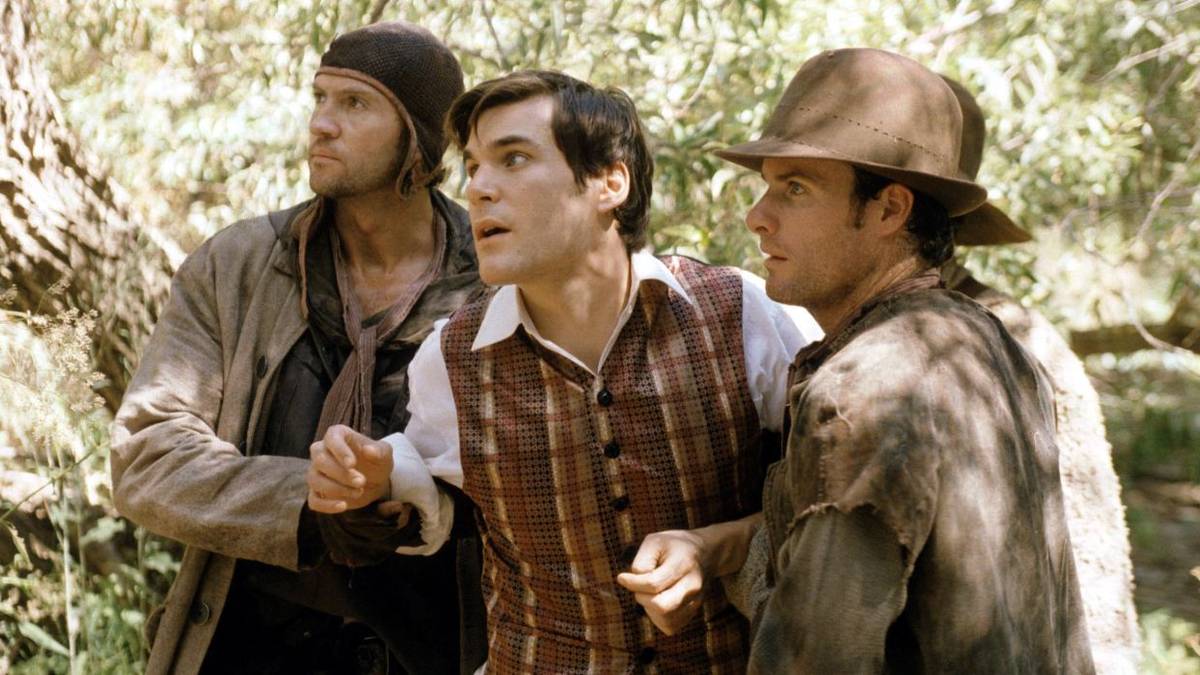
His crew was a ragtag bunch of outcasts: Zoe (Torres), his fiercely loyal second-in-command; Wash (Tudyk), the wisecracking pilot (and Zoe’s husband); Kaylee (Staite) the ships mechanic who ran on unchecked optimism and engine grease; Jayne, a gun-loving mercenary with the intellectual depth of a puddle; Inara (Baccarin) the mysterious “companion” who gave the ship a needed dose of respectability (and gave Mal some pesky feelings); and siblings Simon (Sean Maher) and River (Glau) Tam, the former a doctor on the run, the latter a psychic science experiment with a mayhem-inducing kill switch that activated at the worst times. What made Firefly so beloved wasn’t just its genre-bending premise or Whedon’s quippy dialogue; it was the alchemy of that cast, the lived-in worldbuilding, and the sense that even in the vast, uncaring void of space, you could find family – albeit the dysfunctional, perpetually-on-the-lam, trigger-happy kind.
Here’s What (Still) Sets ‘Firefly’ Apart From Other Sci-Fi Shows
For all its space-cowboy swagger, Firefly’s real magic wasn’t in the ‘verse, it was on Serenity. What made the Firefly gang so fun to watch wasn’t just their quirks; it was how their flawed parts fit together to make the whole. They bickered and betrayed each other’s trust more than once, but underneath the hijinks was genuine care and loyalty that felt earned. They were real people – messy, funny, occasionally infuriating – and that’s why their stories stuck. You didn’t just root for them, but you missed them when they were gone.
And somehow, in less than a two-season order and despite a shoestring budget, Firefly made you miss the world it built, too. The show rarely leaned on big special effects, because, well, it couldn’t really afford to. Instead, Whedon employed documentary-style filmmaking tricks to put fans in the action, such as shaky cams and tight closeups that felt gritty and grounded. It trusted viewers to fill in the gaps, whether it was revolutionary war lore, government conspiracies, or the political tensions that caused trouble for the crew on whatever backwater planet they happened to dock each week. No one sat you down and explained the rules of Firefly’s ‘verse, you just picked them up as you went along, like you would a foreign language on an extended holiday.
‘Firefly’ Might Be Creatively Brilliant, but It Has Major Blind Spots

Of course, it’s impossible to talk about Firefly without talking about Whedon, a creator whose signature dialogue and deep love of oddball ensembles made the show what it was… and whose personal and creative blind spots are just as baked into its DNA. For everything that worked: the dry sarcasm, the quotable one-liners, the found-family vibes, and the lived-in mythology, there was an antithesis, narrative red flags that couldn’t (and shouldn’t) be ignored. Firefly imagined a future where Chinese culture had merged with Western influence to become the dominant aesthetic of the galaxy. Yet, somehow, no Chinese characters made it aboard the ship. The crew appropriated curse words, interior design choices, and clothing styles, but there was no Asian representation on screen. It was cultural window-dressing; a borrowed backdrop used to add “flavor” to the world without including the people it supposedly came from.
And then there’s the handling of the show’s female characters, a contradiction in Whedon’s work that always seems to age poorly. While Firefly initially set itself up as a showcase of complex, capable women – Zoe, Inara, River, and Kaylee each had depth and agency – those afforded traits often came with an expiration date. Inara’s sexuality, for example, was framed as empowering, until it was repeatedly undercut by Mal’s moral judgments and the show’s discomfort with sex work. Kaylee, brilliant and joyful in early episodes, was reduced to pining and giggling over the ship’s resident medic.
River, perhaps the most interesting crew member, began as an intriguing mystery and ended up as a plot device, wheeled out for bursts of violence or vague prophecies that only served to “other” her. For Whedon, if a woman wasn’t kicking ass (in the literal sense) or sexually frustrating a male character, he just didn’t know what to do with her. Still, Firefly was rarefied air. It was flawed, yes, but also electric — a show that tried to do something different in a genre that, these days, often plays it too safe.
Here’s What Modern Sci-Fi Should Learn From ‘Firefly’

Which is why it’s so disappointing that the show barely had time to find its feet before Fox yanked the rug out from under it — even if its small and mighty fan army came rioting. The Browncoat rebellion that followed Firefly’s cancellation news helped define modern fandom as we know it: petitions, campaigns, fanfics, forums, cosplay, cons… a whole grassroots blueprint, really. It was loud enough to spawn a follow-up film, an ongoing comic universe, endless merchandise, and an influence that echoes in every morally gray crew of space misfits you’ve seen since. The Expanse, Dark Matter, The Mandalorian? You’re welcome.
But it’s not just the show’s legacy that makes it noteworthy. It holds up all on its own. Not as comfort viewing for burned-out millennials, but as a masterclass in world-building, character writing, and earned emotional stakes. In an age of streaming bloat where 10-hour seasons feel like padded homework, Firefly did more in 14 episodes than some shows do in five seasons. It reminds you what sci-fi on TV can be when it’s smart, scrappy, and has something real to say. It was lightning in a bottle, sure, but maybe it had to burn fast to be remembered as something so shiny.

- Release Date
-
2002 – 2002-00-00
- Network
-
FOX
- Showrunner
-
Joss Whedon
- Directors
-
Allan Kroeker, David Solomon, James A. Contner, Marita Grabiak, Michael Grossman, Tim Minear, Vern Gillum
- Writers
-
Cheryl Cain, Drew Z. Greenberg, Jane Espenson