
There’s a certain flavor of genre TV that existed in a pocket of time right after Lost rewired everyone’s expectations and long before peak-TV budgets made every mystery box series look like a movie trailer. Think of the early days of Fringe, when the weirdness still felt handwritten; the little-seen FlashForward running on pure adrenaline and good intentions; Jericho building a small-town nightmare with canned goods and paranoia. Under the Dome arrived right in that lane and, for a minute, tapped into the same sweet spot. It took the claustrophobic dread of The Mist, the social-pressure cooker of Battlestar Galactica’s New Caprica arc, and even a little of the eerie calm of Wayward Pines before that show steered into its own skid. Season 1 didn’t feel like a puzzle to solve so much as a place you didn’t want to be stuck in — a big, glass jar, panic-sweating in the sun.
But the cultural memory of Under the Dome became something else entirely. People remember the exploding cows, the egg, the butterfly metaphors, and that late-run feeling that the writers were shaking a Magic 8-Ball to see what genre they should try next. What gets lost in the meme fog is how good the show’s opening stretch was — how unnervingly grounded, even tender at times, the first season could be when it focused on the human pressure points. The real danger wasn’t the dome at all — it was the slow, sinking understanding that when the world goes quiet, you’re suddenly stuck with the people you’ve been sidestepping for years. That’s the kind of everyday horror Stephen King has always understood. It’s the part that still works.
King’s Favorite Nightmare Is of Ordinary People Cornered by Doom
The best King adaptations aren’t the ones that go for the jugular first — they’re the ones that understand his fondness for watching regular people wrestle with impossible situations. The Fog, Misery, and Doctor Sleep all survive because they never lose track of the human scale. Under the Dome found that rhythm right out of the gate. Chester’s Mill never played like a TV set. It felt like one of those New England towns that always seemed to be waiting for something to go wrong. So when the air itself hardened, and the world cut out, the panic wasn’t some big cosmic revelation — it was local.
What clicked was the way the show let that panic simmer. You had the sheriff trying to keep order with a dwindling supply of bullets, the radio hosts grasping for a sense of community as the outside world blinked out, and the townspeople learning in real time that every argument, every old grudge, every whispered rumor had nowhere left to go. King’s fiction is littered with those pressure cookers — the grocery store in The Mist, the dorm hallway in Carrie, the dead-end corners of Castle Rock — and Under the Dome understood that the dome was less a science-fiction device and more a psychological trap.
Characters didn’t just react to the dome; they slipped into themselves, the same way folks do in real-world disasters. Panic doesn’t create new personalities — it just heats up the ones that were already there. That’s what made the early episodes sting: the fear that the person across from you might be less predictable than the apocalyptic mystery overhead.
‘Under the Dome’ Worked Because It Stayed Small, Intimate, and Human

One of the quiet triumphs of Season 1 is that it never rushed to “save the world.” The world was gone. The dome erased it. The show lived in those couple dozen blocks — the diner, the clinic, the radio station, the fields that now ran straight into an invisible wall. Staying tight on that little slice of town gave everything a real texture. It’s the same reason 11.22.63 hits hardest in the quiet scenes, the ones tucked into tiny kitchens and cheap rooms instead of the big sci-fi swings.
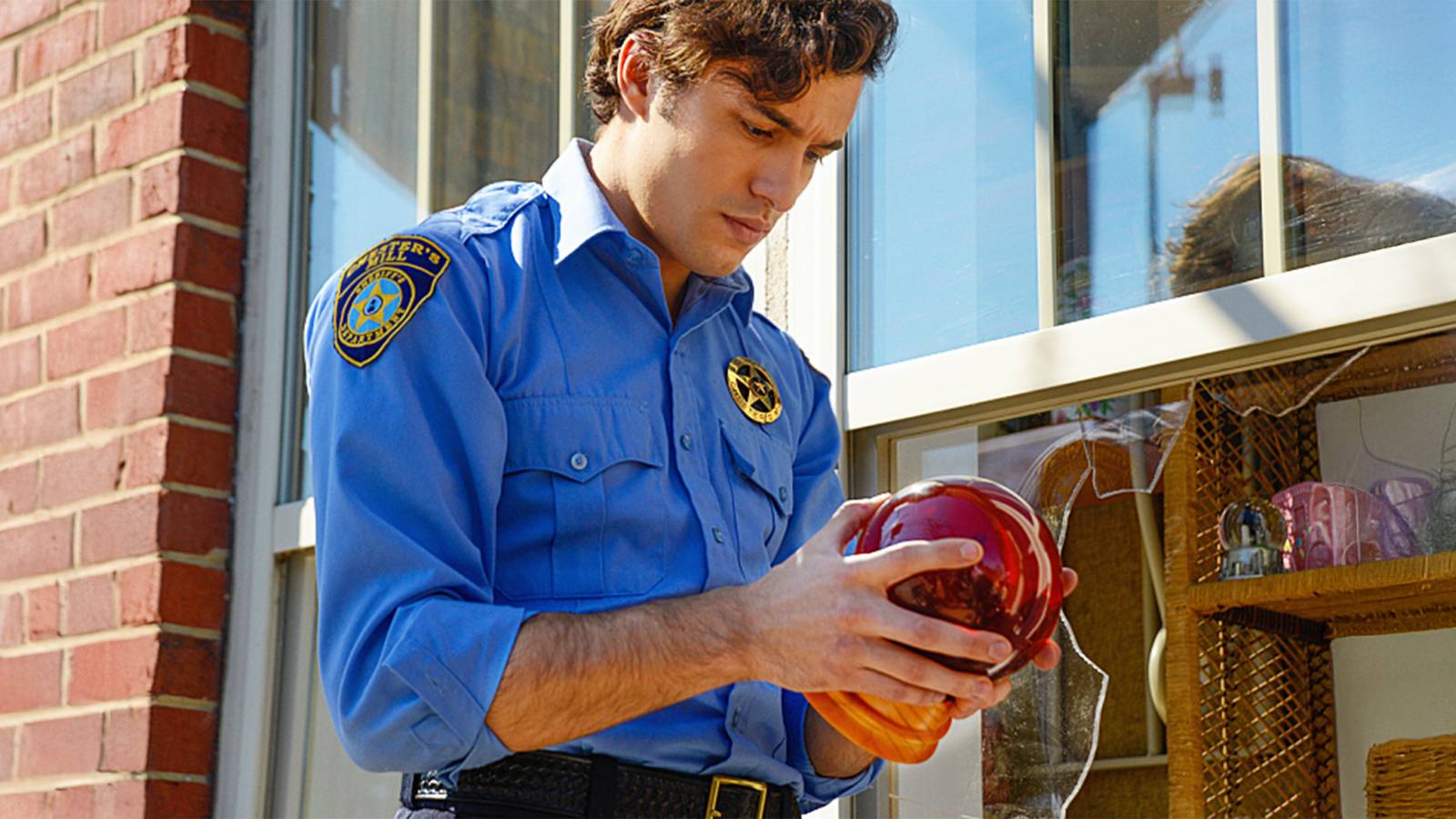
The ensemble thrived in that containment. Junior Rennie (Alexander Koch) wasn’t just a villain; he was a kid unspooled by inherited rot. Angie (Britt Robertson) wasn’t just a damsel; she was a symptom of a town that looked away from the wrong things for too long. Big Jim (Dean Norris) — the character who would later suffer the most from the series’ tonal zigzags — worked in Season 1 because his power grabs were recognizably petty, the kind of hypocritical righteousness you can imagine bursting out of any local official who’s suddenly unchallenged.
It’s also worth remembering how sharply the show handled scarcity. Water, food, medical supplies — none of it was abstract. Every shortage had a cost, and every cost pushed the characters closer to decisions they’d never make under blue skies. The dome didn’t turn people into monsters. It just removed the polite buffers that let everyone pretend they were better than they were.
‘Under the Dome’s Early Mystery Plays to Stephen King’s Weird Fiction

Under the Dome’s reputation took a hit once the show leaned heavily into alien mythology and glowing eggs, but the early mystery felt like something right out of King’s stranger, more haunting catalog — the kinds of stories where the supernatural doesn’t explain itself and may not care if you understand it. Think of “The Colorado Kid’s” unresolved edges or the early, uncanny stretches of “The Tommyknockers” before the plot tightens around the reveal. Season 1 played in that sandbox.
The dome was a presence, not a plot twist. It hummed, it reacted, it mirrored emotional states — not in a literal sense, but in the way disasters often feel uncomfortably personal. When the teenagers touched it and saw visions, it didn’t play like prophecy. It played like the dome itself was a closed-circuit mirror, echoing their fears back at them. That ambiguity gave the show an almost Twilight Zone pulse without tipping fully into anthology weirdness.
Every Stephen King Story Collection, Ranked
IT is what IT is.
And for a while, the uncertainty worked because the characters weren’t theorizing their way through the phenomenon. They were just trying to survive the next hour. King has always been strongest when the supernatural is a pressure, not an answer — a shadow cast over the human mess, not a hologram demanding interpretation. Under the Dome had that energy early on, before the mythology ballooned and started eating its own tail.
Stephen King’s ‘Under the Dome’ Deserves a Revisit in the Streaming Era
Part of the reason Under the Dome became a punchline is timing. It aired during a moment when network shows were chained to 13-episode orders, rigid act breaks, and the constant churn of summer programming. People wanted that sleek, cable-drama sheen from a show that was still chained to network pacing and summer reruns. And once the later seasons started throwing wild pitches, early Twitter and early Tumblr grabbed onto every oddball image with the kind of giddy, ironic glee only the internet can manage.
Seen today, especially in a binge format, the first season feels different. The pacing is tighter. The character arcs are sturdier. The sense of creeping dread plays better when you’re not waiting a week between episodes. And because the ending of the series is no longer a cultural battleground, you can approach the early run without the baggage of “where it all went wrong.” It becomes a 13-episode survival thriller instead of a three-season meme object.
Most importantly, we’re in a moment when King adaptations are everywhere, but few of them get the breathing room that Under the Dome had in the beginning. Hulu’s Castle Rock folded under its own mythology. The Outsider was brilliant but short-lived. Chapelwaite nailed gothic discomfort but stayed niche. Under the Dome — in its earliest, rawest state — feels like a reminder of what happens when King’s small-town instincts meet a cast willing to lean into the tragedy instead of treating it like a genre checklist. Chester’s Mill still has something to say. You just have to give it another chance.

- Release Date
-
2013 – 2015-00-00
- Showrunner
-
Neal Baer