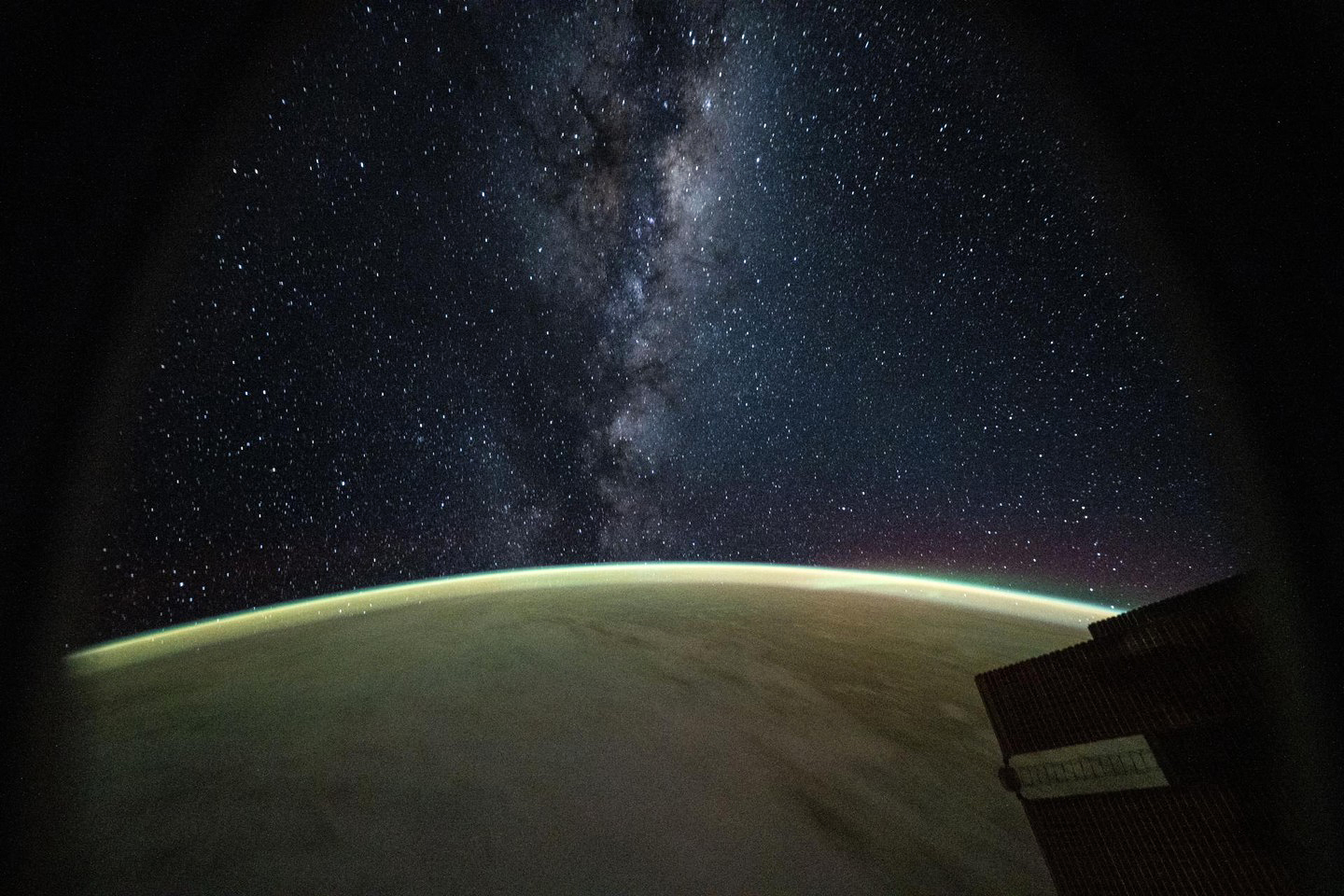
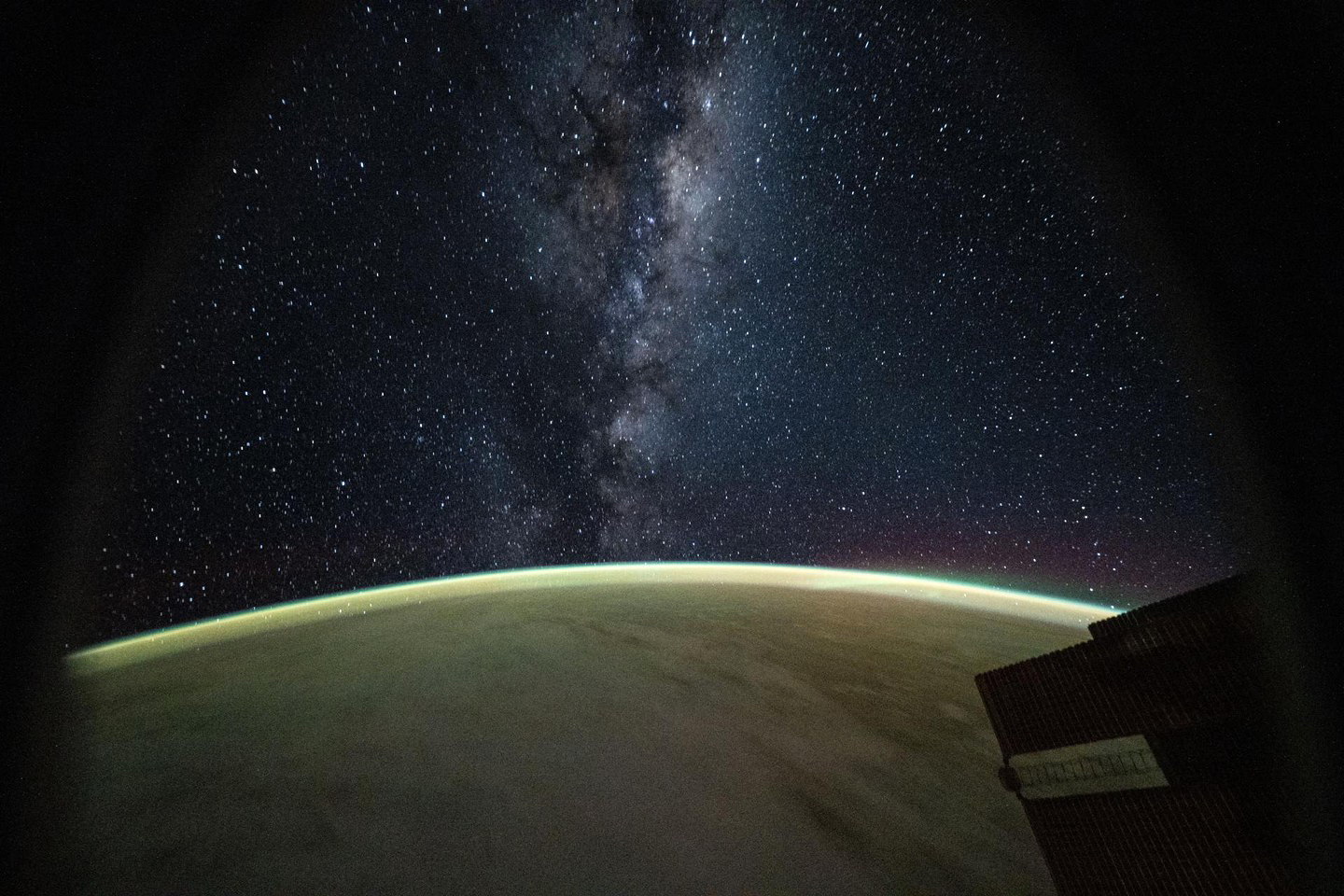
For 10 days in April, NASA’s Artemis II crew traveled around the far side of the Moon and back, marking one of the most important crewed lunar missions since the Apollo era. But alongside the technical milestones, the astronauts also documented the journey in a far more human way, by taking thousands upon thousands of photographs.
More than 12,000 images, to be exact. Like any group returning from a once-in-a-lifetime adventure, the crew captured everything they could: Earth glowing in the distance, dramatic lunar landscapes, life inside the Orion spacecraft, moments between astronauts, and the surreal experience of seeing space from a perspective few humans have ever witnessed firsthand. Scroll down to see some of our favorites.
More info: nasa.gov | Instagram | Facebook
#1 Hello, World
This nighttime picture of Earth was taken on April 2, 2026, by an Artemis II crew member aiming a camera through a window of the Orion spacecraft. The image was captured after Orion completed its translunar injection burn, the critical maneuver that sent the spacecraft on its path toward the Moon and back.

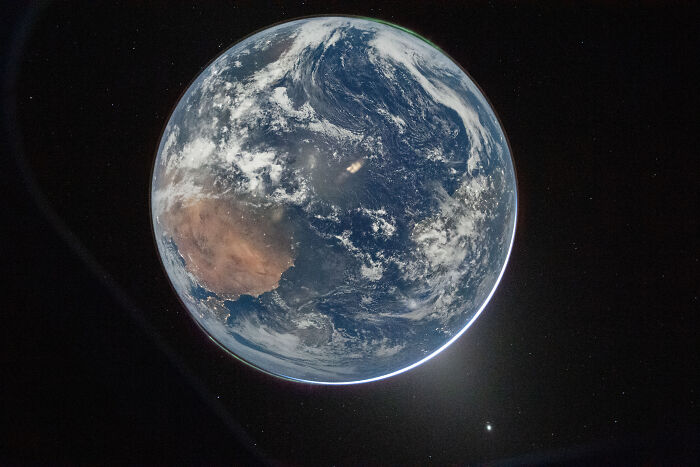
Image source: NASA
Artemis II is the first crewed mission in NASA’s Artemis program and the first time astronauts have traveled beyond low Earth orbit since Apollo 17 in 1972. During the mission, the four-person crew flew aboard the Orion spacecraft, launched by NASA’s powerful Space Launch System (SLS) rocket. Unlike the Apollo missions that aimed directly for lunar landing, Artemis II was designed primarily as a deep-space test flight, evaluating navigation systems, communication, life-support technology, and the spacecraft’s performance with humans onboard before future lunar landings begin. The mission carried the crew thousands of miles beyond the far side of the Moon before looping back toward Earth, recreating a journey not experienced by humans for more than 50 years.
#2 Artemis II Captures Dark Side Of The Earth
A view of a backlit Earth taken by NASA astronaut and Artemis II Commander Reid Wiseman from one of the Orion spacecraft’s window after completing the translunar injection burn on April 2, 2026.
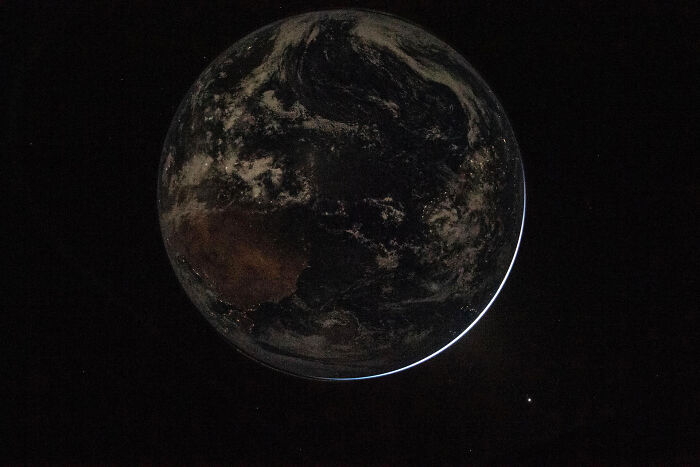
Image source: NASA
#3 Illuminated In Orion
NASA astronaut Christina Koch is illuminated by a screen inside the darkened Orion spacecraft on the third day of the agency’s Artemis II mission. To the right of the image’s center, CSA (Canadian Space Agency) astronaut Jeremy Hansen is seen in profile peering out of one of Orion’s windows. Lights are turned off to avoid glare on the windows.
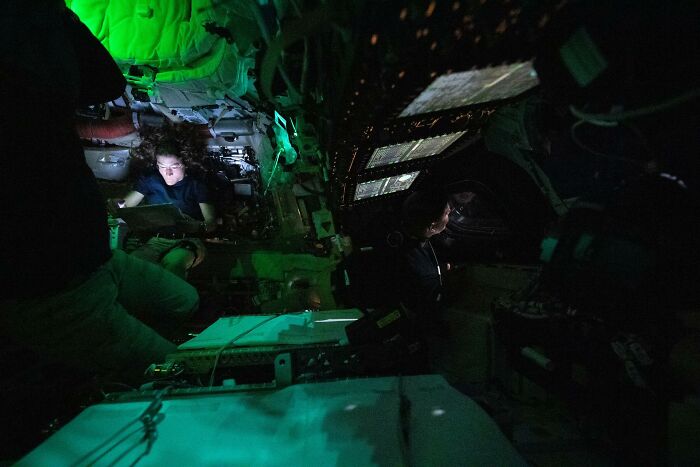
Image source: NASA
The mission is also part of a much larger long-term plan. NASA’s Artemis program aims to establish a sustainable human presence on and around the Moon, using it as both a scientific destination and a preparation ground for future missions to Mars. Artemis III, currently planned as the next major step, is expected to return astronauts to the lunar surface for the first crewed Moon landing since Apollo, including the first woman and first person of color to walk on the Moon. Future missions are intended to help build infrastructure such as the Lunar Gateway space station and long-duration lunar habitats that could support extended exploration missions in the years ahead.
#4 Shadows Across Vavilov Crater
A close-up view taken by the Artemis II crew of Vavilov Crater on the rim of the older and larger Hertzsprung basin. The right portion of the image shows the transition from smooth material within an inner ring of mountains to more rugged terrain around the rim. Vavilov and other craters and their ejecta are accentuated by long shadows at the terminator, the boundary between lunar day and night. The image was captured with a handheld camera at a focal length of 400 mm, as the crew flew around the far side of the Moon.
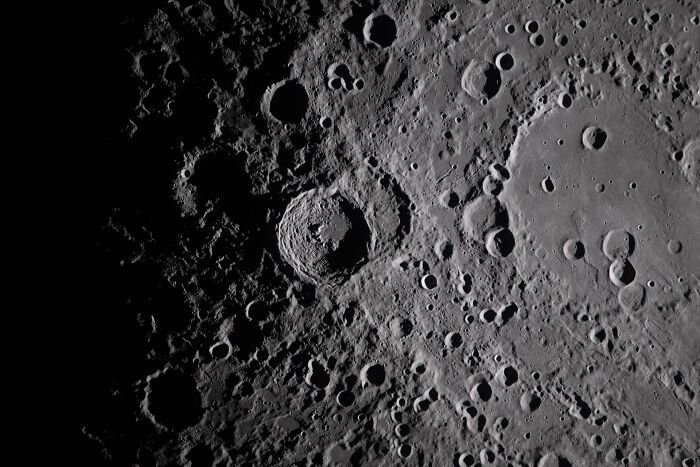
Image source: NASA
#5 Artemis II In Eclipse
Captured by the Artemis II crew during their lunar flyby on April 6, 2026, this image shows the Moon fully eclipsing the Sun. From the crew’s perspective, the Moon appears large enough to completely block the Sun, creating nearly 54 minutes of totality and extending the view far beyond what is possible from Earth. We see a glowing halo around the dark lunar disk. The scientific community is investigating whether this effect is due to the corona, zodiacal light, or a combination of the two. Also visible are stars, typically too faint to see when imaging the Moon, but with the Moon in darkness, stars are readily imaged. This unique vantage point provides both a striking visual and a valuable opportunity for astronauts to document their observations during humanity’s return to deep space. The faint glow of the nearside of the Moon is visible in this image, having been illuminated by light reflected from Earth. Editor’s note: This caption was updated on April 8, 2026, to reflect ongoing scientific observations and discussion about the image.
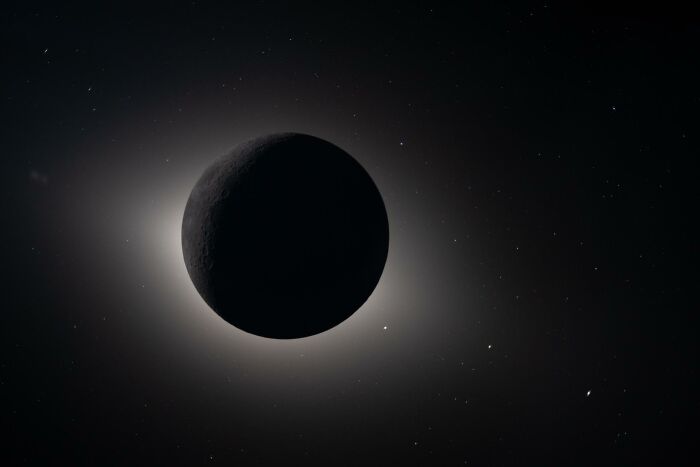
Image source: NASA
Beyond the engineering and scientific goals, the Artemis missions also represent something deeply symbolic. For an entire generation, human space exploration beyond Earth orbit existed mostly in history books, documentaries, and imagination. Artemis marks the beginning of a new era where lunar exploration becomes real again, not as a one-time achievement, but as the foundation for humanity’s next chapter in deep space exploration. The thousands of photographs taken during Artemis II reflect that unique moment perfectly: a blend of historic achievement, technological ambition, and very human curiosity about what lies beyond our world.
#6 A Sliver Of Earth
A sliver of the edge of Earth is brightly illuminated against the vast darkness of space.
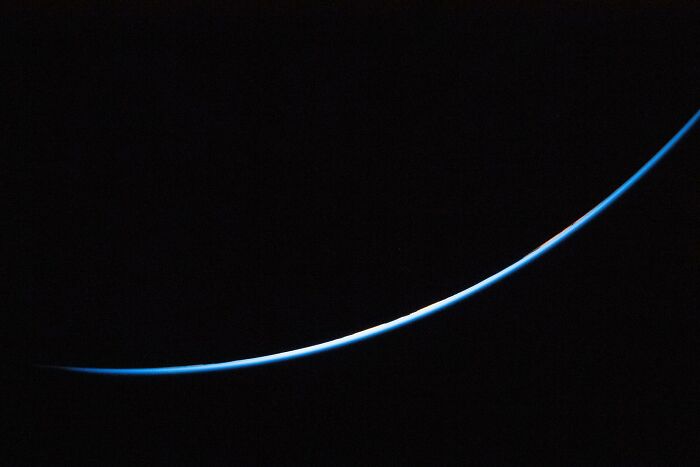
Image source: NASA
#7 A “Handprint” On The Moon
Resembling a “handprint” to the Artemis II crew, this view highlights contrasting dark and light features on the Moon’s surface. From top to bottom, the darker regions include Oceanus Procellarum, Mare Humorum—known as the “Sea of Moisture”—and the crater Byrgius A.
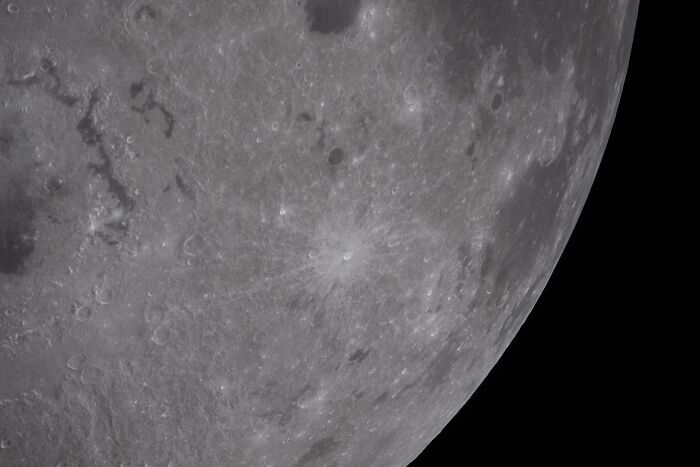
Image source: NASA
Among the thousands of photos, some of the most fascinating moments came from the smallest details of daily life in deep space. The crew documented floating food, sleeping arrangements inside Orion, handwritten notes drifting in zero gravity, and the unusual visual distortions caused by photographing Earth and the Moon through spacecraft windows. One image even captured sunlight reflecting across the lunar surface in a way rarely seen from a human perspective. NASA also revealed that the astronauts tested future communication technologies, radiation monitoring systems, and emergency procedures throughout the journey – all while living inside a spacecraft smaller than many people’s living rooms for more than a week. Together, the images offer something surprisingly rare: not just the spectacle of space exploration, but a glimpse into the ordinary human reality of what it feels like to temporarily live beyond Earth.
#8 A New View Of The Moon
Earth sets at 5:41 p.m. CDT, April 6, 2026, over the Moon’s curved limb in this photo captured by the Artemis II crew during their journey around the far side of the Moon. Orientale Basin is perched on the edge of the visible lunar surface. Hertzsprung Basin appears as two subtle concentric rings, which are interrupted by Vavilov, a younger crater superimposed over the older structure. The lines of indentations are secondary crater chains formed by ejecta from the massive impact that created Orientale. The dark portion of Earth is experiencing nighttime. On Earth’s day side, swirling clouds are visible over the Australia and Oceania region.
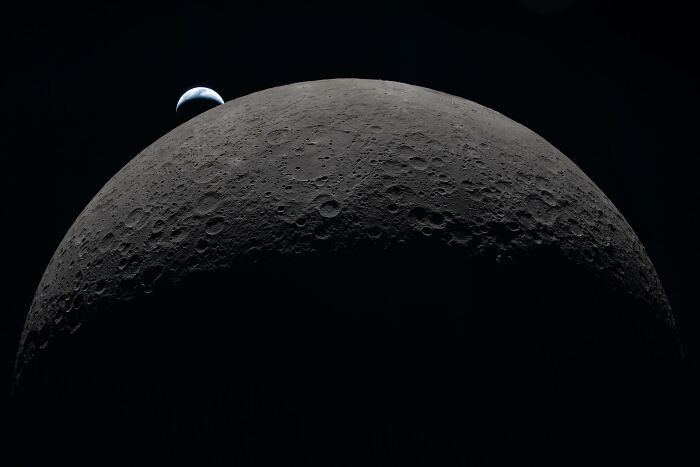
Image source: NASA
#9 Artemis II Looking Back At Earth
A view of Earth taken by NASA astronaut and Artemis II commander Reid Wiseman from one of the Orion spacecraft’s four main windows after completing the translunar injection burn on April 2, 2026.
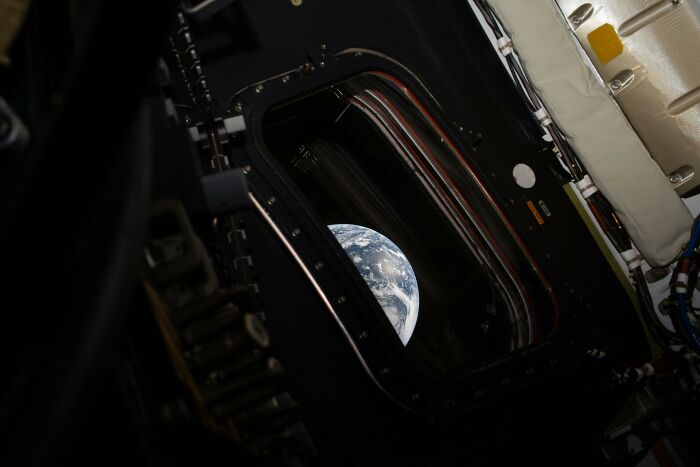
Image source: NASA
#10 Home, Seen From Orion
NASA astronaut and Artemis II Commander Reid Wiseman peers out of one of the Orion spacecraft’s main cabin windows, looking back at Earth, as the crew travels towards the Moon.
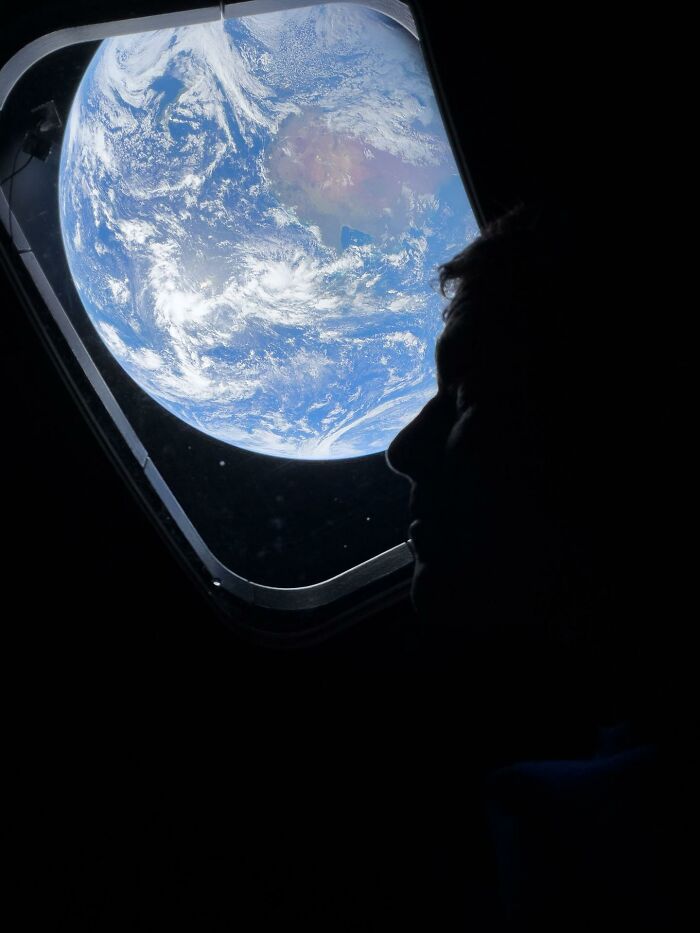
Image source: NASA
#11 Earth In View
Earth is illuminated against the blackness of space in this photo taken by an Artemis II crew member through an Orion spacecraft window on the second day of the mission.
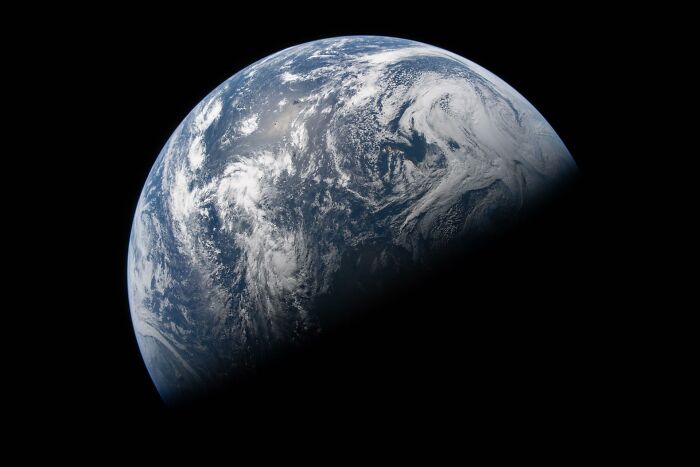
Image source: NASA
#12 A Room With A View
A view from the window of the Orion spacecraft approximately 9 minutes before Earthset during the Artemis II lunar flyby on April 6, 2026.
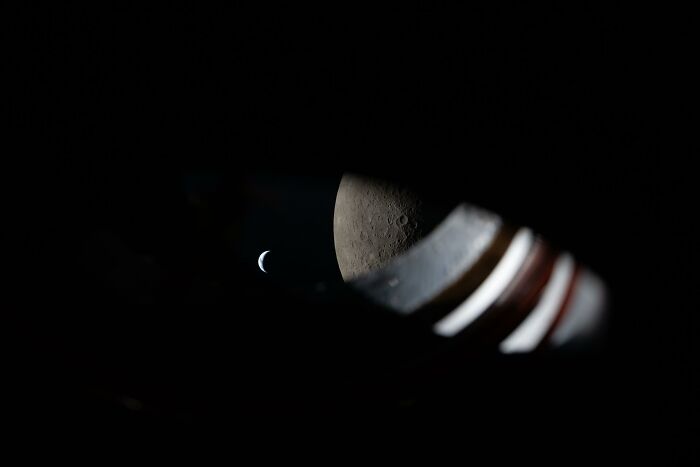
Image source: NASA
#13 Home In Sight
A thin arc glowing in the darkness of space. Sunlight traces the curves of the ocean and clouds, while the rest of the planet fades into shadow.
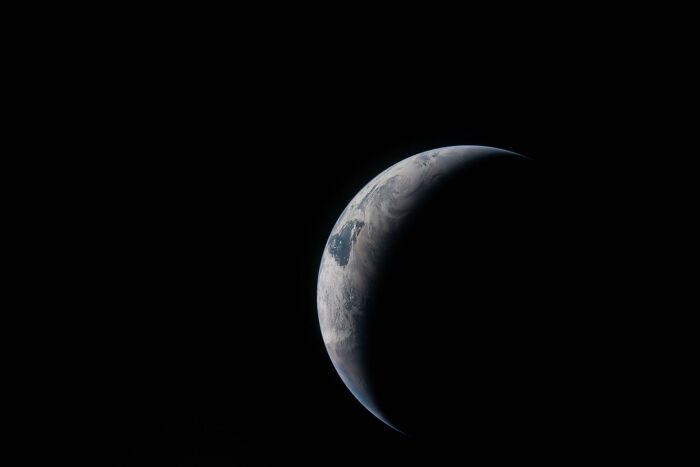
Image source: NASA
#14 Along The Lunar Terminator
This view of the Moon captures the terminator—the shifting boundary between day and night—where sunlight grazes the surface at a low angle. Taken by the crew during the Artemis II mission, the lighting accentuates the Moon’s rugged terrain, casting long shadows that reveal the depth and structure of craters, ridges, and surrounding highlands.
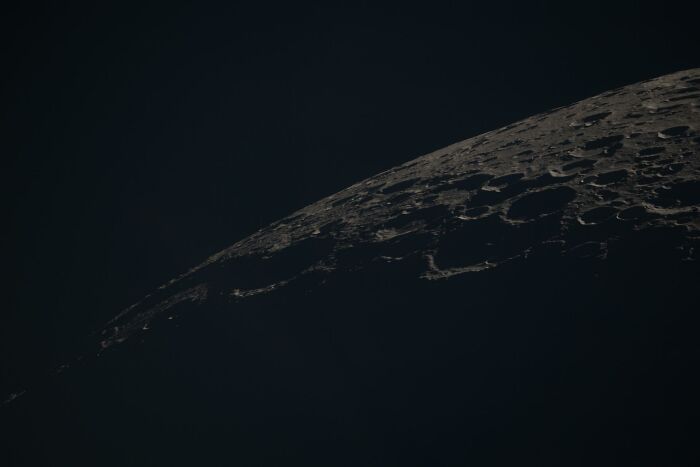
Image source: NASA
#15 Artemis II Captures The Terminator Line
A view of Earth taken by NASA astronaut and Artemis II Commander Reid Wiseman from one of the Orion spacecraft’s four windows after completing the translunar injection burn on April 2, 2026.
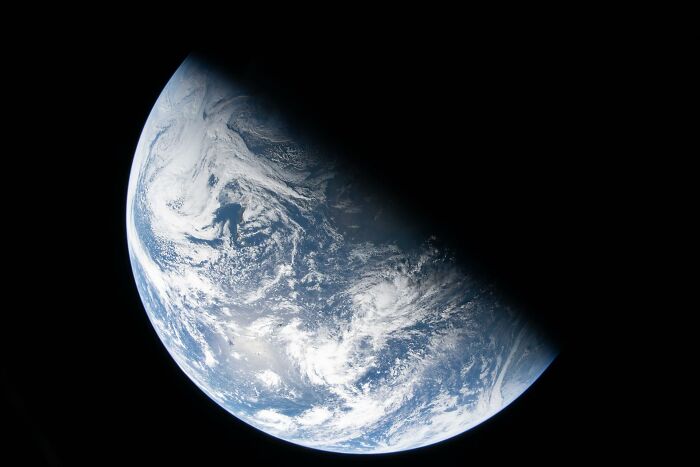
Image source: NASA
#16 Orion Snaps A Selfie During External Inspection
Orion snapped this high-resolution selfie in space with a camera mounted on one of its solar array wings during a routine external inspection of the spacecraft on the second day into the Artemis II mission.
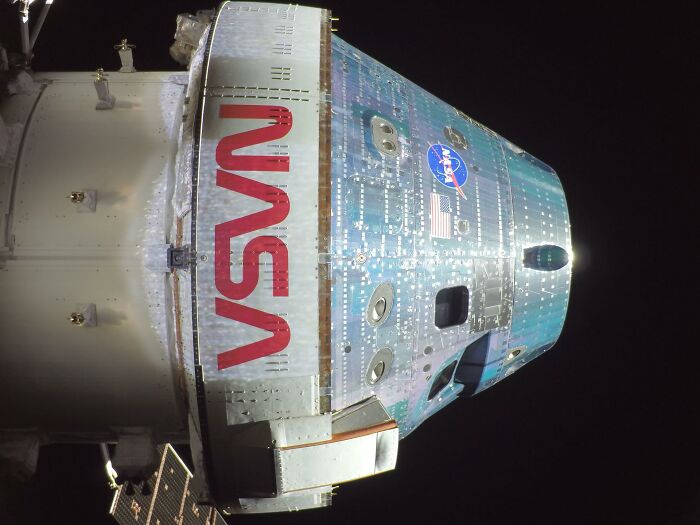
Image source: NASA
#17 Goodnight Moon
Before going to sleep on flight day 5, the Artemis II crew snapped one more photo of the Moon, as it drew close in the window of the Orion spacecraft. Orion and the four humans aboard entered the lunar sphere of influence at 12:37 a.m. EDT on April 6, at the tail end of the fifth day of their mission. That marked the point at which the Moon’s gravity had a stronger pull on the spacecraft than the Earth’s. Artemis II’s closet approach to the Moon will come on flight day 6, as they swing around the far side before beginning their journey back to Earth. About an hour after entering the lunar sphere of influence, Artemis II Mission Specialist Christina Koch said, “We are now falling to the Moon rather than rising away from Earth. It is an amazing milestone!”
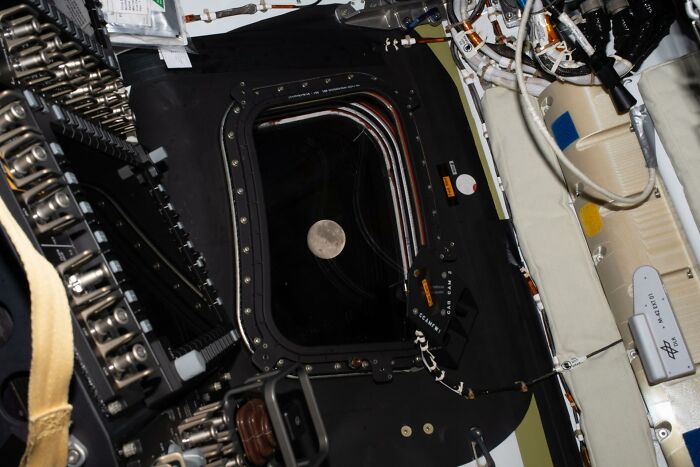
Image source: NASA
#18 Even Closer Now
In this view of the Moon, the near side (the hemisphere we see from Earth) is visible at the top half of the Moon’s disk. It is identifiable by the dark splotches. These are ancient lava flows from a time early in the Moon’s history when it was volcanically active. The large crater that appears below the lava flows, dark in the center, is the Orientale basin, a nearly 600-mile-wide crater that straddles the Moon’s near and far sides, which are partly visible from Earth on the edge of the Moon. In this image, we have a full view of the crater. Everything below the crater is the far side, the hemisphere we don’t get to see from Earth because the Moon rotates on its axis at the same rate that it orbits around us.
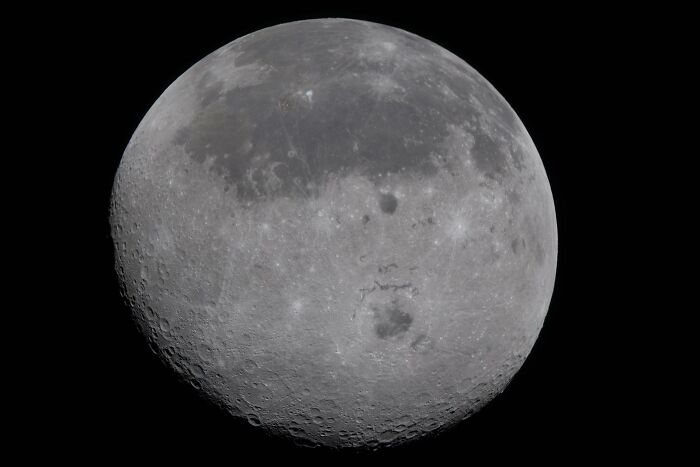
Image source: NASA
#19 A Cross Section Of Lunar Geology
A diverse set of lunar features is visible in this view, including the brightly colored Aristarchus crater, whose high reflectivity stands out against the surrounding terrain. Nearby, the Marius Hills region reveals a field of volcanic domes and cones, evidence of past lunar volcanism. The sinuous Reiner Gamma swirl contrasts with the darker mare surface, while rays from Glushko crater streak across the plains. At the bottom of the frame, the dark-floored Grimaldi crater anchors the scene.
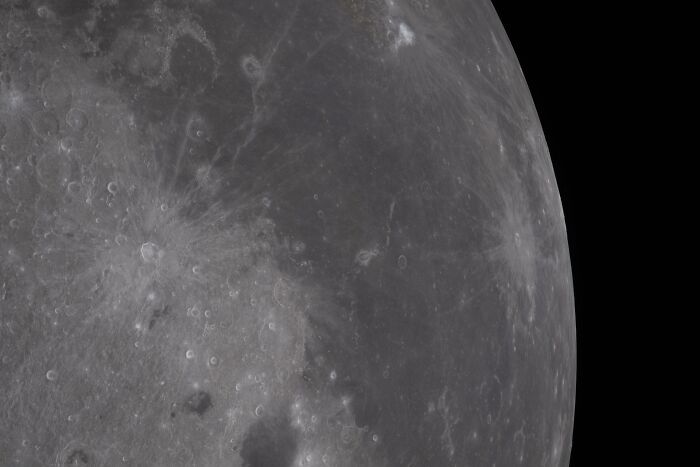
Image source: NASA
#20 The Moon’s Great Scar
During the lunar flyby observation period, the Artemis II crew captures a detailed image of the Orientale basin, a 600-mile-wide impact crater marked by a dark patch of ancient lava that erupted through the Moon’s crust billions of years ago.
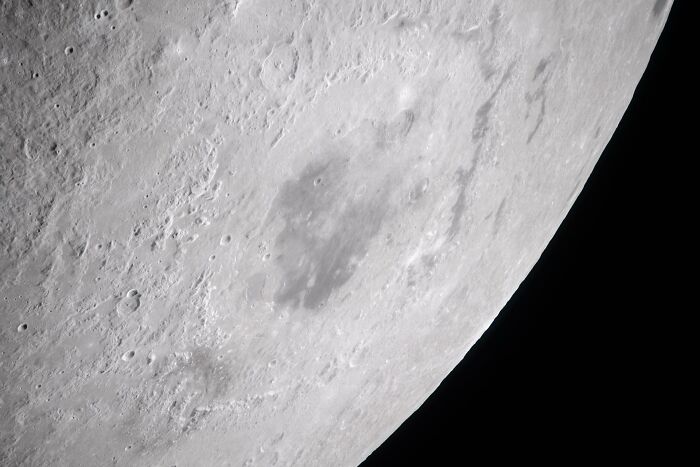
Image source: NASA
#21 Earthset
Captured through the Orion spacecraft window at 6:41 p.m. EDT, April 6, 2026, during the Artemis II crew’s flyby of the Moon. A muted blue Earth with bright white clouds sets behind the cratered lunar surface. The dark portion of Earth is experiencing nighttime. On Earth’s day side, swirling clouds are visible over the Australia and Oceania region. In the foreground, Ohm crater has terraced edges and a flat floor interrupted by central peaks—formed when the surface rebounded upward during the impact that created the crater.
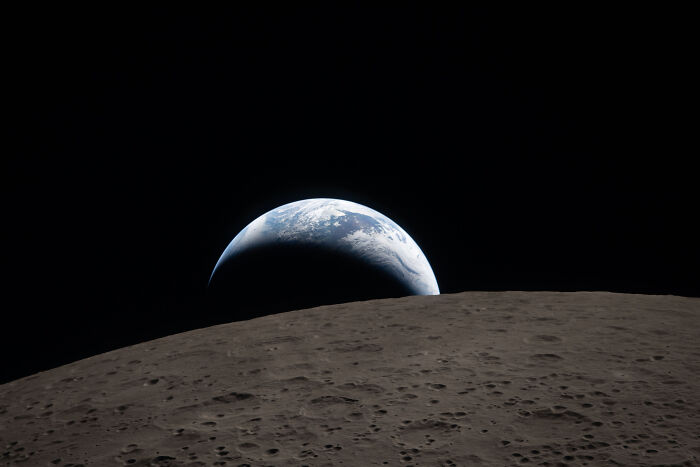
Image source: NASA
#22 Capturing The Details Of The Moon And The Beauty Of Earth
As the Artemis II crew came close to passing behind the Moon and experiencing a planned loss of signal, they captured this image of a crescent Earth. Seen from afar, it almost looks like a circular arc – except when backlit, as in other images captured by the Artemis II crew. Earth is in a crescent phase, with sunlight coming from the right. The dark portion of Earth is experiencing nighttime. On Earth’s day side, swirling clouds are visible over muted blue in the Australia and Oceania region.
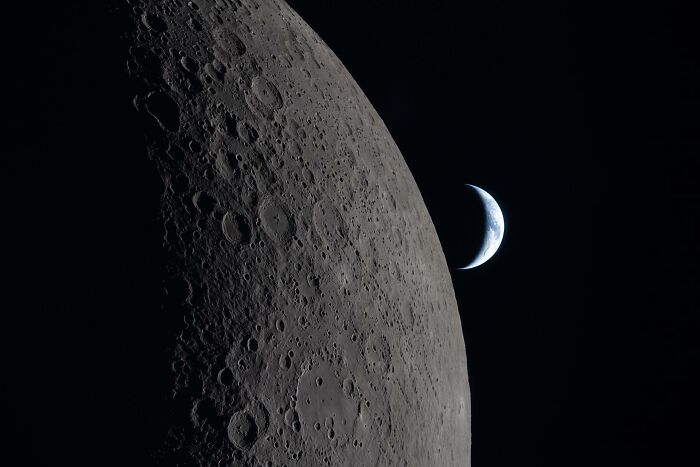
Image source: NASA
#23 Crescent Earth Over Lunar Horizon
The Artemis II crew captures a faint view of a crescent Earth above the horizon on the Moon’s far side.
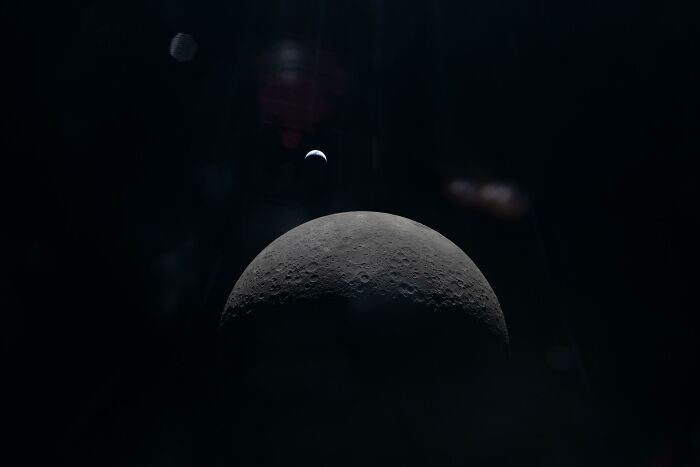
Image source: NASA