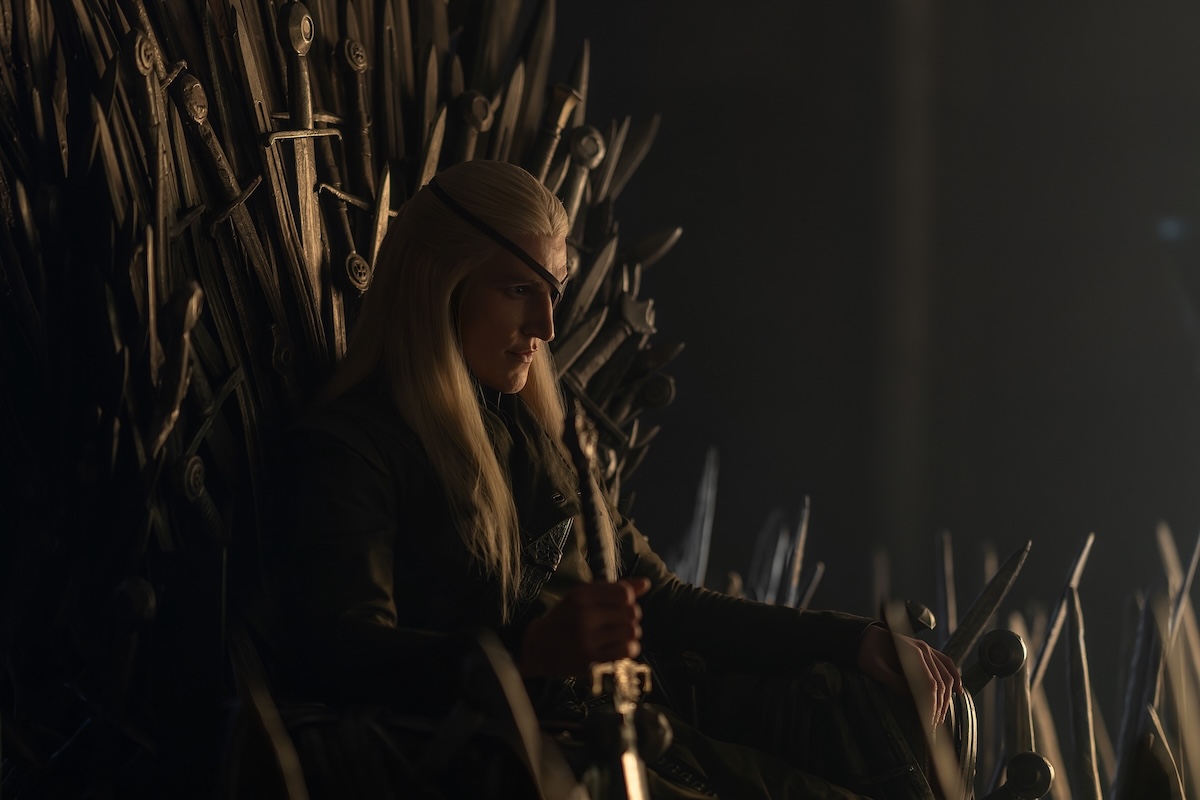

Part of the animosity stems from childhood jealousies, when Aegon joined Rhaenyra’s children Luke and Jace in mocking Aemond for not bonding with a dragon. The young Aemond rectified the problem by bonding with Vhagar, the Queen of All Dragons, the largest living dragon in the show’s present. Emboldened by the bonding, Aemond stands up to Rhaenyra’s children when they demand Vhagar, resulting in a battle that costs him his eye.
As Aemond One-Eye, he acts like a dangerous loose cannon in the world, even using Vhagar to attack his brother. But Mitchell’s Scorsese comparison suggests that there’s something more to the imposing warrior. Directed by Scorsese and written by Paul Schrader, Taxi Driver focuses upon a nondescript man completely out of touch with society. Bickle has recognizable human desires for love and admiration, but they manifest in odd behaviors, like taking a date to an adult theater or the vigilante violence he enacts at the end.
Taxi Driver has a famously ambiguous ending, in which Bickle’s rampage to rescue an underage sex worker (Jodie Foster) is lauded in the press and results in her safe return to her home. However, the extreme reaction to Bickle’s reaction, combined with his attempts to harm himself at the end of the movie, have led many to believe that it’s all a fantasy. The possibility of fantasy only further separates Bickle from society, proving that even his moral behavior looks frightening from the outside.
More than just film bro pretensions, Mitchell’s allusion helps him advance the themes of the show. “I feel like it is a horror TV show, but the monsters are the human beings in it,” he says of House of the Dragon. And monstrous humans can be found everywhere, in the fantasy world of Westeros and in the gritty streets of New York.
House of the Dragon season 3 premieres at 9 p.m. ET on HBO on June 21, 2026.