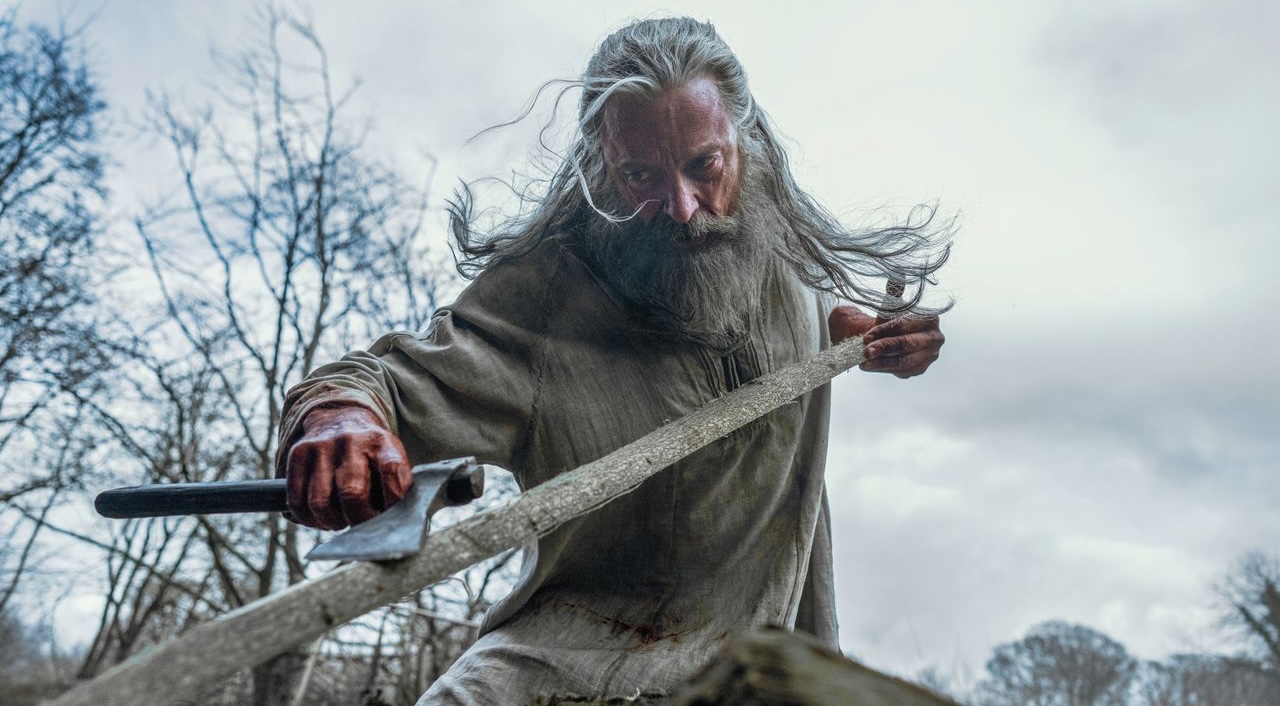
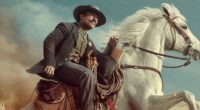
This parable kicks off properly when an old and grizzled Robin is found living alone in the wilderness by his former compatriot, the much younger Little John (Bill Skarsgård). Whether any other Merry Men existed is ambiguous, but based on the fact that John still wears green while Robin is bundled up in blacks, grays, and the red of those he’s killed, it’s clear which of them actually believes the legends that have already begun to spring up along the countryside like dandelions. John romanticizes his past, even as he finds some semblance of peace for the future with a wife and young daughter, Margaret (Faith Delaney). Alas, the past isn’t done with him. Relatives of a nobleman he slew some years back have taken his family hostage, and John wants Robin to go on one last adventure to free them.
The aftermath of that quest is so cataclysmically violent that our wounded folk hero is forced to seek shelter in the aforementioned priory on the sea. There, Comer’s Prioress has built a bucolic Eden separate from the medieval miseries across the waterway. She takes in orphans, loners, and even a leper (an endearingly aloof Murray Bartlett). And now she has taken in Robin, albeit the leper warns the brigand not to reveal his famous identity to the others. So things grow complicated when John’s little girl Margaret also arrives on the island, recognizing Robin as her father’s friend. Meanwhile others likewise approach, searching for the outlaw.
Seeing Hugh Jackman play another legendary hero at sunset after the also quite poignant Logan nearly a decade ago might cause some viewers to suspect this is familiar territory for the Australian star. Yet the tagline “he was no hero” proves to be more than just a marketing gimmick. It is difficult to think of a recent protagonist more challenging or potentially despicable than this Robin Hood. It is, indeed, the first movie I can think of with a scene where the protagonist of your film considers whether they may, or may not, murder a child—depending on if Margaret knows him by the name Robin. Frequent Sarnoski cinematographer Pat Scola even shoots the queasy scene by torchlight, casting ominous red pits in Jackman’s eyes.
There will be some viewers who will simply recoil at the prospect of such a depiction of a classic hero—and others who don’t want to see any feature with a hero (in the loosest sense) who is so broken and flawed. But for those up for the challenge, the emotional resonance of the piece unfurls a profound beauty that’s survived in the most perilous of contexts. It’s like a flower that’s somehow bloomed in the grays of January.
Part of this is obviously Jackman’s undeniable charisma as a performer. A born showman with a penchant for soulfulness, he exudes a humane intelligence hiding behind a beast’s fixed grimace. I do not think this Robin can be redeemed, but he can atone, which is where the real heart of the film comes into focus.
A deeply thoughtful and often understated performer, Jodie Comer’s Sister Brigid proves the true core of the film. Despite Robin not living up to the legends that strangers spin about him, Jackman’s character is in many ways an open book. The Prioress, on the other hand, is warm and empathetic, patient and forgiving. Nonetheless, Comer imbues the woman with just enough mystery to hint at layers and motivations left unseen, and perhaps a journey far grander than even Robin Hood’s. His is a world of gray, hers is awash in natural light, offering the only green in the movie not worn by Little John. Hers is the actual story of redemption for a land, if not a man.