There is a certain bit of irony in a studio co-founded by Steve Jobs now attempting to, even mildly, consider the psychological, emotional, and developmental downsides to screen technology. One senses the film pulls its punches, too, while emphasizing with parents who view Lilypad (voiced here by Greta Lee as a chipper Siri clone) as the best way for their slightly shy and introverted child to make new friends at dance class. All the other girls are doing it, so we can’t have her left behind.
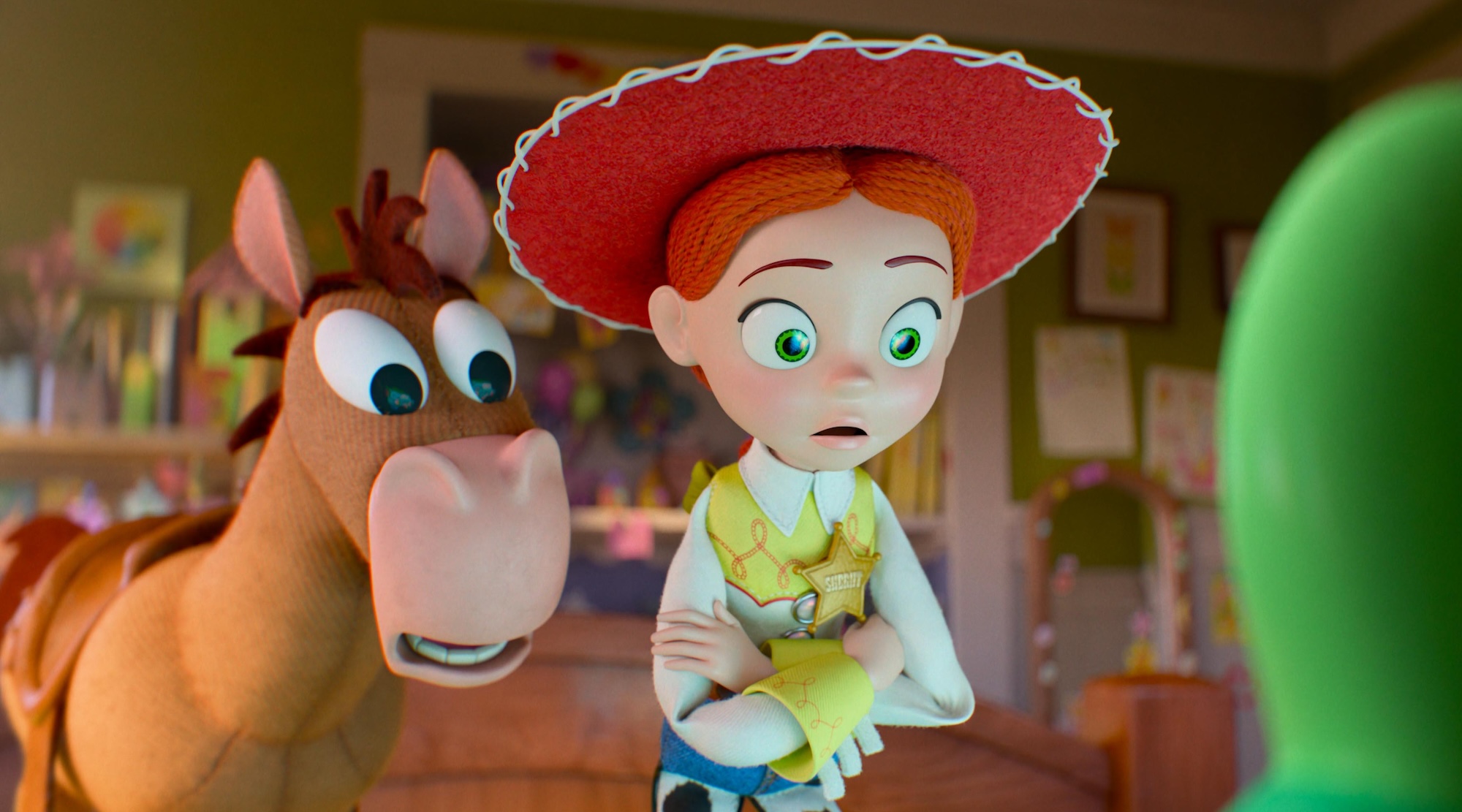
Still, the movie does offer a fairly evenhanded consideration about the advantages and many pitfalls of putting the first device within a child’s reach. Bonnie is immediately glued to the new blue light, barely even noticing her beloved Jessie and Bullseye toys. Yet it’s hard to say the eight-year-old is much happier as Lilypad introduces Bonnie to her first social network of friends—and her first taste of mean-girl bullying when those friends discover Bonnie plays with toys.
The trick of the Toy Story movies, particularly the later ones, is that they’re both a metaphor for childhood and the challenges of raising a child. Especially as Andy got older, and Woody and Buzz started thinking about a life after college, these films have leaned evermore on the adult point-of-view via the metaphor of a toy’s purpose. Despite this relative heaviness, they are still a child’s fantasy, and in the case of Toy Story 5, the misplaced existential fear of being replaced in the original movie takes on hilarious modern context as Jessie, Buzz Lightyear (Tim Allen), Rex (Wallace Shawn), and all the rest recognize they are about to be neglected in favor of a screen. Many of the castoffs Woody and Bo Peep (Annie Potts) run into out on the road now are ronin figurines lamenting that “the age of toys is over!” Tech is here.
As with the best Pixar movies, co-writers and co-directors Andrew Stanton and McKenna Harris (the former of whom has been writing these characters since the ‘90s) know how to balance the meta commentary with sincere, affectionate characterization. Jessie and Buzz’s arguments with Lilypad’s smooth, PR-clipped promises of not being their doom are genuinely funny, even as Lilypad seems to be using the internet messenger to make decisions for Bonnie and her parents, as opposed to the other way around.
The film is too sophisticated to have an outright villain—or perhaps too sympathetic for technology—but it knows how to twist the knife and build on a sturdy foundation of characters who have raised children and, at this point, the children of that first crop of fans.
The film also delicately tickles the nostalgia buttons. This is much more Jessie’s story, with the cowgirl and her trusty horse ending up on an odyssey when they are accidentally left behind by Bonnie during a disastrous sleepover, but Woody and Buzz feature just enough to rekindle memories of halcyon Pixar days. The film also has some fun at really underscoring the age of the franchise, with Woody getting a sun spot on his scalp that looks suspiciously like baldness, matching the inexplicable new stuffing in his tummy.