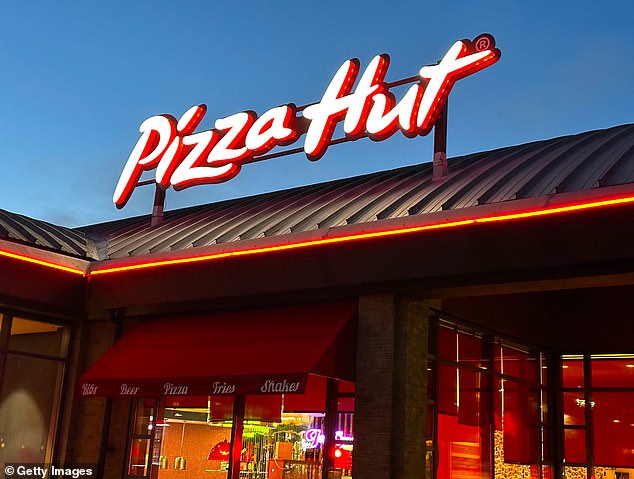
Ordering out for pizza remains a grand old American tradition, but delivery apps have eaten up the profits of the national chains – and given consumers so many other options.
Until recently, for most Americans ordering out usually meant choosing between Domino’s, Pizza Hut and Papa Johns – or maybe Chinese.
Sure, it’s been decades since online platforms like Seamless became mainstream, and over ten years since Uber Eats and DoorDash started building their own food delivery networks.
But the dominance – not to mention the profitability – of Big Pizza was built on two pillars: Massive brand recognition and costly ordering-and-delivery infrastructure.
Many chains have basically ceded control of the latter to the apps, which already give customers a wide variety of other choices, from tacos to sushi to high-quality local pizza.
And in giving up ordering and delivery the apps, the national pizza chains must fork over huge commissions that are collapsing their profit margins.
Total sales at quick-service pizza chains – Pizza Hut, Little Caesars and Papa Johns – declined 0.3 percent last year, according to restaurant data firm Technomic. That follows a measly 0.6 percent gain in 2024 and a 2.8 percent increase in 2023.
Six out of the top 10 pizza chains were in the negative last year, most prominently Pizza Hut and Papa Johns – while Dominos surged ahead with a 4.8 percent sales growth.

Yum Brands has agreed to sell Pizza Hut after months of exploring strategic options for the struggling restaurant chain

Today, Pizza Hut boasts more than 19,000 locations across over 100 countries and territories, making it one of the most recognizable restaurant brands on the planet
Sliding sales, coupled with the staggering commission fees shelled out to third-party services, were the nail in the coffin for many pizza chain outlets.
When orders are placed through third-party platforms, restaurants pay commission fees that can reach a whopping 30 percent of the order value. So while delivery apps can often lead to more sales, the pizza chains are typically making less money on each order.
Rave Restaurant Group, which operates more than 230 Pizza Inn and Pie Five Pizza Co locations, cut ties with Uber Eats following price hikes that pushed commission rates as high as 30 percent.
Uber Eats, which operates in more than 11,500 cities worldwide, said the increases are needed to offset rising costs and invest in its platform.
An Uber Eats spokesperson previously told the Daily Mail: ‘We updated marketplace fees for certain US restaurants on Uber Eats for the first time in about a decade.’
‘This change reflects higher costs to operate a reliable delivery marketplace and helps ensure we can continue supporting restaurants, couriers and customers,’ the statement continues.
Some companies have resorted to offering discounts and deals when ordering directly on their website as opposed to Uber Eats or DoorDash. Others increase menu item prices on third-party services, forcing the consumer to front the bill.
But as demand grows for faster and better delivery options, plucky upstarts and beloved local pizza joints stand basically as equals to the national chains on the apps, and customers are defecting
The biggest loser to date is Pizza Hut and its nationwide chain of iconic red-roof restaurants. As the apps spread across the nation’s mobile phones like delicious melted mozzarella, Pizza Hut leaned more and more on the third-party platforms.

Uber Eats is one of the best-known food delivery services in the US, along with DoorDash and Grubhub
According to Restaurant Business, by late 2022, 90 percent of Pizza Hut’s US locations had partnered with at least one third-party delivery service – primarily DoorDash and Uber Eats.
The chain saw a slight bump in sales the following quarter – but it didn’t last long.
Pizza Hut announced it would shutter 250 underperforming restaurants as part of its restructuring plan. US same-store sales fell five percent last year, a sharp contrast to Domino’s, which continued to gain market share.
Just last week, Pizza Hut parent Yum Brand reached a deal to sell the chain to private equity, burdened as it was by declining sales and the costly challenge of maintaining hundreds of aging locations.
Papa Johns is facing similar pressures. The company revealed that North American same-store sales fell as customers increasingly placed orders through third-party delivery apps instead of directly through Papa Johns.
In early 2024, the proportion of sales coming through third-party delivery marketplaces jumped to 16 percent, according to company filings.
While customers increasingly preferred third-party delivery, the chain’s own delivery service weakened, contributing to a two percent decline in North American same-store sales.
‘This shift in channel also led to a slightly lower average ticket,’ Papa John’s CFO Ravi Thanawala said at the time, ‘as the relatively profit-neutral revenue from our organic delivery fee decline and strategic pricing actions by our revenue management team helped to somewhat mitigate this delivery fee impact in the current environment.’

Papa Johns was one of the six out of the top 10 pizza chains with negative sales last year
Kevin Schimpf, Senior Director of Industry Research at Technomic, told the Daily Mail that delivery apps have ‘been an overall net negative’ for Big Pizza.
‘Pizza chains essentially were the only game in town when consumers wanted the convenience of delivery, but now they can get nearly anything delivered to their doorstep thanks to third-party apps,’ said Schimpf.
Schimpf said that even if pizza chains get plenty of orders from third-party platforms, it’s not enough to offset the heightened competition in the delivery space.
According to Jonathan Maze, editor-in-chief of Restaurant Business, there’s an additional problem for the national pizza chains: Financial strain among low-income consumers.
‘Think about it, when you want food delivered, you historically would call a pizza chain, because in most cases that was your only option, along with maybe Chinese,’ Maze told the Daily Mail.
Then along came Uber Eats and DoorDash.
‘You open their apps and have a ridiculously big selection of restaurants to choose from,’ Maze told us. ‘Yes, it’s more expensive. But that means these companies are capturing higher-end consumers who can afford to use them and who continue to spend.’
Gregg Majewski, CEO of Craveworthy Brands, said that delivery apps are not the sole reason pizza chains are struggling.

Delivery platforms like Doordash and Uber Eats charge restaurants commission fees up to 30 percent
Majewski argued that delivery apps level the playing field between big chains and local restaurants, which means customer’s restaurant preferences comes down to execution.
With more choices than ever before, consumers are choosing brands that ‘deliver on quality, value and consistency.’
‘Today, a neighborhood pizzeria can compete for the same daypart and reach the same guest through the same platform,’ he told the Daily Mail.
‘That has shifted the conversation away from who has the greatest delivery network and back to what matters most: the food, the experience and the brand itself.’
Majewski was formerly the CEO of Jimmy John’s – his multi-brand restaurant management platform recently acquired Fresh Brothers Pizza, an Orange County-based chain specializing in Detroit-style pizza.
‘The winners among all this confusion are the local pizza shops,’ Majewski said. ‘And don’t count out the appeal of new. It’s built into the appeal of the DoorDash and the like. Consumers browse and like to see what’s new and different. That’s a win for the local shops.’