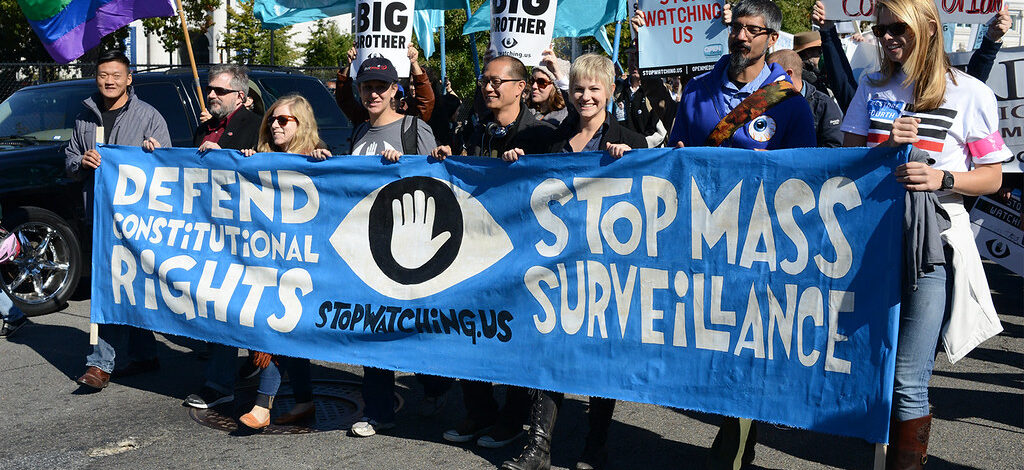
The concept of privacy is foundational to America. Indeed, the Fourth Amendment prevents unlawful searches and seizures. The Fifth Amendment prevents self-incrimination. The First Amendment prevents the government from compelling Americans from making disclosures. Some places, like Montana, explicitly list the right to privacy in their state constitutions.
But in the digital age, the lines on what constitutes a warrantless search continue to blur. Under current law, section 2705(b) of the Stored Communications Act (SCA) allows the government to impose a “gag” order on tech companies when they want to access your data. Worse, the procedure is entirely ex parte (one sided, private conversations) and under seal. The customer has no notice, no opportunity to be heard, and no ability to challenge the search. Only the provider knows, and the provider is the only party in a position to push back, which most don’t have the resources or incentive to do.
THE STORED COMMUNICATIONS ACT.
When the government wants stored emails, cloud files, account records, or metadata from large tech companies without you knowing, it uses a law called the Stored Communications Act. The Act provides the government with narrow subpoena power that allows the government to obtain basic subscriber information. They can also seek orders for non-content records provided that they can provide “specific and articulable facts” to justify the measure. The law even gives them the ability to surreptitiously seek a warrant for content so long as they have probable cause – a low bar.
Usually, the provider would be free, or even required, to notify the customer. However, the Act allows them to override that obligation if the government files a companion application asking the court to bar the provider from telling anyone about the request. This is basically a government-imposed gag order.
There are some good and valid reasons why law enforcement would want to have these in place. These measures can be critical for law enforcement to conduct covert investigations, prevent criminals from fleeing their jurisdictions, or ensuring that evidence doesn’t get destroyed. But if our Fourth Amendment or due process is to mean anything, there has to be limits.
The Act, and its predecessor the Electronic Communications Privacy Act (ECPA), were enacted when applications, like email, were in its infancy. Today’s digital world is a completely different animal. With the allure of free services, we provide details about our most intimate selves to trillion-dollar tech companies who, in turn, make an enormous profit off the data they collect. They know everything about us. What we like to eat. When we sleep. Where we live. Where we are. Our beliefs. Our fears.
This is far more data that was even cognizable at the time Congress enacted SCA and ECPA.
NO CAP.
Worse, the statute itself sets no cap on how long they can keep the data. It simply says the order is for “such period as the court deems appropriate.” For decades that meant indefinite gag orders were routine, sometimes lasting years or forever. That is until Microsoft pushed back and sued the government for violating, among other things, its users’ Fourth Amendment right against unlawful searches and seizures. The lawsuit prompted the Department of Justice (DOJ) to issue a memo (i.e., the 2017 Rosenstein memo) that set a default cap of one year to hold user data. Keep in mind, this is not legally binding. The DOJ can simply ignore or rescind the policy at any time.
Frankly, we need an update to comport with contemporary times and set better guardrails.
Thankfully, Congress has actually found a compromise that better assures that our rights are protected under the Fourth Amendment and traditional notions of due process, while allowing law enforcement to keep us safe. The bill is called the Non-Disclosure Order (NDO) Fairness Act, which would require prosecutors to show specific, articulable facts that notifying the customer would cause a defined harm (like flight, evidence destruction, or witness intimidation). It would also cap the gag order at a limited duration with renewals requiring fresh justification, and push courts to apply a tighter constitutional standard rather than rubber-stamping requests.
Better yet, it’s bipartisan. And it is easy to see why. Let’s start with the obvious: customers have a right to know when the government rifles through their data so they can challenge over-broad searches, and indefinite secrecy undermines due process.
Lest we forget the potential for the government to weaponize this information. This is not hypothetical. Recent revelations from Arctic Frost showed prosecutors obtained records of journalists, congressional staff, and members of Congress under sealed orders during the Trump-era leak investigations.
Given this reality, the balancing of equities weigh in favor of passing the NDO Fairness Act.