
A devastating fungus that causes painful blisters and sores in cats, and potentially death, could be silently spreading among wildlife across South America, a new study warns.
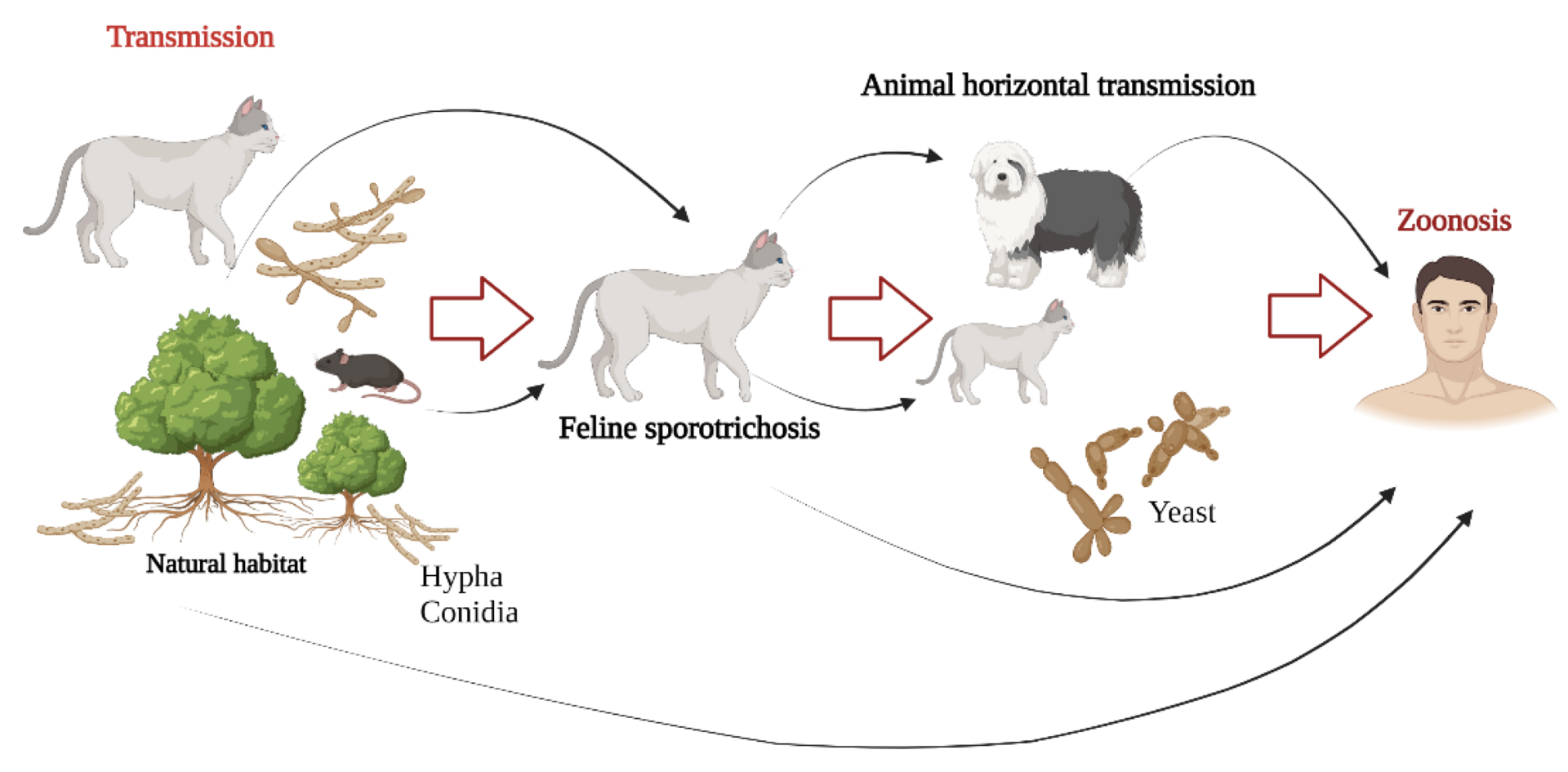
The deadly fungus causes a disease called sporotrichosis that spreads via cat scratches and results in serious lesions, sometimes even in humans.
It has until now been detected in cats, driving outbreaks across Brazil and neighbouring countries.
Now, researchers have also found the fungus in the internal organs of wild animals, including mammals, birds, and reptiles that were killed by vehicles on Brazilian roads.
“What we have right now is this ginormous ongoing outbreak of Sporothrix brasiliensis in Brazil,” CDC mycologist Shawn Lockhart told Science News.
“It’s just a matter of time [for the fungus to reach the US]. We’re waiting,” Dr Lockhart said.
The findings, scientists warn, point to a new reservoir host for the fungi, highlighting an urgent need for better disease surveillance.
Researchers could detect DNA of the fungus in the internal tissues of mammals, birds, and reptiles killed by vehicles on Brazilian roads, including in the liver and heart, hinting that it’s circulating in the body.
In the study, they collected animal carcasses within the first few hours after they were struck by vehicles on two highways in the Brazilian state of Paraná.
The animal carcasses were collected between 2017 and 2023 along approximately 530 km of the BR-376 highway, bordered by Atlantic Forest areas, and 150 km of PR-445, which borders native areas of the Campos Gerais Region and rural properties.
Overall, scientists analysed 178 tissue samples from the heart, liver, lungs, and bladders of 81 animals, including 39 mammals, 36 birds, and six reptiles.
Heart and liver were the tissues that tested positive for the fungus most frequently, suggesting that many animals can carry the microbe without developing disease.
“We expand this established spectrum by detecting Sporothrix DNA in taxonomic groups previously unrecognised, such as reptiles, specifically the false coral snake, diverse native wild birds, including the picui ground dove, tataupa tinamou, green-barred woodpecker, squirrel cuckoo, and spot-billed toucanet; and mammals that act as potential bridges for visceral infection, including the southern tiger cat, European hare, white-eared opossum, and agouti,” researchers wrote in the study.
The latest findings raise the possibility that Sporothrix is adapting to new hosts.
They also challenge existing views that many fungi struggle to infect hosts with high body temperatures, including birds and humans.
“There’s a prevailing view that birds are protected from pathogenic fungi simply because they have a high body temperature, up to 42C, which would make it impossible for fungi to survive,” said Steffanie Skau Amadei, an author of the study from McGill University in Canada.
“We saw in this study that pathogenic species do indeed tolerate high body temperatures,” she said.
One species of the fungal species, S. brasiliensis, has emerged as a disease-causing pathogen that spreads from cats to humans and other animals through bites and scratches of infected cats.
The US Centres for Disease Control and Prevention warns that this species may cause more severe disease among humans and animals, but it has not yet been detected in North America.
Scientists hope that further studies will be conducted to find the reservoir of other deadly fungal pathogens.
“The study opens the door to new research by showing that the reservoirs of the fungus extend far beyond domestic animals. Human pressure on the environment is blurring the boundaries between what’s rural, urban, and wild,” Dr Rodrigues said.