
Though it’s a watered-down version of the long-discussed PRIME Act authored by the Kentucky Republican Thomas Massie, the House has passed an important measure to start returning the regulation of intrastate food production to state and local authority. In practice, the return of meat production to local control will be a victory for producers and consumers, restoring flexibility and real community markets.
But first, go back to 1942, when the farmer Roscoe Filburn grew wheat on his Ohio farm that he only intended to use on his own property. Penalized for violating the federal Agricultural Adjustment Act of 1938, Filburn argued in court that Congress only has the constitutional authority to regulate interstate commerce, so federal law couldn’t limit a crop that would never cross state lines.
The resulting 1942 Supreme Court decision in Wickard v. Filburn waved a magic wand over commercial activity: Because there’s an interstate market for wheat, all wheat is part of interstate commerce, whether or not it crosses state lines. Regulating interstate commerce, Congress regulates all commerce.
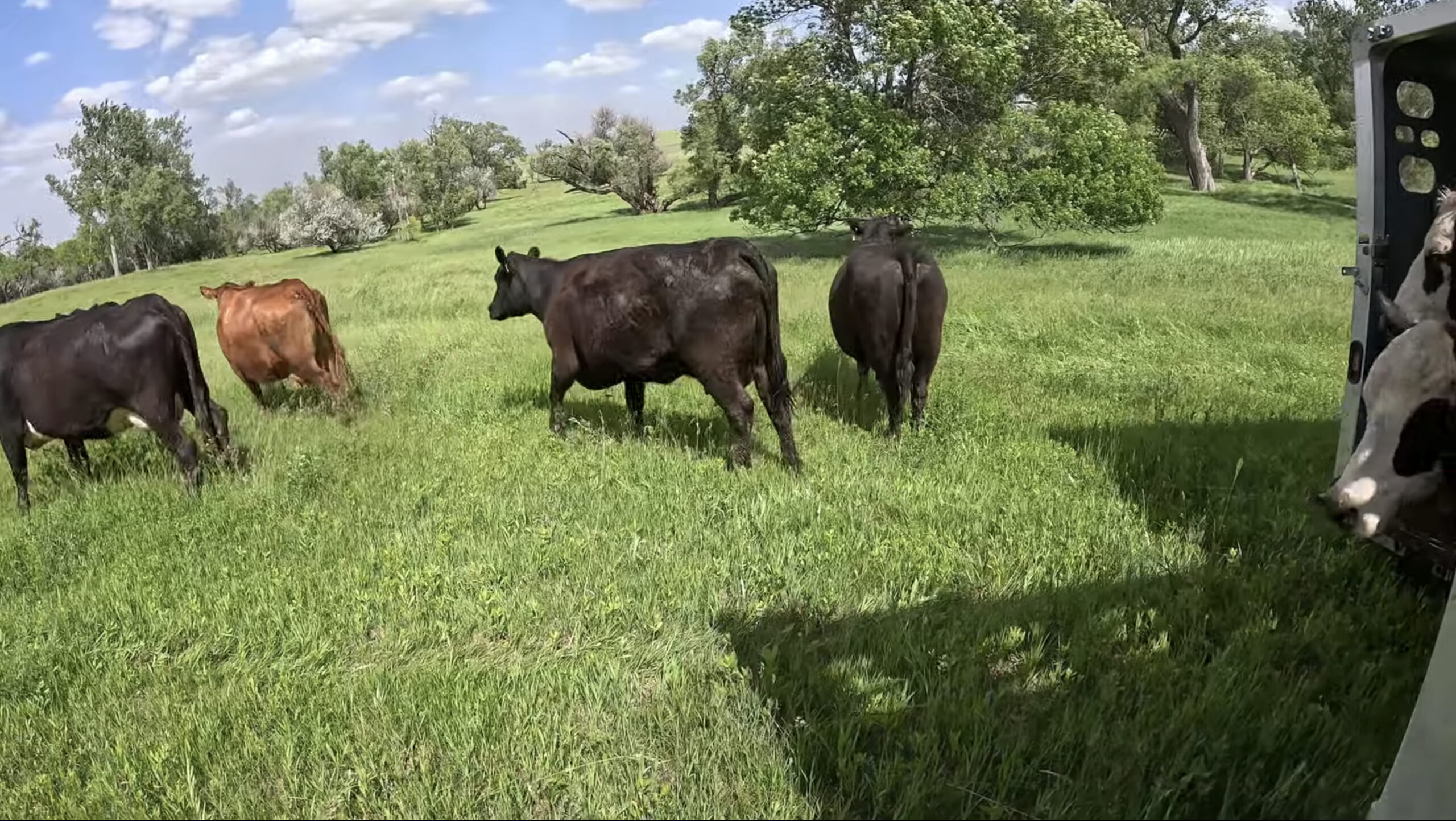
In practice, omnipresent federal authority has limited and stifled food production, especially of meat. Ranchers can’t slaughter their own cattle in nearby facilities and then butcher the meat to be sold directly in local markets. They have to send their cattle to a corporate beef processor with an on-site federal inspector, while consolidation has left that industry controlled by four giant companies.
This lack of local control has led to unintended consequences that can be devastating for people who make their living making food. The California ranch Santa Carota — in English, Saint Carrot — finishes its beef on a diet of sweet, watery carrots, arguing that carrot-finished beef is sweet and juicy. Then the ranch loses control of its product, sending cattle to a giant meat conglomerate that has allegedly returned the bespoke product mixed with poor-quality foreign beef.
As a primer on the bill from the Institute for Justice explains, Massie’s PRIME Act (PRIME stands for Processing Revival and Intrastate Meat Exemption) “would allow ranchers and farmers to slaughter their livestock at local slaughterhouses instead of driving hours away to USDA-approved slaughterhouses.”
Opponents have argued that the loss of federal regulation will be dangerous. The Meat Institute, an association of meat processors, has conjured up a return to Upton Sinclair’s unregulated jungle of dirty food, warning against a market filled with “uninspected meat.”
On Wednesday, Massie told The Federalist that the transition back to limited local production envisioned by the PRIME Act isn’t a loss of regulation. The bill, in both its original and more limited recent forms, represents a transition back to state and local regulation, not a return to the jungle. Local meat processors will be inspected by the same local or state health authorities who already check restaurants and butcher counters for safe practices, while labeling requirements will tell consumers exactly where their meat comes from.
“You would have local accountability, back to the farmer,” Massie told The Federalist.
The version of the bill that passed the House as part of a larger farm bill (see Section 12114) and now waits for Senate action is a pilot version, Massie said. It’s a limited test of a more general return to food freedom. The original version of the PRIME Act would have allowed producers to slaughter locally and sell directly to restaurants and grocery stores, while the pilot version only allows for direct sales of locally processed meat to consumers. And this initial test only runs until 2031 before it will require reauthorization by Congress, restricting the number of locally regulated processors. A return to full local control and flexible meat processing will have to come later.
“I’m not ready to call it the Wickard v. Filburn repeal act yet,” Massie told The Federalist, joking that this version of the PRIME Act is more like the “Sub-PRIME Act.” But he hopes that the pilot project proves the concept, and consumers develop a taste for nutrient-dense, locally grown and processed meat that they can buy directly from people in their own communities.
“The proof will be in the pudding,” Massie says.
The bill should meet a warm reception in the Senate, where it’s sponsored by Sen. Rand Paul, R-Ky., and Sen. Angus King, a Maine independent who caucuses with the Democrats. Democrats in the House co-sponsored the bill, which continues to have bipartisan support.